

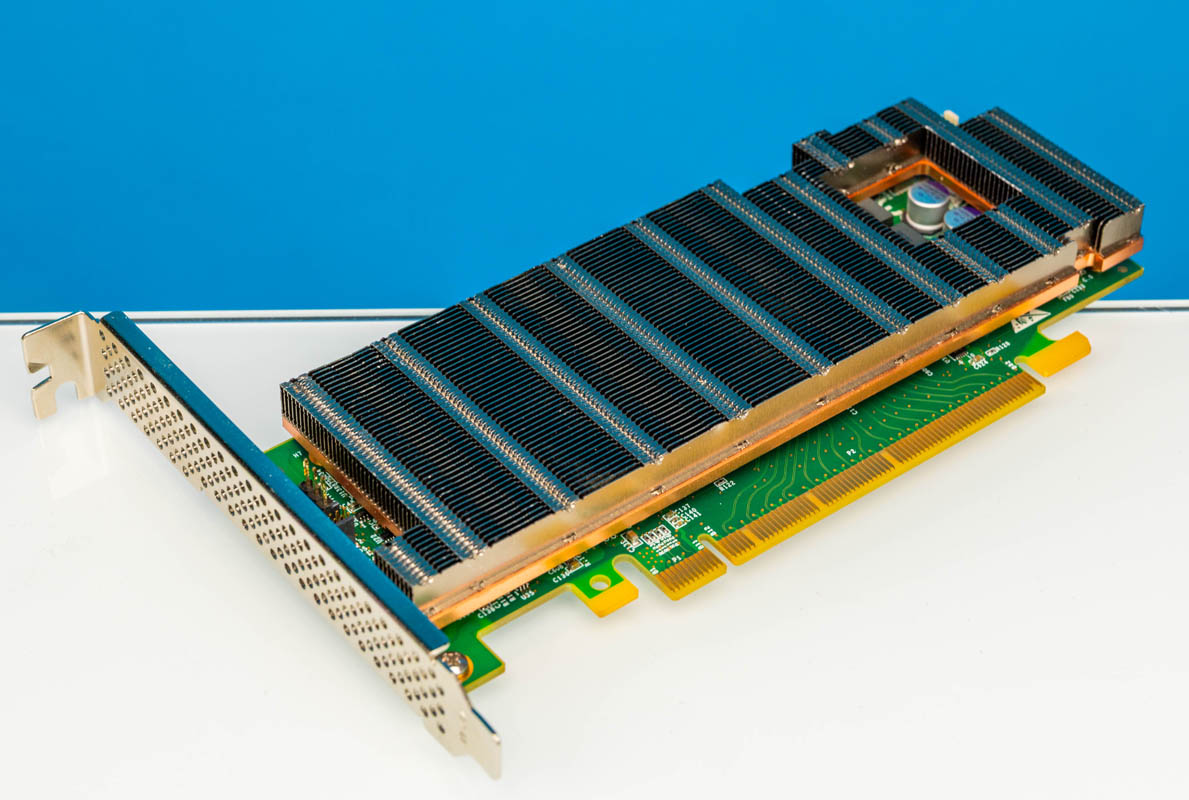
The Silicom P3IMB-M-P2 is an Intel ACC100-based card that most of our readers will never need. At the same time, we decided to buy one because we needed it to show our readers in future reviews. This card is also derived from Intel’s eASIC acquisition and is one of the few eASIC cards we have found. The purpose of this card is to handle 10Gbps of L1 FEC (forward error correction) for 4G and 5G networks. This is the kind of card that would be deployed in 5G base stations to accelerate FEC algorithms. Let us take a look at the hardware.
Silicom P3IMB-M-P2 Intel ACC100 Hardware Overview
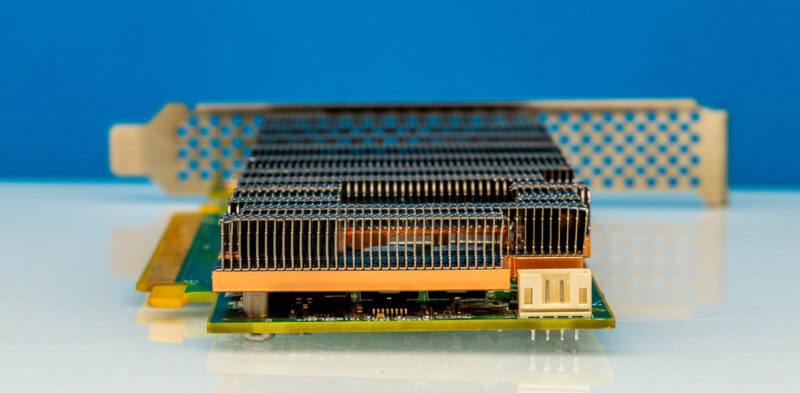
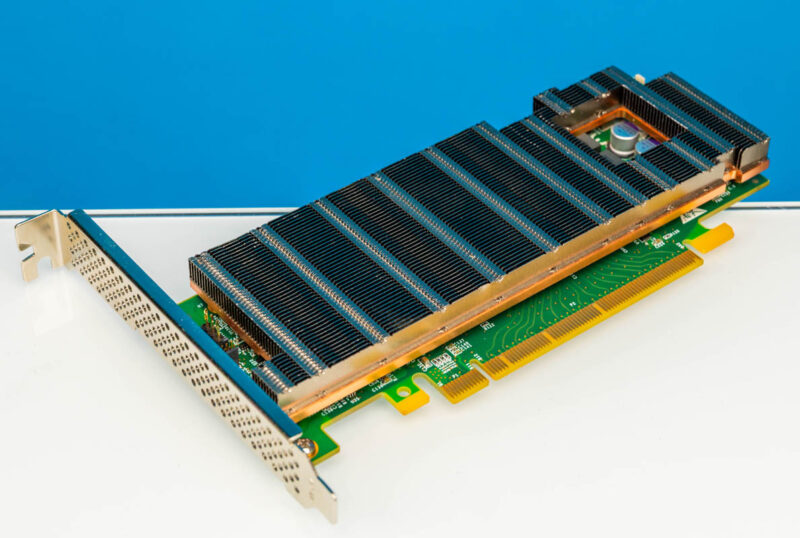
This is far from a tiny card. Instead, this is a PCIe Gen3 x16 card with a substantial heatsink.
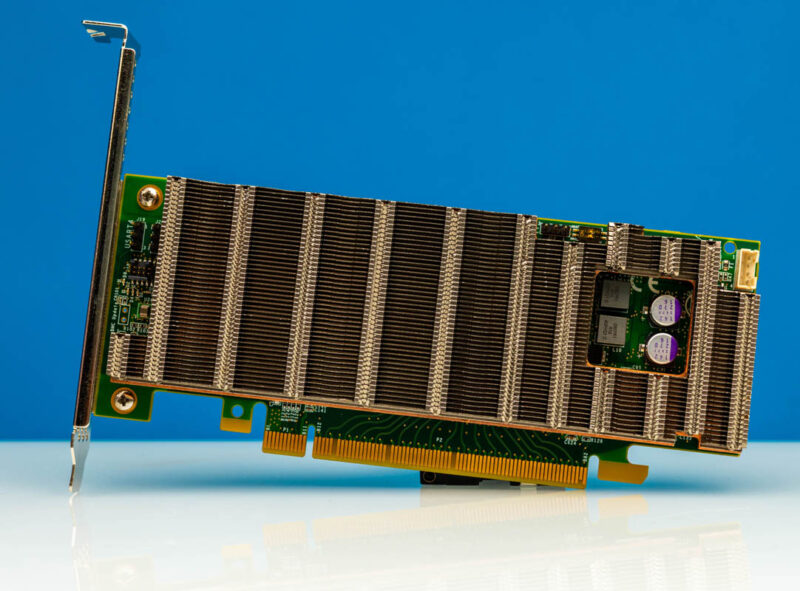
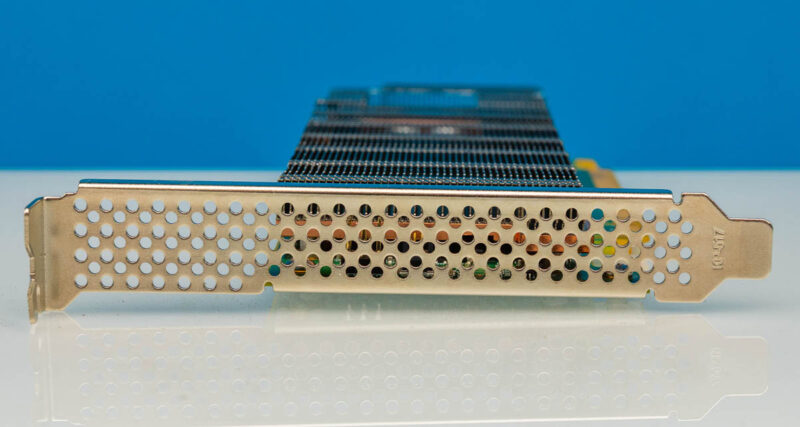
There are no network ports here, since this is just an acceleration device. We have a full-height bracket, but you can tell that it was also designed to be a low-profile device.
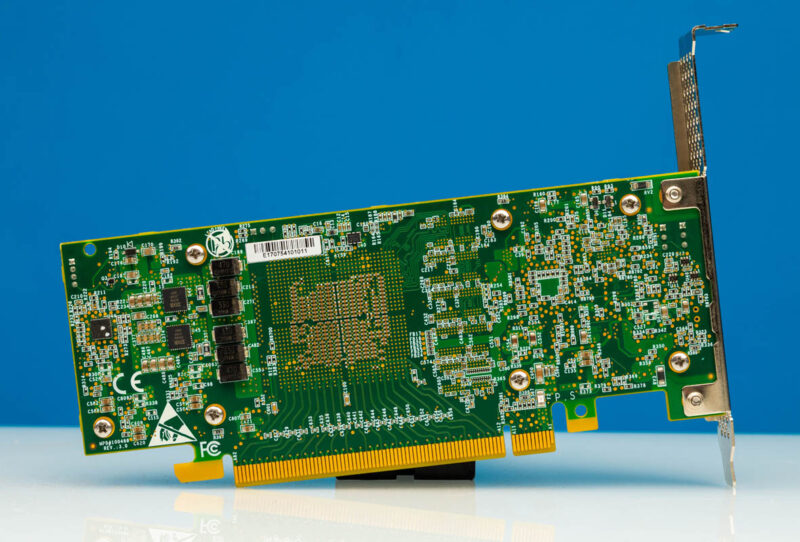
On the back of the card, we can see the x16 connector and a hint that we have a very busy PCB.
Something that was surprising is that this card feels heavy. The reason for that is the heatsink. You can see that under the fins is a big block of copper.
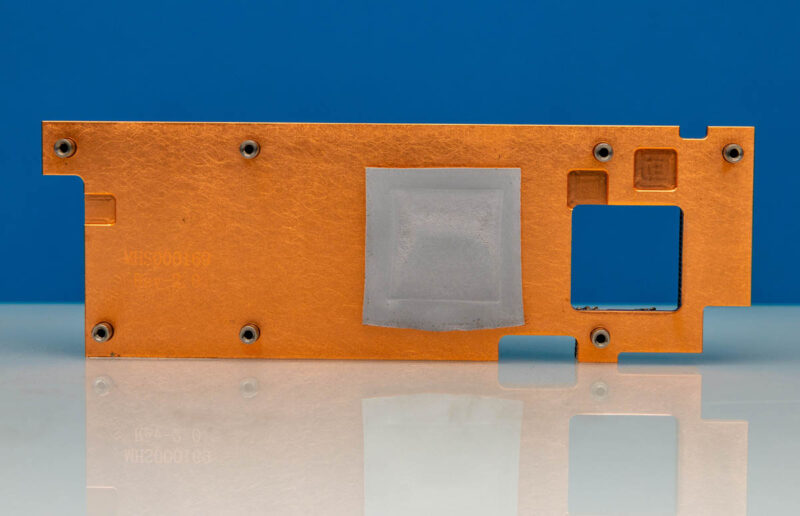
Pulling the heatsink off, you can see just how much copper is used here. This is the extended temperature version of the card, so that is why we get such a substantial hunk of metal.
Here is the card with the heatsink off.
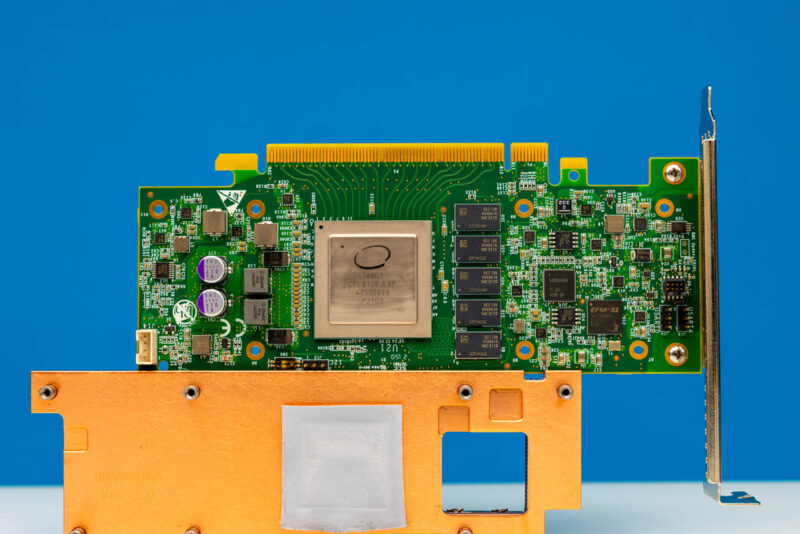
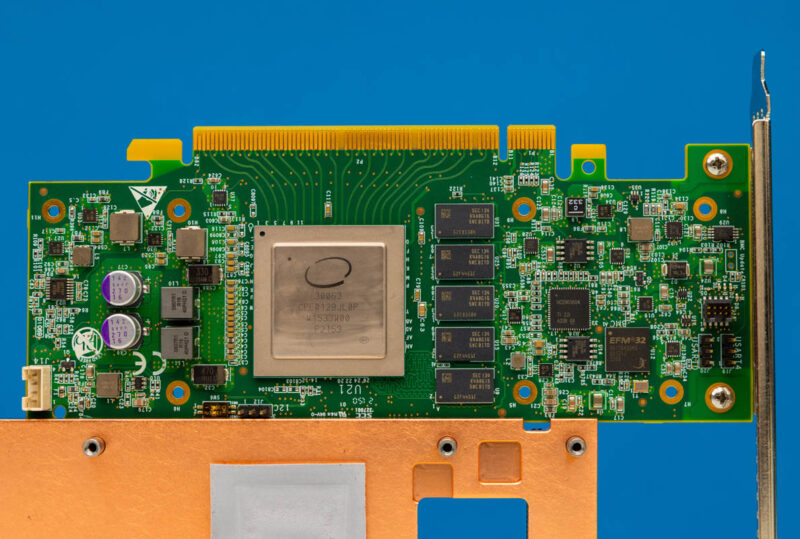
Here you can see the 28nm Intel eASIC chip with its 8GB of Samsung DDR4 memory.
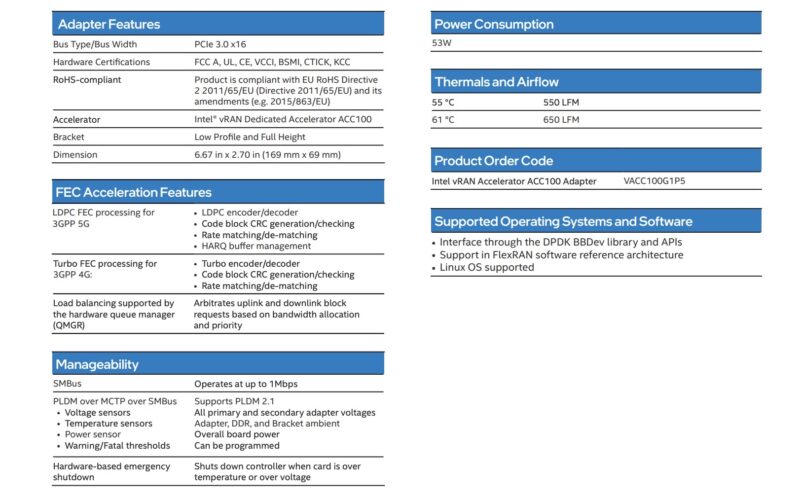
Here are the specs from the card. The 53W of power consumption is made of roughly 36W for the eASIC chip, then 2.5W for the DDR4 memory. You can see the LPDC FEC processing and other features here as well.
These were designed to be used with the Intel FlexRAN software suite using dpdk for carriers. You would use something like this to set it up:
nano host_vars/.yml fec_acc: "dddd:bb:ss.f"

fec_acc: "dddd:bb:ss.f" # Wireless FEC H/W Accelerator Device (e.g. ACC100/ACC200) PCI ID

dpdk_local_patches_dir: "/opt/patches/flexran"

dpdk_local_patches_strip: 1
Performance-wise, for 5G FEC, this offered up to something like 21Gbps of decode and 4-5.5Gbps of encode.
Final Words
We do not expect folks to purchase these. These are primarily for 5G operators, with very little use outside that context. The ACC100 was successful in the space, however. The updated ACC200 was part of the Sapphire Rapids EE SKUs, where not only did it get a performance update to include FFT acceleration, but it was integrated into the CPU, so it did not add another 53W TDP device into the system.
Again, this is just one of those fun ones we do to show off a server component that many do not often get to see. As a fun one, we bought this card for about half of what an 8GB DDR4 SODIMM costs right now (Amazon Affiliate.) It is interesting since between the DDR4 and copper, this is a relatively recent card that is selling for less than its scrap value. The DRAM shortage is doing strange things to the market. Hopefully, you guys enjoyed this quick look at an interesting bit of hardware.




Interesting and unusual indeed. It would make an interesting piece in any chip collector’s stash for sure. Thanks for sharing this.
Not just for operators. You can use this to accelerate L1 for running a private 5g network. SrsRAN is open source, but sadly the open source version doesn’t include support for the ACC100.