Pascari X200P 7.68TB Performance by CPU Architecture
Now that we are firmly in the PCIe Gen5 era, we have a number of AMD, Intel, and even AmpereOne platforms to test the drives in to see the differences in performance based on architecture. These are small, but important.
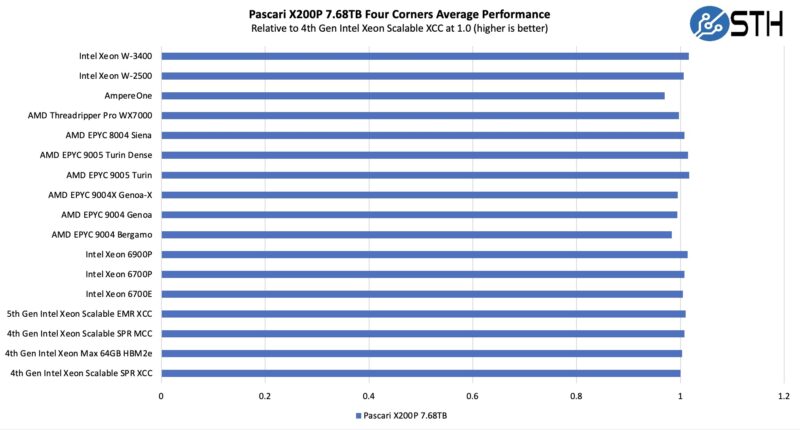
Since that is hard to read, we have a zoomed-in view below without a 0 X-axis.
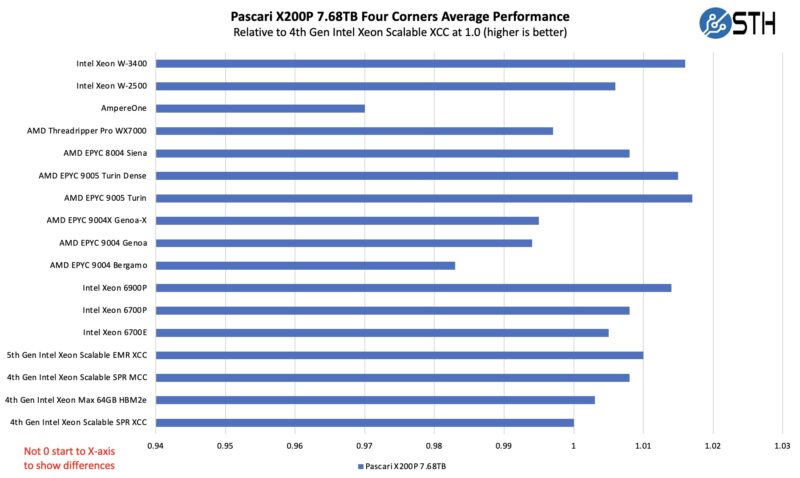
We see a similar trend to the previous PCIe Gen4 generation. Something that was small but notable is that Pascari seems to have a closer Intel to AMD gap for us across newer architectures. It is small but it is there.
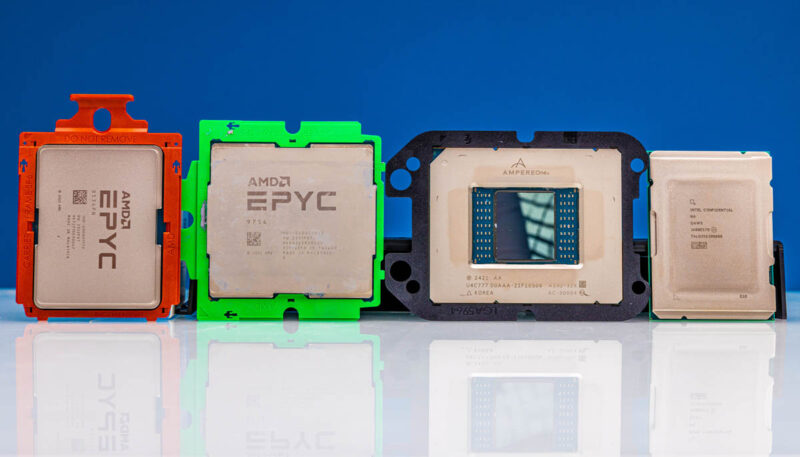
It is fun to see that not all PCIe controllers are created equally and that there are differences even based on the platform the drive is put into.
Final Words
Something that testing the Phison Pascari X200P 7.68TB showed us is that the X200P and X200E make sense that they are two products from the same family. To us, unless you need the extra write performance, the higher capacity 7.68TB model will make more sense for the majority of our readers. Beyond the performance, however, we want to see how Phison’s move into a branded SSD market goes. That is a tough task for anyone, especially in the data center market. Still, Phison has been making the controllers and in some cases the drives behind other brands for some time, so perhaps it has a leg up.
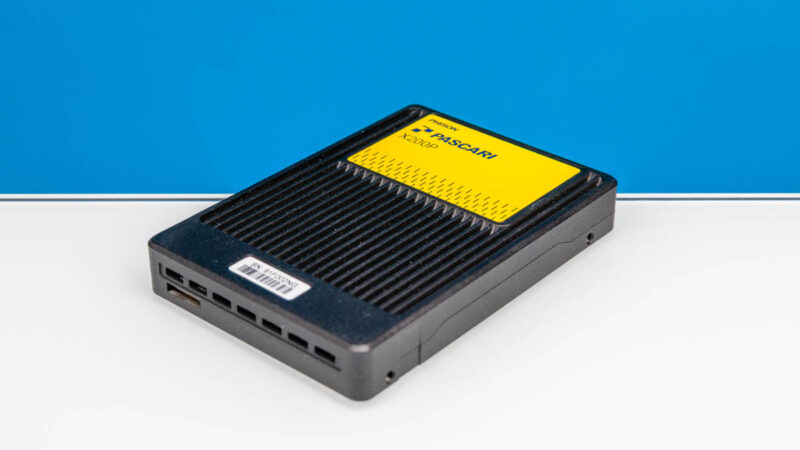
Overall, the Pascari X200P performed well and gave us more capacity than the 6.4TB X200E. While we really like the X200E for its performance characteristics, we would be more likely to deploy the X200P because of the addiitonal capacity.