

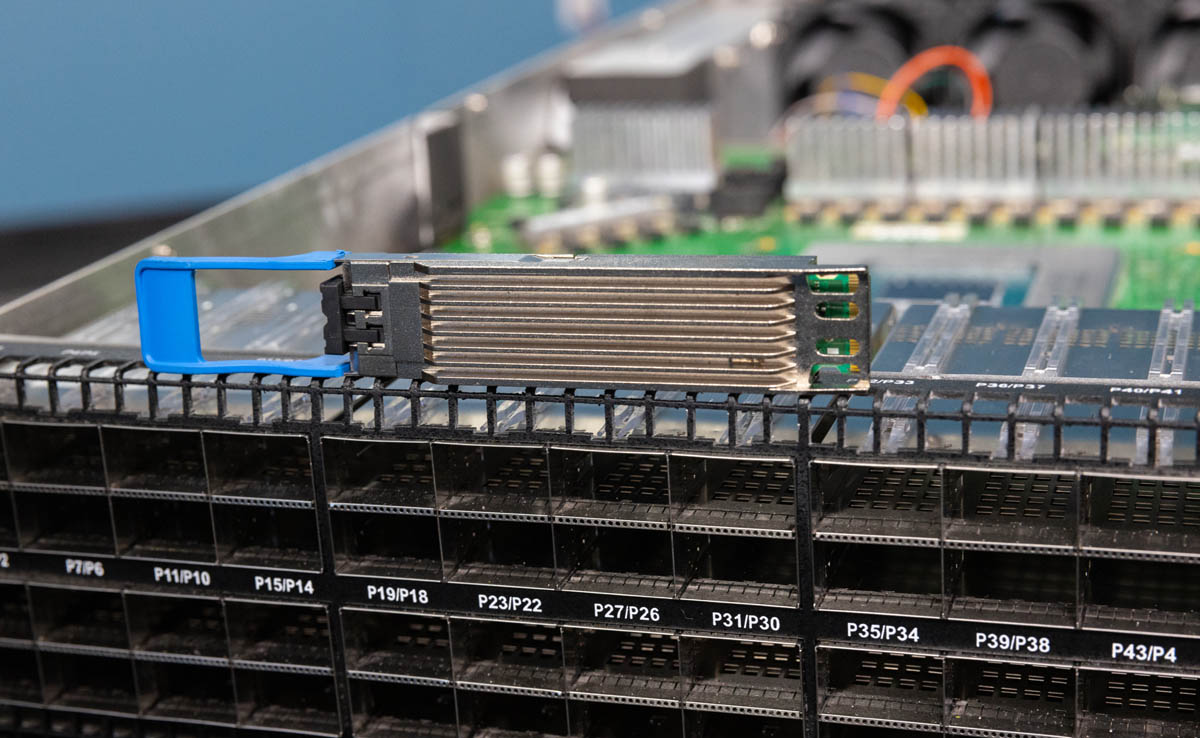
While the OSFP form factor of pluggable optics has become popular in the 400G and 800G generations, all OSFP modules are not the same. Octal Small Form-factor Pluggable (OSFP) often comes in two physical form factors that are not compatible. We wanted to just show quickly the differences between the OSFP Finned and Flat Top variants so folks can see the difference.
OSFP Finned and Flat Top: The 400G and 800G Experience
OSFP modules are designed for high-performance networking. The form factor allows for both room inside the module for components, but also cooling optics that can commonly span from 10-15W for lower-power OSFP optics to over 30W for higher power devices. As a result, the OSFP modules can come with their own cooling, which is commonly referred to as a finned top.
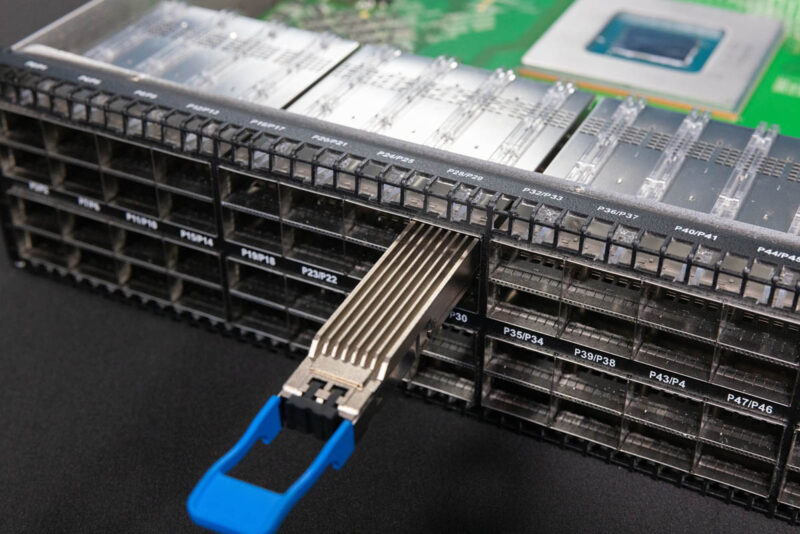
The OSFP Finned Top modules, including optics and DACs have large fins included in the modules that help dissipate heat. Commonly, the Finned Top modules are used in switches where there is a high port density.
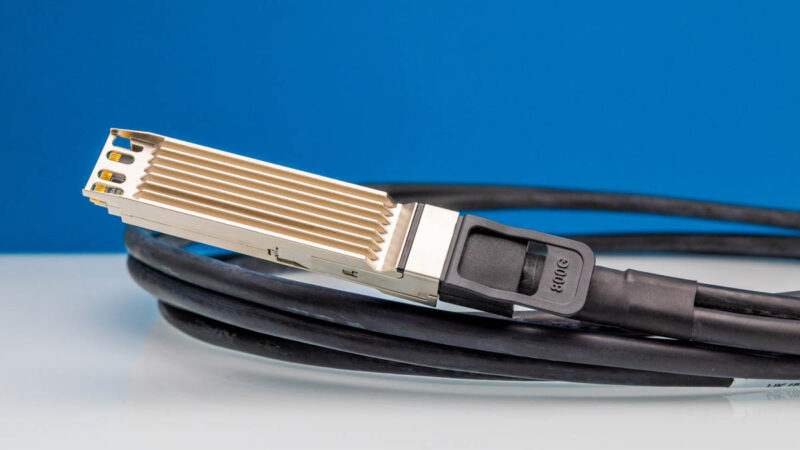
The other side of a finned top module is often smooth.
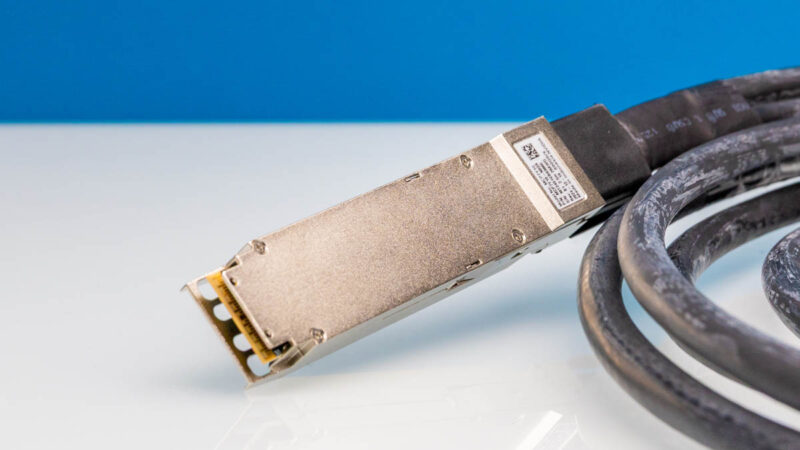
The advantage of this design is that a switch can provide a standard amount of airflow and cool the modules instead of having different cooling on the optical cages in each type of switch. At higher speeds, optical cages can require quite a bit of cooling.
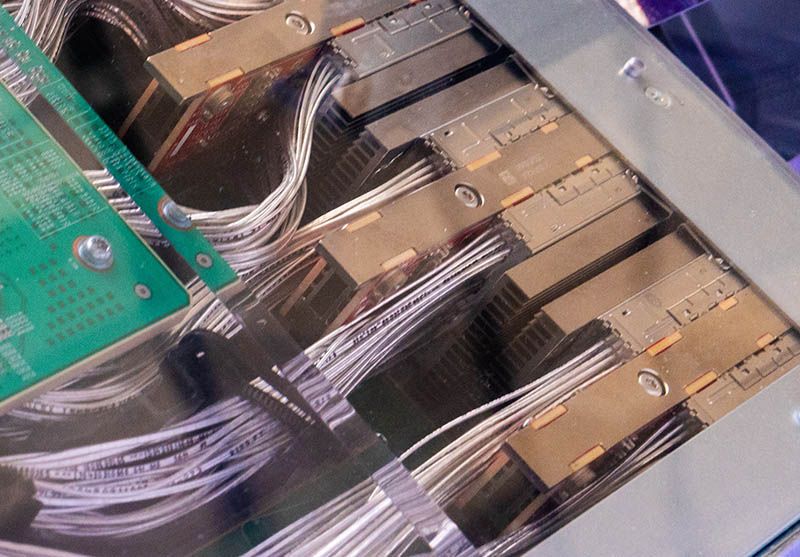
While that is exciting, the other side of the equation is the NIC, or what is on the other end. In generations of older 100G QSFP28 optics, for example, it was common to use the same types of optical models on the switch and NIC sides. In modern NVIDIA ConnectX-8 NICs, you often see OSFP cages that do not fit the Finned Top modules. Instead, you need a Flat Top module.
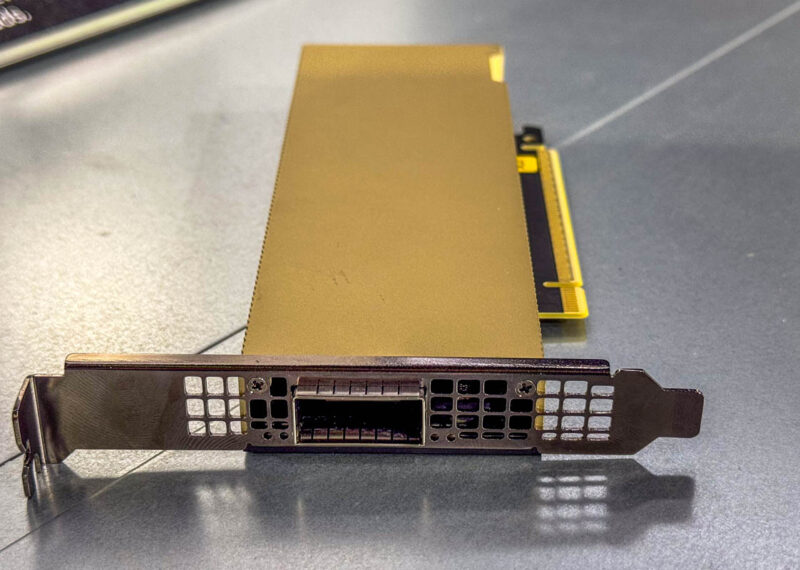
The OSFP Flat Top is also very common in the ConnectX-7 generation.
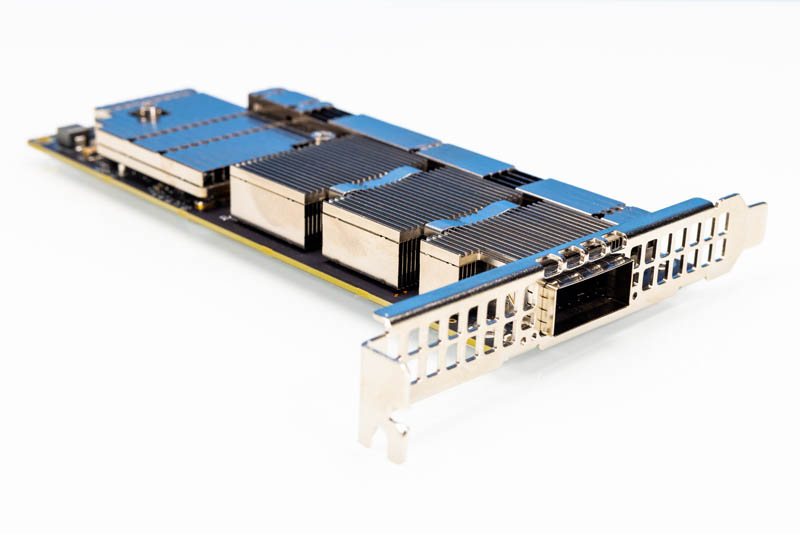
If you see AI servers with one ConnectX-7 per GPU, oftentimes that means one OSFP Flat Top module per GPU.
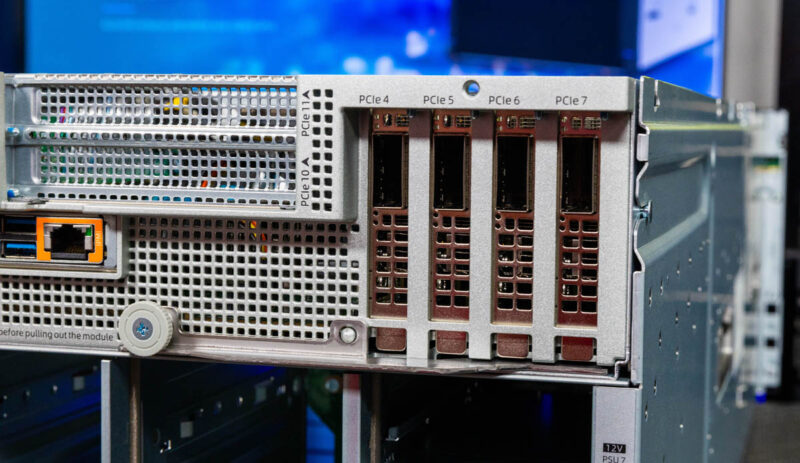
Flat top is exactly what it sounds like. Instead of having fins at the top, the modules are flat. What is important about this distinction is that the cage the modules plug into then needs to have appropriate cooling.
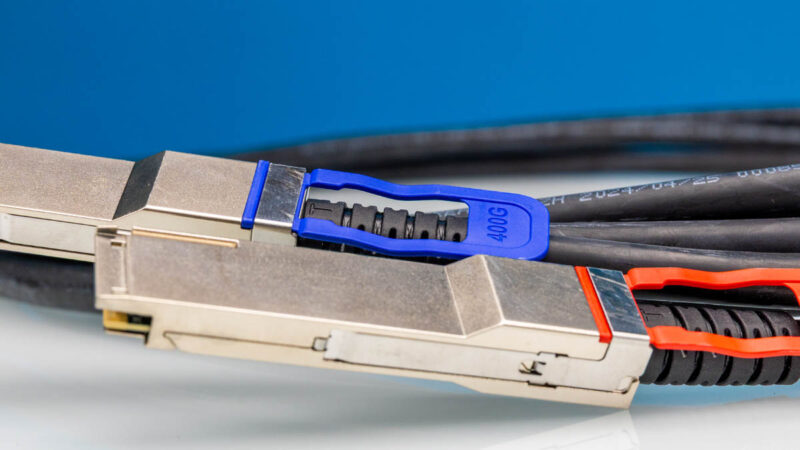
As you can probably tell from the photos, the other big implication is that since the distinction is having the fins or not having the fins, the physical cage sizes and cooling capabilities are different. Therefore, you cannot put a finned top optic in a flat top NIC.
Final Words
Since we are about to embark on a lot of higher-end networking content, we need a few reference pieces. Seeing finned and flat top optics in the realm of OSFP is common these days, but it is also a major difference between this generation and the QSFP generations. Folks are just not accustomed to having two different physical sizes when we say OSFP. 400G and 800G generations have become more complex on the physical connection side, so we thought it would be a good idea to take a few photos and illustrate the difference for folks to use later as a reference.

I’d never heard of OSFP until now, but I’m familiar with OSPF. How confusing to have both of these acronyms in the networking systems domain…
So we’ve had QSFP(quad/4), and OSFP(octal/8). Next would be HSFP? HdSFP? (hexadeca/16)
QSFP comes in 4- and 8- lane flavors already (“QSFP-DD”, double-density), so presumably we’ll see something similar with OSFP soon, as I think 16-lane Ethernet isn’t supposed to be *that* far off. Not that it matters on the server end — it takes PCIe 6.0 x16 to feed an 800 GbE link — but switch-to-switch links could use the added oomph.
It already exists and it is called OSFP-XD
https://osfpmsa.org/assets/pdf/OSFP-XD_Specification_Rev1.0.pdf