

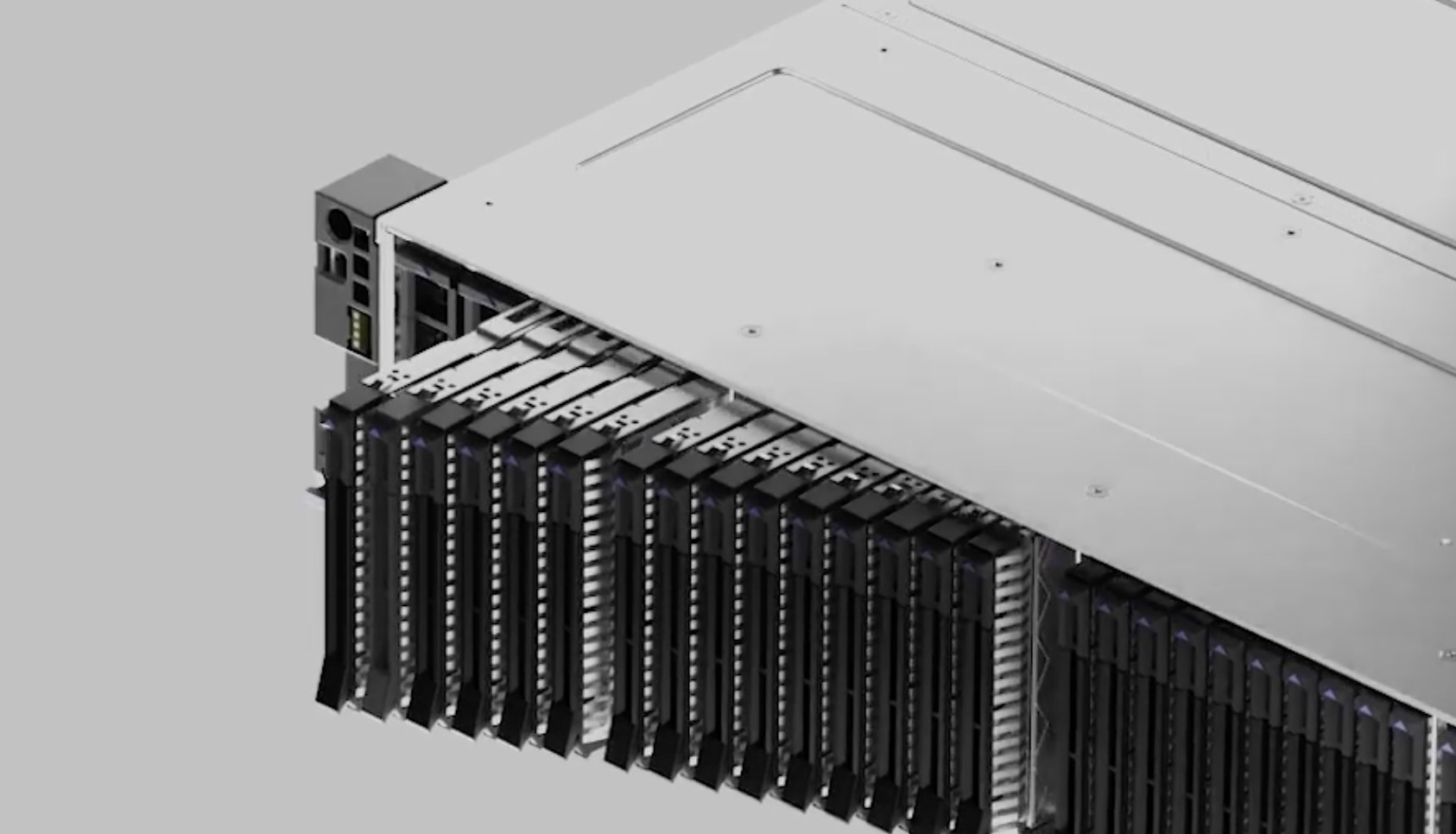
The new IBM Storage FlashSystem 5600, 7600, and 9600 arrays use EDSFF and a new fifth-generation FlashCore module to bring more capacity and performance to its arrays. Two of the arrays can support well over 1PB raw. What is more, the new arrays use FlashSystem.ai to bring agentic AI to storage administration.
New IBM Storage FlashSystem Gets an AI Infusion
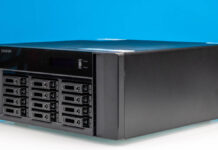
The lower end of the three new models is the IBM Storage FlashSystem 5600. This is a 1U 12-drive enclosure with two 12-core Intel Xeon’s. It also supports PCIe Gen4, which is interesting since that would make this an Intel Ice Lake generation storage array.

IBM says this can support up to 633TB of raw capacity, 30GB/s of read bandwidth and up to 2.6M IOPS.
The midrange option is the IBM Storage FlashSystem 7600. This is the 2U 32-drive enclosure. IBM says it is using two 16-core AMD EPYC CPUs, and this supports PCIe Gen5. Between the jump to AMD EPYC on the CPU side, and PCIe Gen5 on the I/O side, this is a notably more capable system.

IBM says this supports up to 1.68PB of raw capacity, 55GB/s of read bandwidth, and up to 4.3 million IOPS.
At the higher-end is the IBM Storage FlashSystem 9600. Like the FlashSystem 7600, this is a 2U 32-drive array. It also supports AMD EPYC and PCIe Gen5 with a major difference being that it supports two 48-core CPUs.
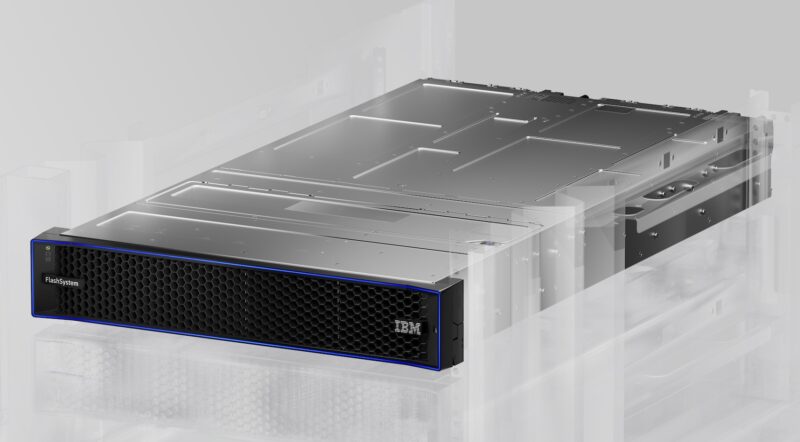
The max raw capacity is 3.37PB. With the faster system, IBM says this can support up to 86GB/s of read bandwidth and 6.3 million IOPS.
Final Words
This is going to be a trend we see in the industry. There is a lot of pressure on companies to show value from AI. IBM is embracing the trend to show how it can use agentic AI to automate routine maintenance tasks. Something similar is happening on the networking side, which will be a major theme this year.

Not mentioned: WTF is AI supposed to do in a disk shelf?
This is peak AI garbage.
This use as network storage for AI cluster.
Normal cluster computing and super computer rarely justify to make this as regular products.
They mostly build costumes storage for they need.
IBM is really agressive with pricing on these. They are still FC first and feel very much behind other vendors when it comes to ip based storage. We evaluated the previous generation of flashsystems for primary storage and went for something else. IBM in general feels very much disconnected from their old image and what it is like to work with them now.
“Two of the arrays can support well over 1PB raw.”
Two questions about this:
1. with 256TB class SSDs, that is basically saying they can handle 4 drives per array. That seems very low.
2. All but the lowest end model in the subsequent paragraphs are rated for over 1PB raw per chassis.
So why is this sentence?
This must be what the Texas Memory System guys inside of IBM have been working on lately. I’m surprised by how off the shelf the components are and software defined most of this actually is. I would have expected more proprietary hardware in the mix as they’re known for while also using that hardware to further performance. I guess things are ‘fast enough’ iwith PCIe based flash and moved toward more flexible deployments. Not a bad thing, just different coming from this group.