

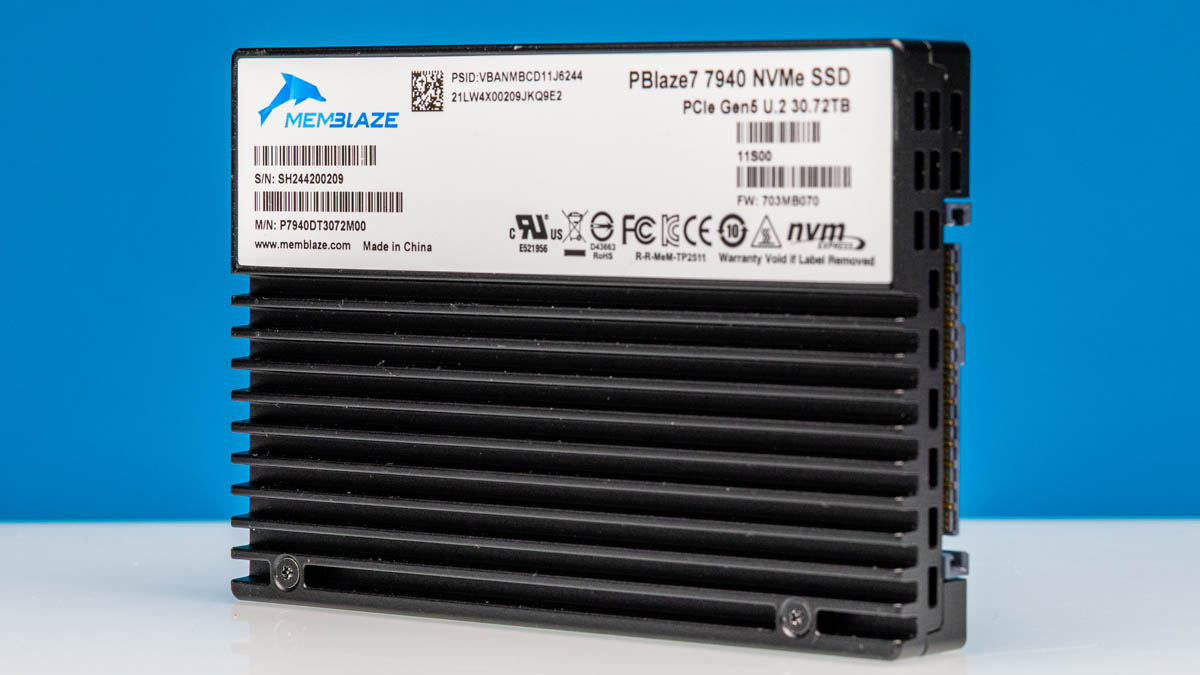
The Memblaze PBlaze7 7940 we are looking at today is a 30.72TB drive that aims to mix what has become the upper-end of mainstream capacity with solid performance for mixed workloads. In other words, the Memblaze PBlaze7 is a higher-capacity PCIe Gen5 NVMe SSD. This class of drive has been popular in AI training and inference deployments, so we thought we would take a look at it.
Memblaze PBlaze7 7940 30.72TB Overview
The Memblaze PBlaze7 7940 we are looking at is a 2.5″ U.2 design that will fit into most current servers. With the upcoming PCIe Gen6 era that we will see hit in full force in 2026, we will need to transition to EDSFF. For now though, the 2.5″ U.2 drives are a sweet spot.
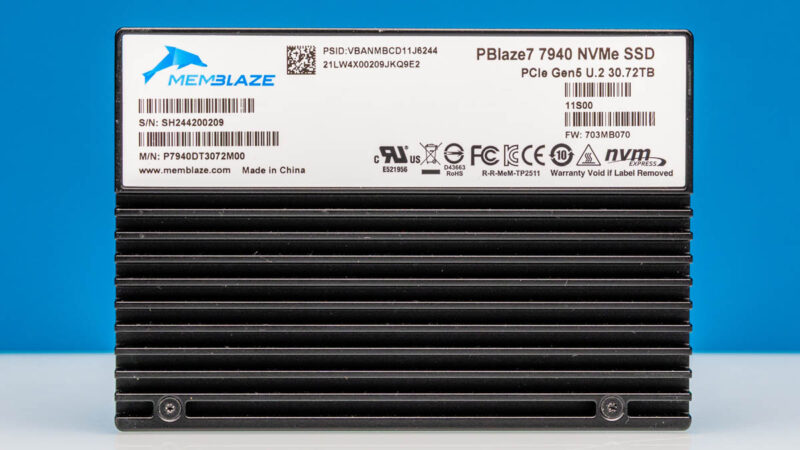
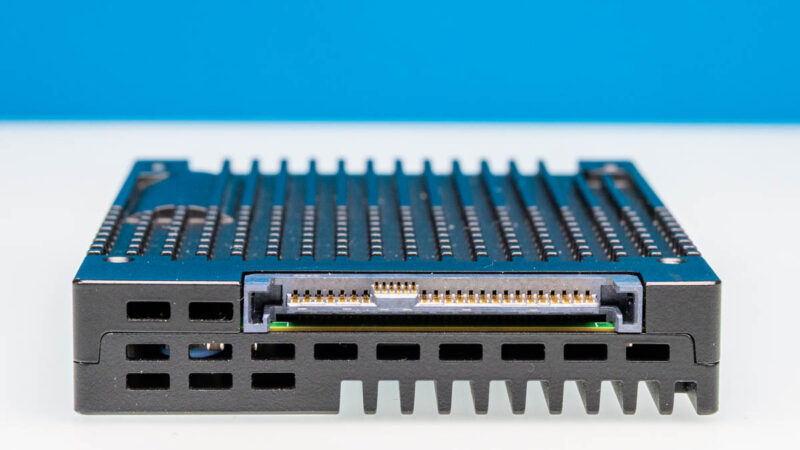
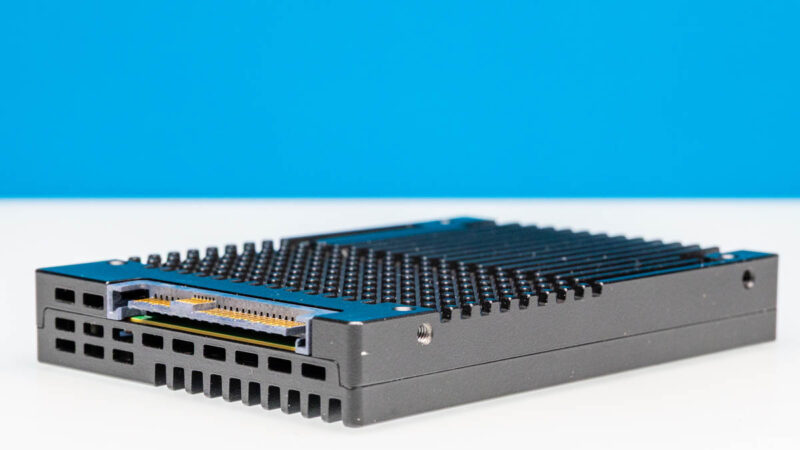
The drive itself has a lot of extra surface area dedicated to cooling. That is perhaps the most striking visual feature of the drive.
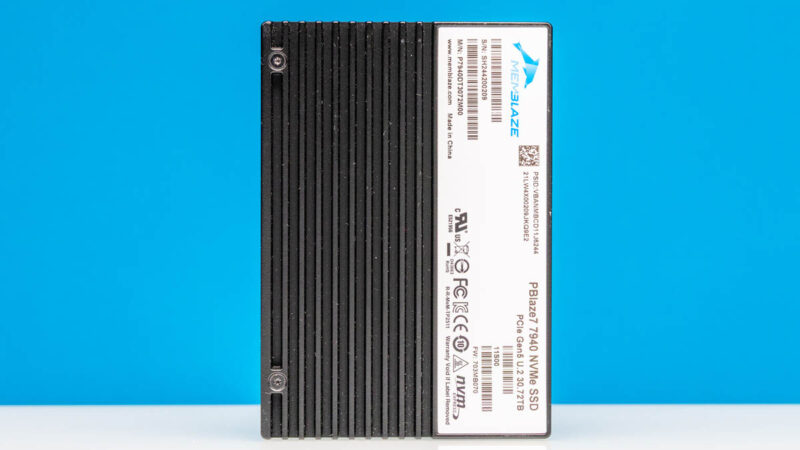
While many SSDs have flat sides, this has pronounced fins and holes for airflow.
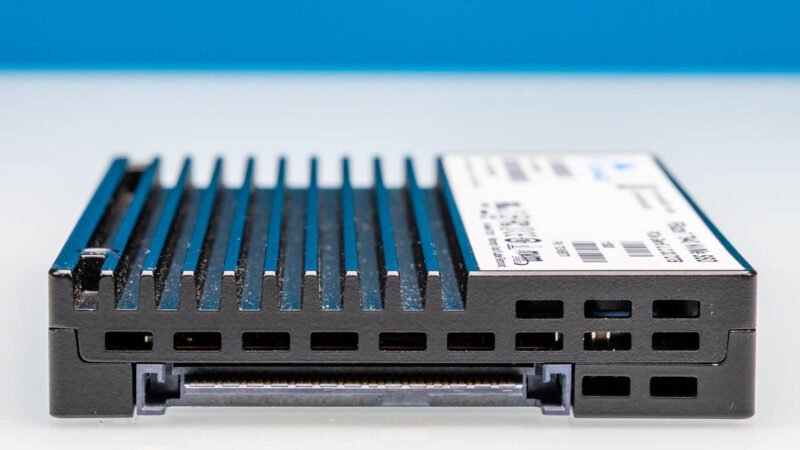
On the end, we have our power and data connections.
Here is the other side where we can see more effort to increase the surface area of the metal casing.
This is currently the top-end 7940 drive. There is a 7936 drive that is a 3 DWPD vairant, but that only goes up to the 12.8TB/ 15.36TB class. At this high of capacity, the 1 DWPD rating is fine for most applicaitons since it is over 30TB written per day. Here are the different capacities that are available from the spec sheet:
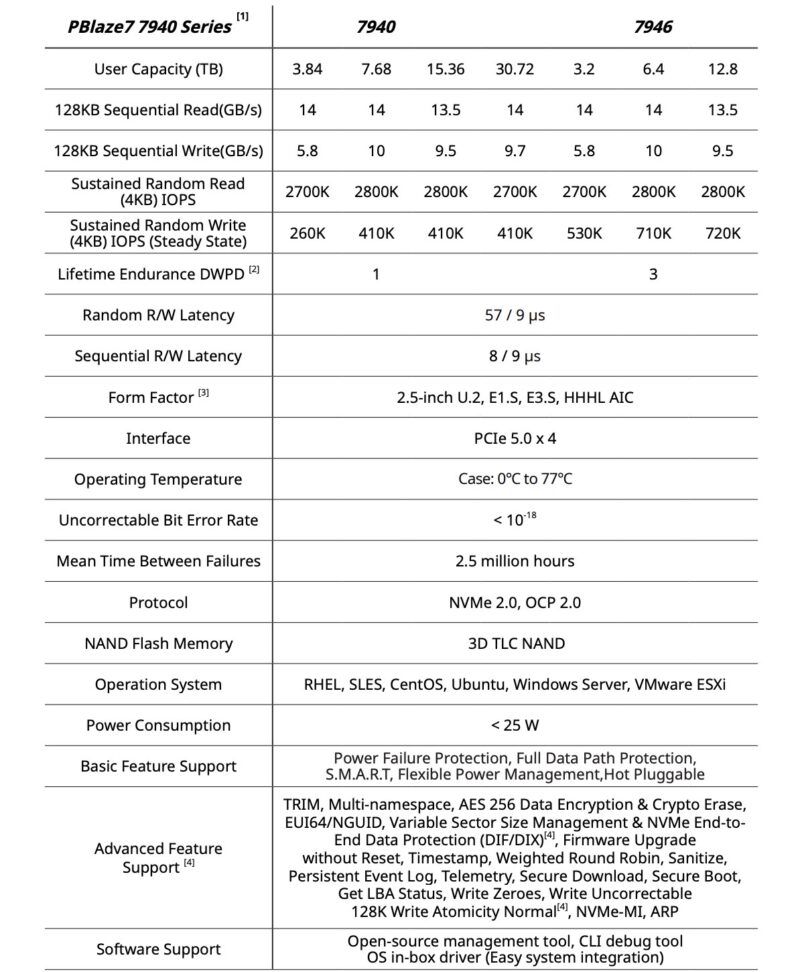
It is common these days to see different capacities show performance deltas. Luckily, at the 30.72TB capacity, the the rated performance is similar to the 7.68TB drives, albeit slightly lower. The real drop-off happens at 3.84TB capacity. It should also be noted that in this line the 3.84TB 1 DWPD and 3.2TB 3 DWPD drives are the lowest advertised capacities. This is a higher-capacity drive so smaller capacities are not the target market.
Not on the spec sheet, but this uses the Marvell Bravera SC5 MV-SS1333 controller. Memblaze’s other PBlaze7 line, the lower capacity 7A40, uses a completely different controller and NAND stack.
Next, let us get to the performance.

Yeah I don’t think I can afford this in my home lab.
How do I buy one?