
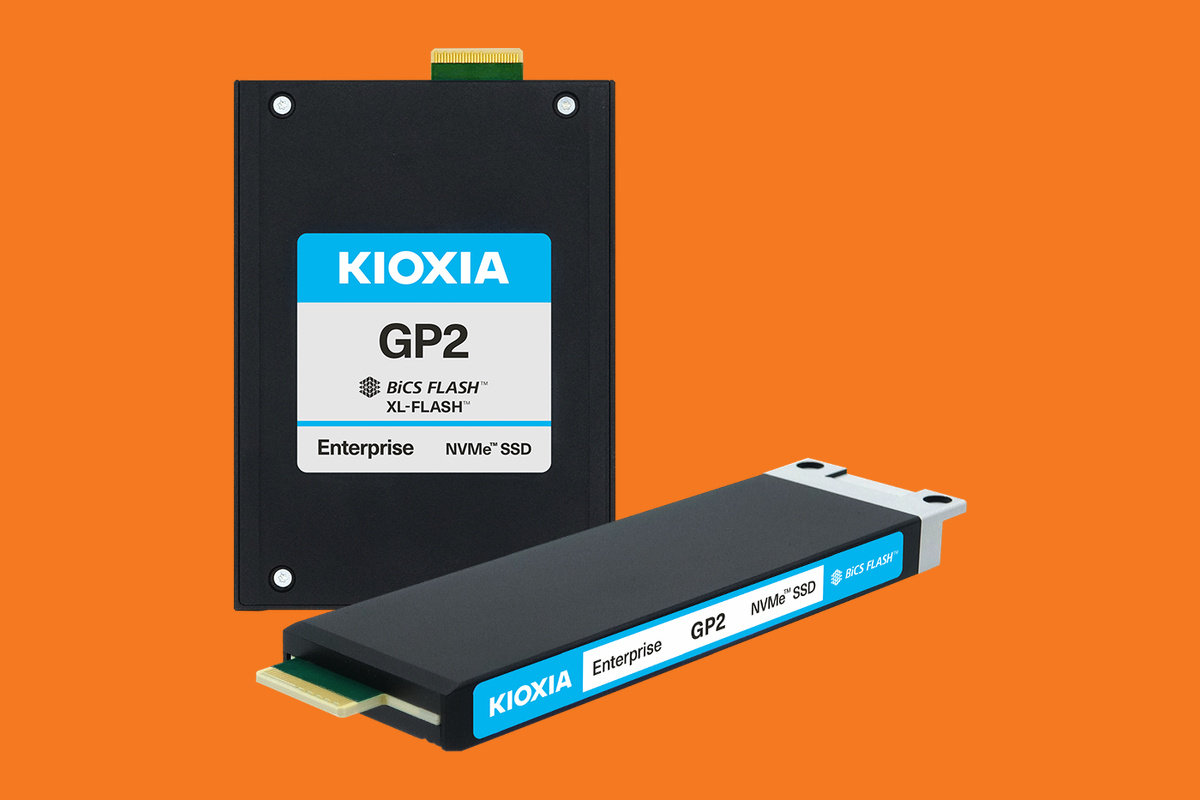
Kioxia is introducing the GP2 Series SSD, and the standout number is more than 18 million random read IOPS at a 512-byte block size. I think we actually saw a precursor to this drive a few weeks ago. 18M IOPS is nearly double the performance of the GP1 Series Kioxia showed in August at FMS. The new drive is designed for PCIe 6.0 and NVMe 2.3, and Kioxia says it is also expecting sequential read throughput of up to 28GB/s, enough to saturate a PCIe 6.0 x4 link.
Kioxia GP2 Series Launched
The GP series is designed for a specific role in AI systems. Instead of adding more expensive HBM or DRAM to a GPU system, operators can use these NAND-based drives to create a flash-based memory tier the GPU can access directly. This lets the system handle larger datasets at a lower cost. Whenever you try to replace DRAM with NAND, endurance becomes a question. At 50DWPD, the GP2 is a step above many of the common capacity-focused drives.
| Kioxia GP2 Series | |
|---|---|
| Interface | PCIe 6.0 / NVMe 2.3 |
| Flash Memory | Kioxia XL-FLASH generation 3 |
| Random Read Performance | More than 18 million IOPS at 512-byte block size |
| Expected Sequential Read Throughput | Up to 28 GB/s |
| Endurance | Up to 50 DWPD |
| Form Factors Under Consideration | E1.S 9.5 mm and E3.S |
| Cooling | Direct liquid cooling support |
Kioxia is using its XL-FLASH generation 3 memory in the GP2. The company says this low-latency flash is better suited for the fine-grained data access needed for memory expansion than typical TLC-based SSDs. Kioxia also claims XL-FLASH generation 3 provides higher endurance and about 2.5x the IOPS of its own TLC-based CM10 Series SSDs at a 512-byte block size.
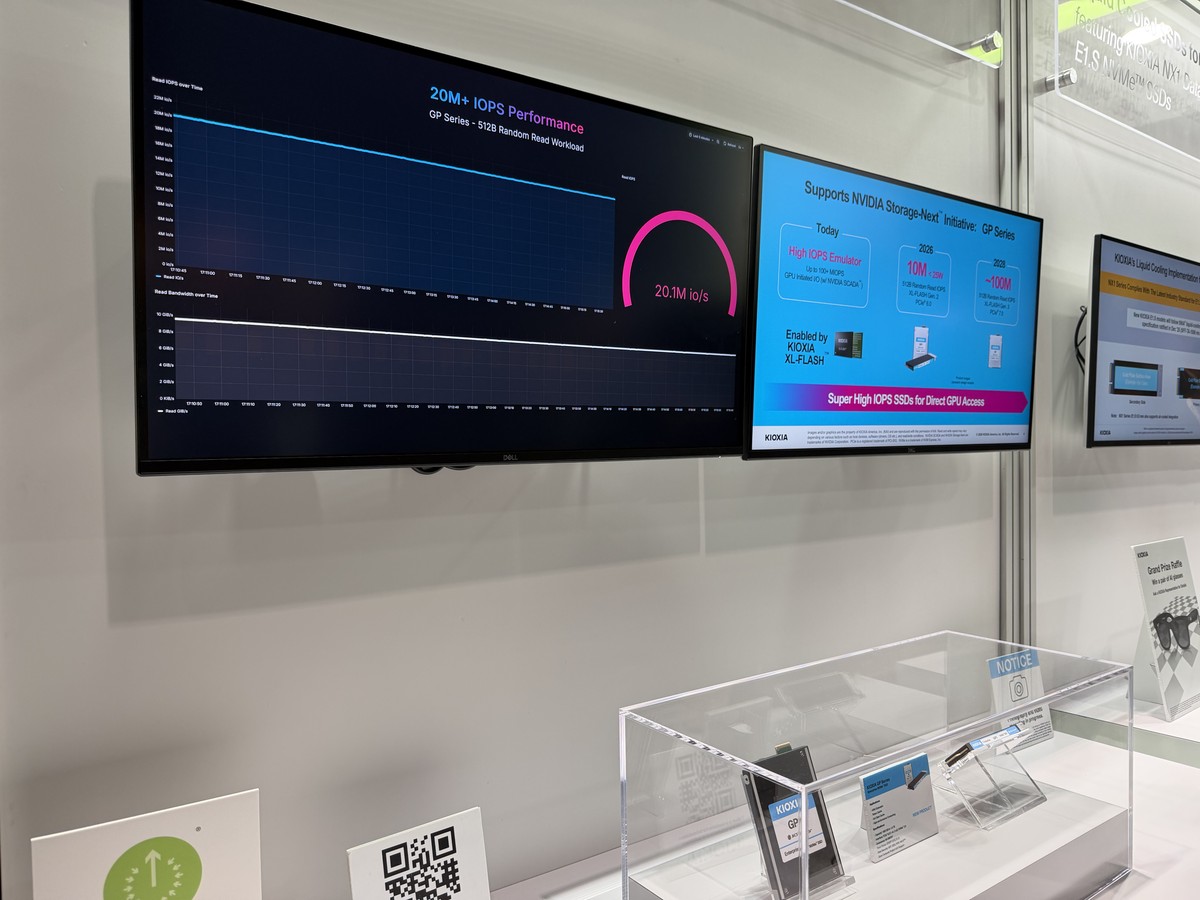
Kioxia previewed its next-generation GP series at OCP Summit 2026 in the demo above, with a 20M IOPS system running live. The company says future generations will target up to 100 million random read IOPS, but we are not there just yet.
Final Words
Kioxia says evaluation GP2 samples will be available to select customers by the end of 2027, so this seems a bit further out. We are starting to see more PCIe Gen6 systems, as you may have seen in our recent AMD EPYC 9006 Results Are Here and AMD Delivers a Knockout Part Deux piece, where we had both AMD and NVIDIA PCIe Gen6 systems. Hopefully, we will get to try these out when they ship.
Of course, happy Thanksgiving to those in the US.