

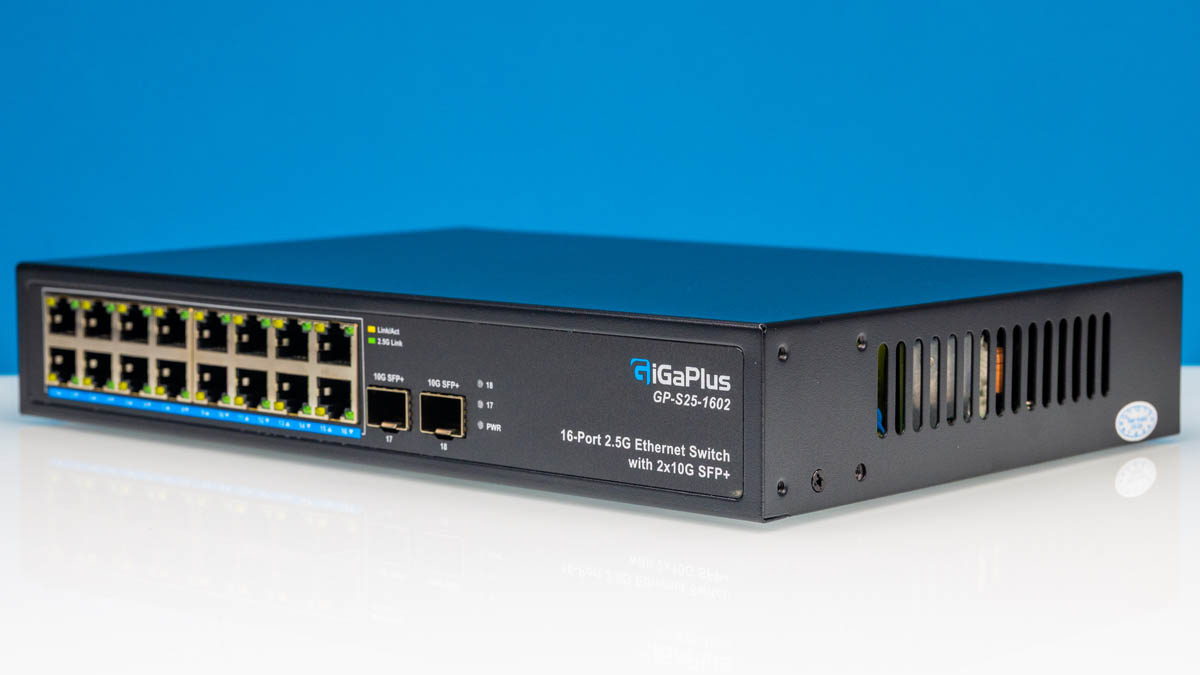
This is one of those switches that we saw, thought, “we need to review it,” and were surprised by what we found. The GigaPlus GP-S25-1602 has sixteen ports of 2.5GbE, two ports of SFP+ for 10G connectivity. As an unmanaged silent switch for $160-170, it seemed like a big upgrade over one of our favorite 8-port switches, the Gigaplus GP-S25-0802 8-port 2.5GbE and 2-port 10G we reviewed. At the same time, we opened it and it was built differently than we were expecting.
Update 2025-09-10: We covered this one in a video:
We purchased our review units on Amazon. Here is an Amazon Affiliate Link to the listing we purchased from.
GigaPlus GP-S25-1602 Hardware Overview
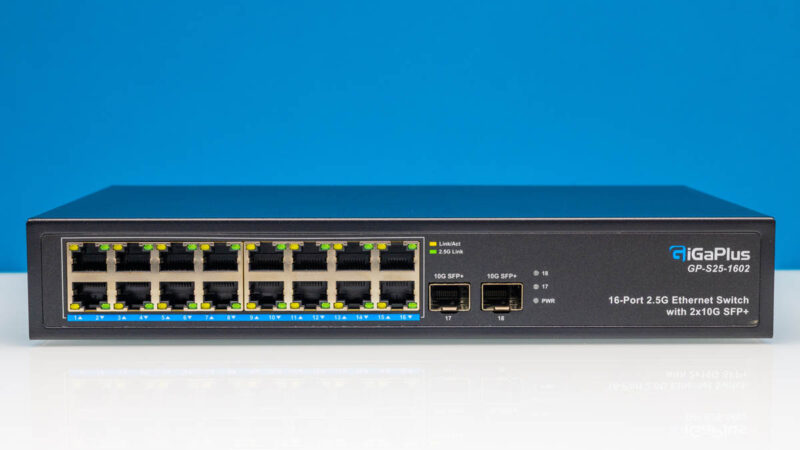
The switch itself is a typical 1U form factor, albeit not wide enough to fill the width of a 19″ rack. Also, one could add rubber feet to the bottom and use this as a desktop switch given the fact that it is low power and silent.
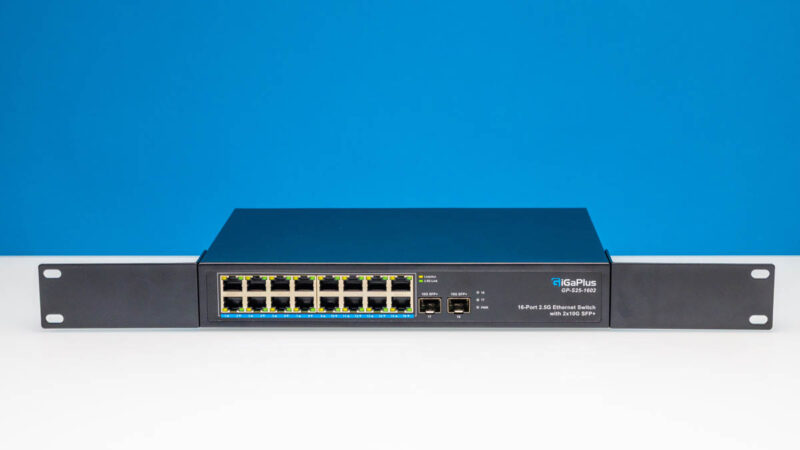
Here is the switch with the 1U rack ears attached. Unlike some other cheap switches we have tested, these rack ears are the proper width.
The big feature is the 16 ports of 2.5GbE found on the switch. This is a big upgrade for those who find the 8-port switches like the Gigaplus GP-S25-0802 8-port 2.5GbE and 2-port 10G we reviewed too limiting.
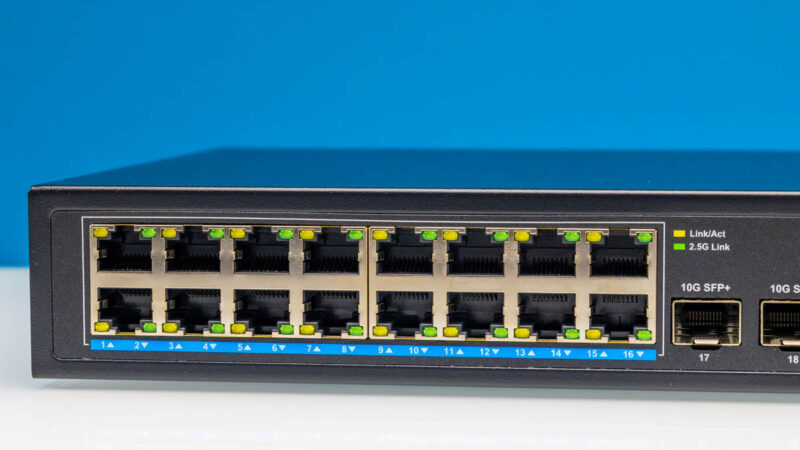
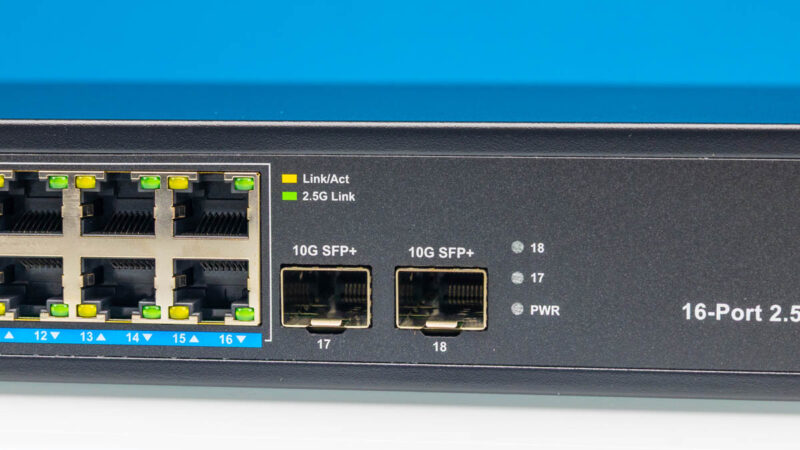
Here are the two SFP+ 10G ports. As we will see later, the way the ports are physically laid out on the faceplate is not aligned perfectly with how the internals are connected, which is one of the reasons we found something strange in testing.
On the side of the switch, we get the mounting holes for the rack ears.
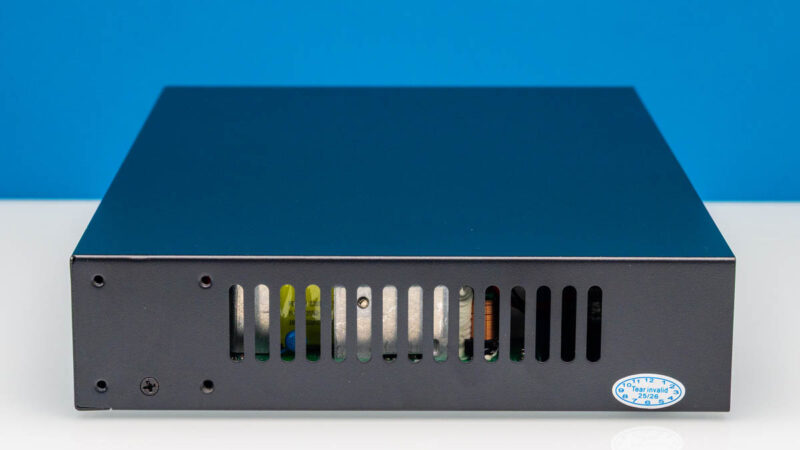
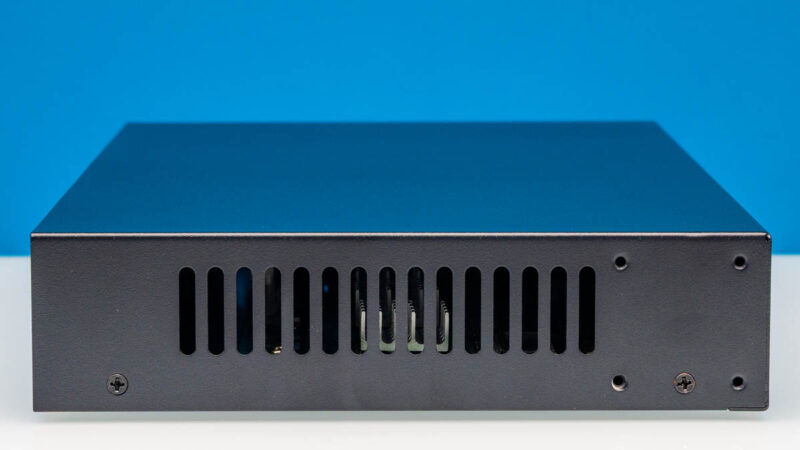
On both sides of the switch we get vents for airflow, but no fans.
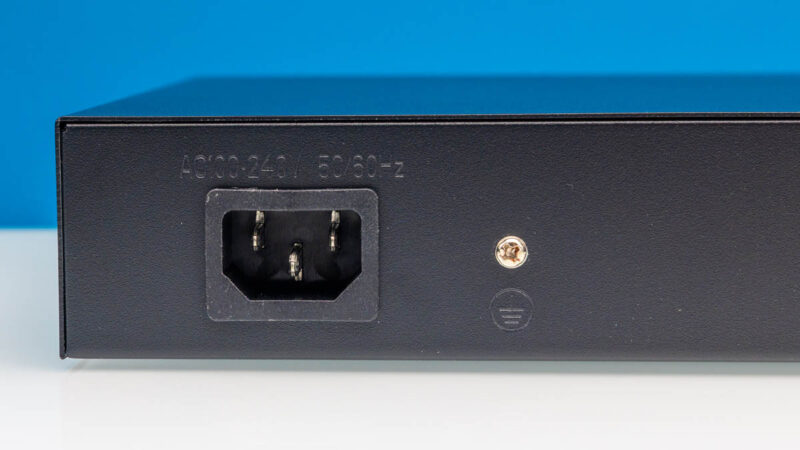
On the rear, there are also no fan ports.
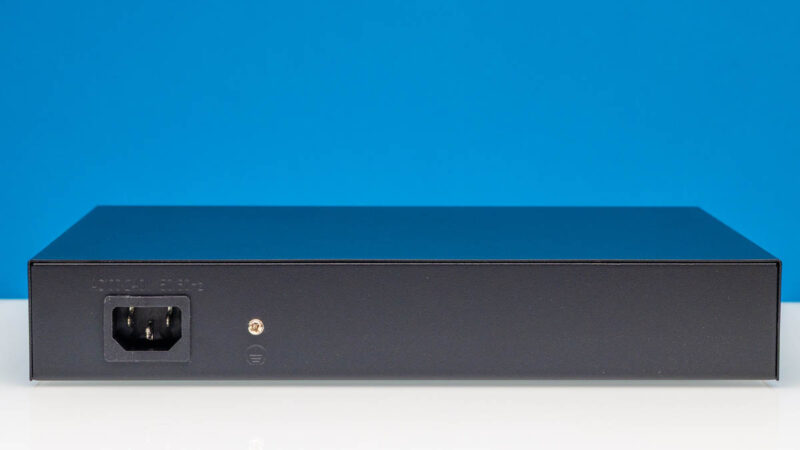
Instead, we have an AC power input for the internal power supply and a grounding point.
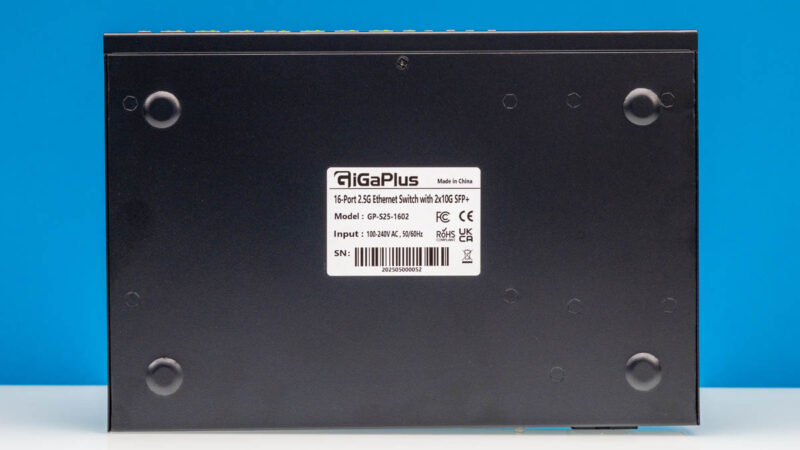
Here is the bottom of the switch with the label. You can also see that there are raised portions for feet, but these are metal. The switch did not come with rubber feet. We wish that it did just so it does not scratch a desk.
Inside the switch, we see a fairly simple layout.
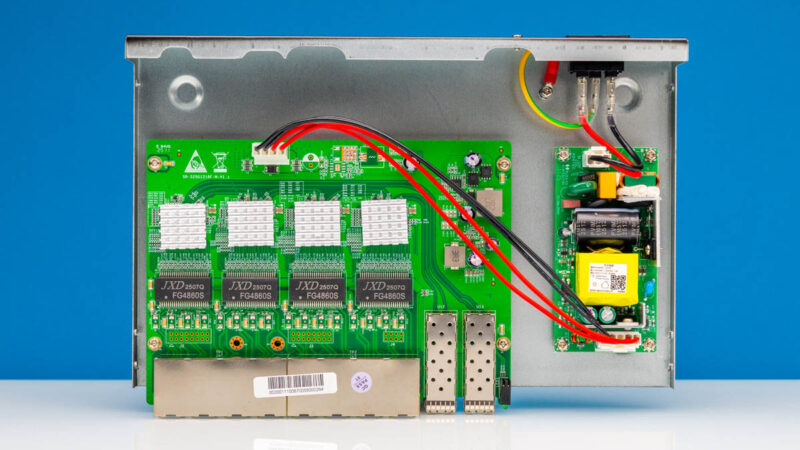
On one side we have the internal AC to DC power supply.
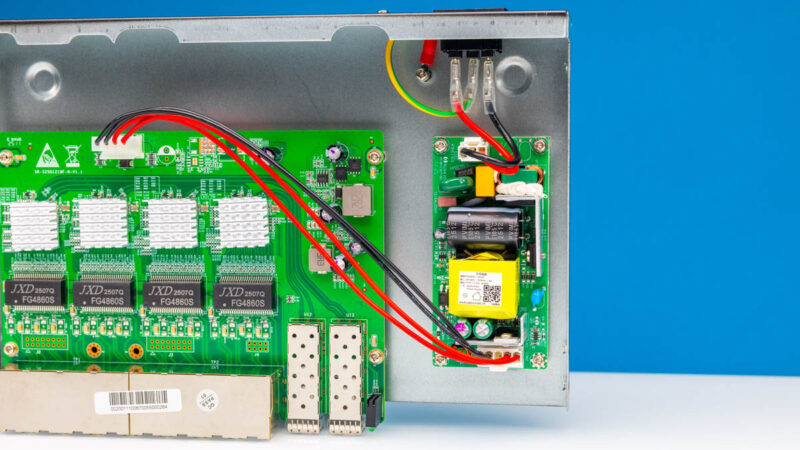
Then we have the main switch PCB.
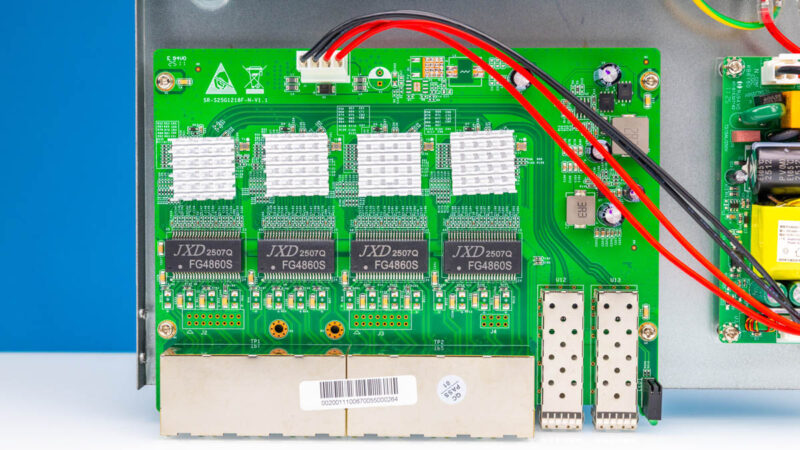
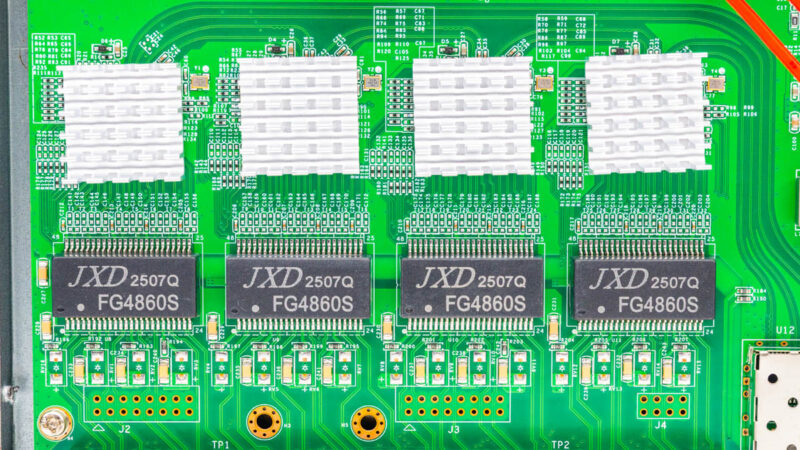
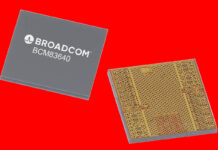
We could not get the heatsinks off due to the glue used, and us wanting to preserve the switch for testing. Our best guess is that instead of a single larger switch, we have four smaller 30Gbps switch chips like the Realtek RTL8373-CG. Each is responsible for four 2.5GbE ports, and then each has two additional 10Gbps links to other parts of the device. We will get into this more in the performance section.
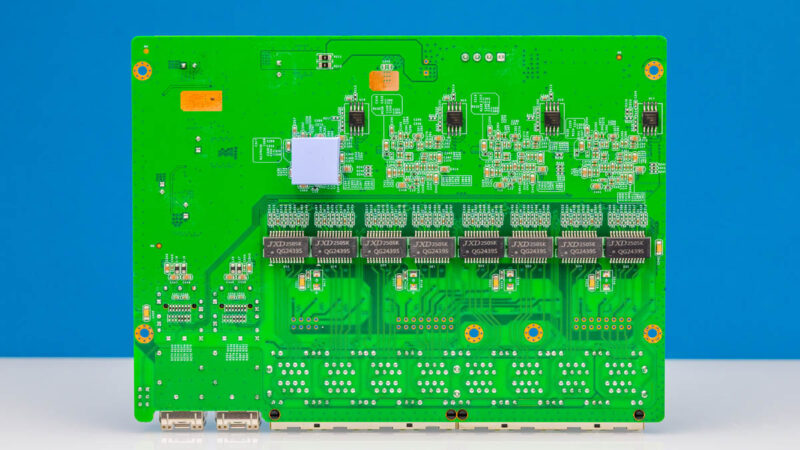
We pulled the switch board out, and here is the bottom for those who want to see that detail.
Next, let us get the switch up and running to see how this hardware design impacts the operation.

3×10 does not equal 30 in switching.
The max traffic that can pass is 10G, as one can see in the diagram. That being said, this looks to be fine for the SOHO marketplace. The lack of MGMT though is unacceptable these days.
Hey all – see the Editor’s Note at the end. We had to do a database server restore from backup. It should all be working now. Thank you to Rohit for getting this one back online this morning.
This really just seems like four of those cheap Chinese 4*2.5G + 2*10G SFP+ switched glued together. Which isn’t necessarily a bad thing, because it also makes it very power efficient and silent and I’m sure it won’t be a problem for quite a few people. However, it should be made clear on the packaging that it has some quirks with certain use cases.
This looks like a great option for me at home. I will likely never approach saturating the total capacity of a switch. But when I’m doing point to point transfers, I want the higher speeds of 2.5g. I’m also considering 2.5 for my wireless APs since my ISP is already pushing beyond gigabit speeds.
Curious how the performance of this would compare to having two of the 8×2.5g switches connected via 10g SFP. I’m assuming it would be pretty similar based on my reading of the article, no?
2.5G in 2025, not good enough, we should be on 10G ethernet managed switches now, for home/soho, the industry is just dragging it’s feet.
Honestly the low bandwidth wouldn’t bother me too much in a home context, but I can’t really see spending $150+ on an unmanaged switch without vLAN support. I suspect that most home users interested in dedicated networking gear would have similar concerns.
Does this switch at least pass VLAN-tagged packets through? Some unmanaged switches outright drop all tagged packets.
As an unmanaged switch, is there an equivalent for an equivalent PoE for a home setup for 12x CCTV cameras back to an NVR?