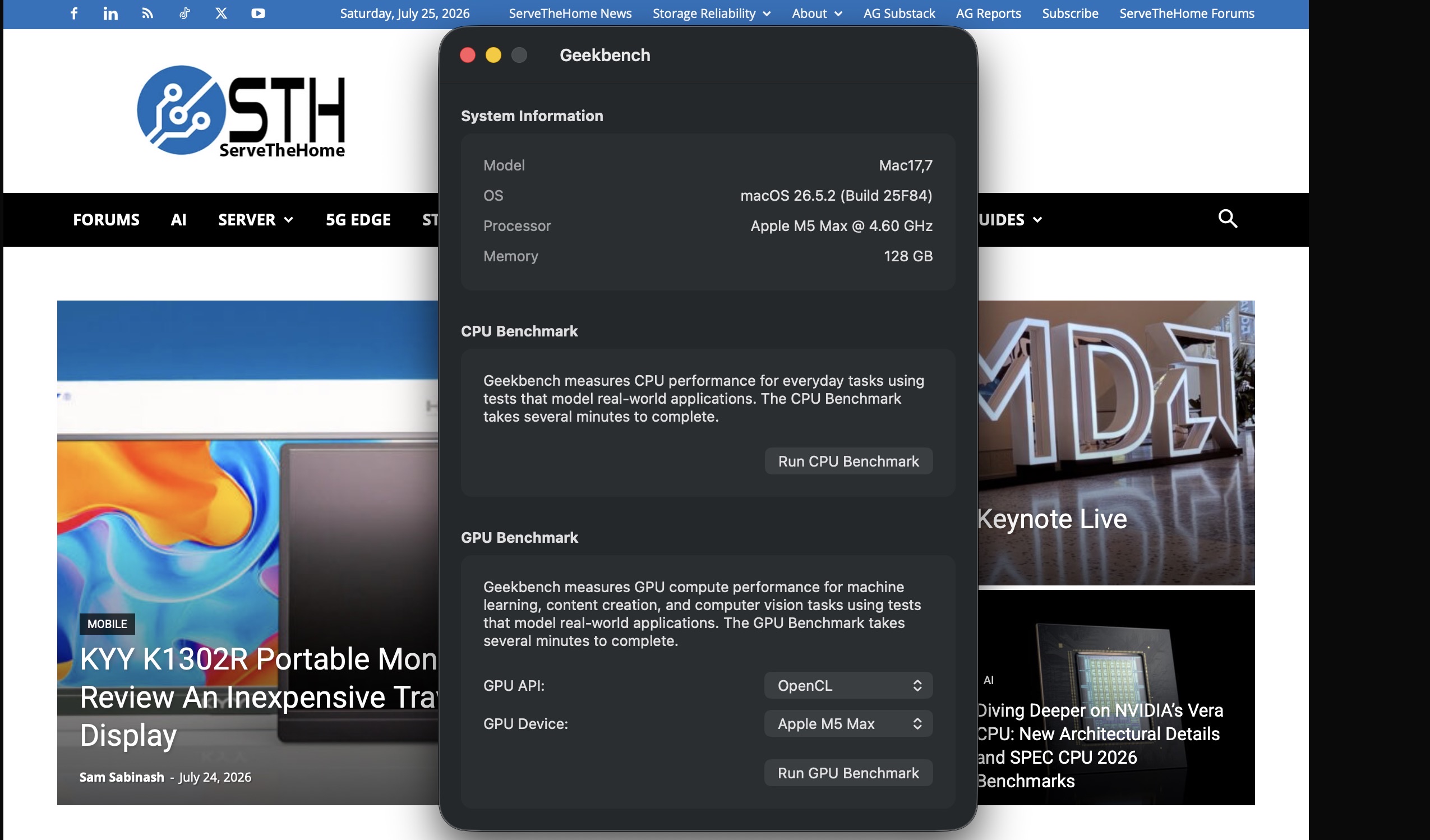
The popular Geekbench platform has a new version. Geekbench 7 is now out, and at STH, we have been trying it for the past few days. We thought it was time for a quick post after this week’s AMD Advancing AI 2026. The new version has updated CPU and GPU benchmarks along with NVIDIA CUDA support.
Geekbench 7 is Out
One of Geekbench’s biggest strengths is that it is both very easy to use and cross-platform. We have already seen versions for Windows, Linux, macOS, and Android. We also found Linux preview versions for Arm and RISC-V. Geekbench 7 results do not match Geekbench 6 results. The CPU scale is anchored at 2,500 by a Lenovo Legion carrying a Ryzen 7 7700. The GPU scale is set to 100,000 by that same laptop with a GeForce RTX 4060 inside.
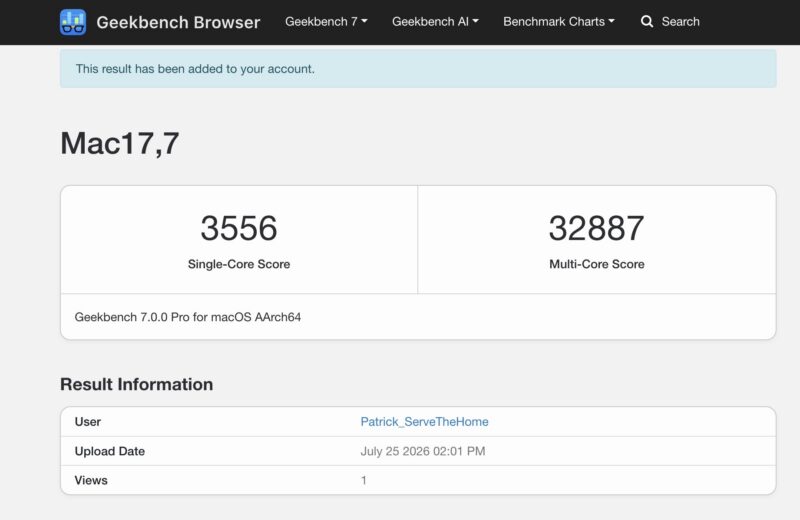
The most visible addition is a media group in the CPU suite, built on the premise that calls, streaming, and playback now dominate how people use a machine. The single-core and multi-core test suites are now quite different. Also, the carryover tests grew in size. File Compression now runs three archives, holding source, object code, and text, across LZ4, zlib, and Zstandard, with SHA1 verification. PDF Viewer renders six documents through PDFium, the renderer inside Chrome. Photo Library adds JPEG-XL and DNG alongside JPEG, tags images with MobileNetV1 SSD, and files the results in SQLite. Photo Editor works across ten images with a wider spread of adjustments. There are other parts that look similar to Geekbench 6. OpenStreetMap routing, a headless browser over eight pages, Clang building Lua, Python 3.13 turning 190 Markdown files into HTML, Blender Cycles ray tracing, and Jolt physics all seem familiar.
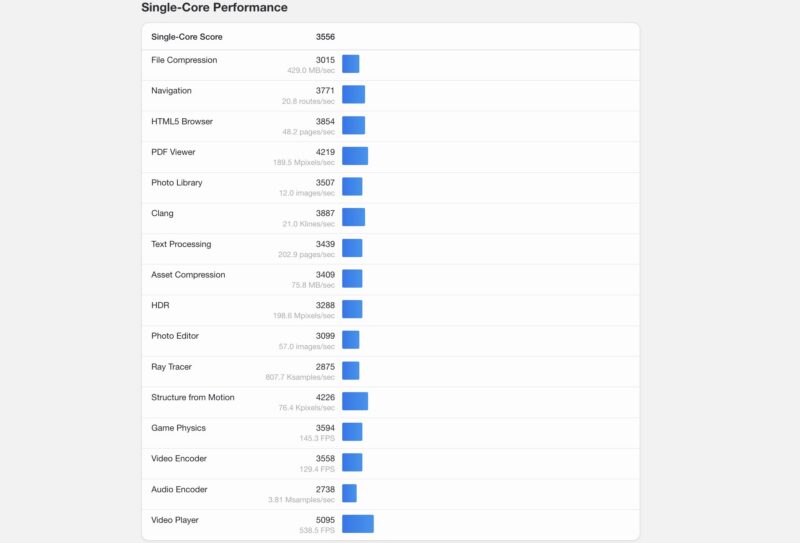
Video Encoder pushes desktop captures, with synthetic cursor motion drawn over them, through the AOM AV1 encoder, standing in for a screen share on Zoom or Teams. The Audio Encoder encodes 2 minutes of music and speech using Opus. Video Decoder is the most interesting of the three because it chains four jobs into the score, including unpacking an AV1 stream, decoding the Opus track, resampling it, and feeding the result to Whisper for captions.
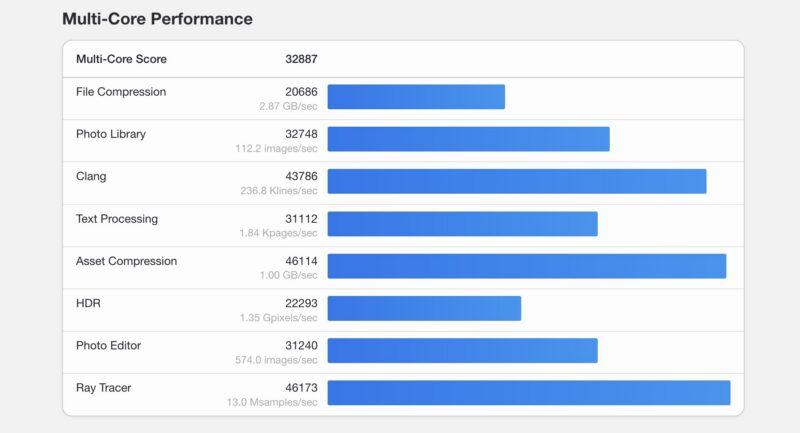
Just to be clear, Geekbench 7 is not really a strict throughput benchmark, which makes multi-core numbers not scale as well as something like a SPEC CPU2026.
On the GPU side, there are also major changes.
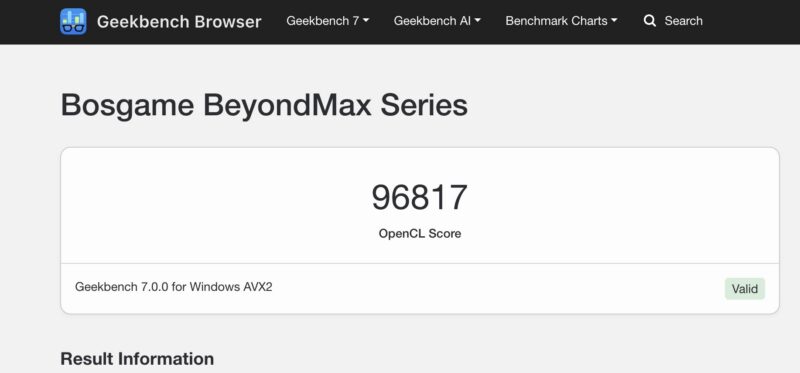
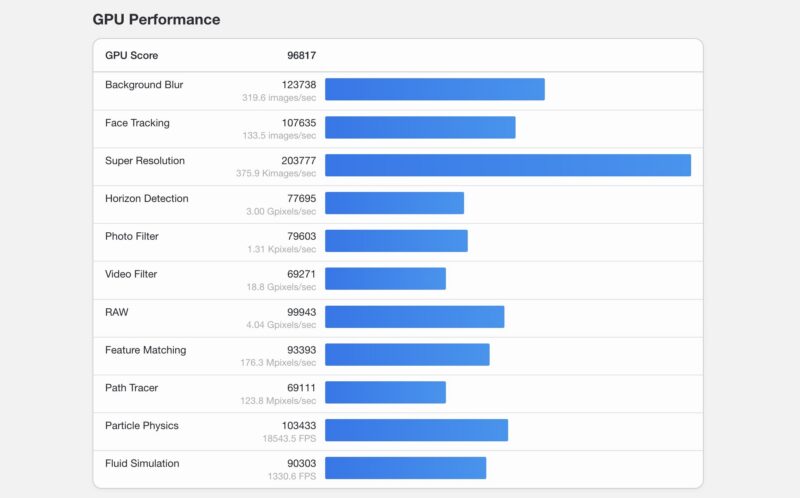
The GPU benchmark now leans toward machine learning plus creative work: DeepLabV3+ for call background blur, RetinaFace for face filters, and RFDN scaling a 256×256 tile up to 1024×1024. Editing, horizon straightening, photo filters, LUT color grading with tetrahedral interpolation, and a RAW pipeline that handles noise, color, and demosaicing. Synthesis adds feature matching and a path tracer on the Blender BMW scene, and two simulations round things out. The practical news is CUDA, which lets NVIDIA parts run natively rather than through a translation layer, and widens what can be compared.
We have noticed that if you upload a Geekbench 7 result to the results browser and add it to your account, the account page does not ye display the results. Hopefully, that will be fixed soon since it makes comparisons easier. Our tip for now is to save the URLs of results you submit so you can access them later.
Final Words
Geekbench 7 is less new math than new assumptions about who is being measured. The multi-core redesign in particular makes clear that this is a benchmark tuned for phones, laptops, and modest workstations, where a handful of fast cores handle interactive work. It is not built for high-core-count workstations or servers since the multi-threaded workload is not really a throughput or multi-tenant workload. Still, you should expect to see us integrate Geekbench 7 results into STH reviews over the coming weeks.