

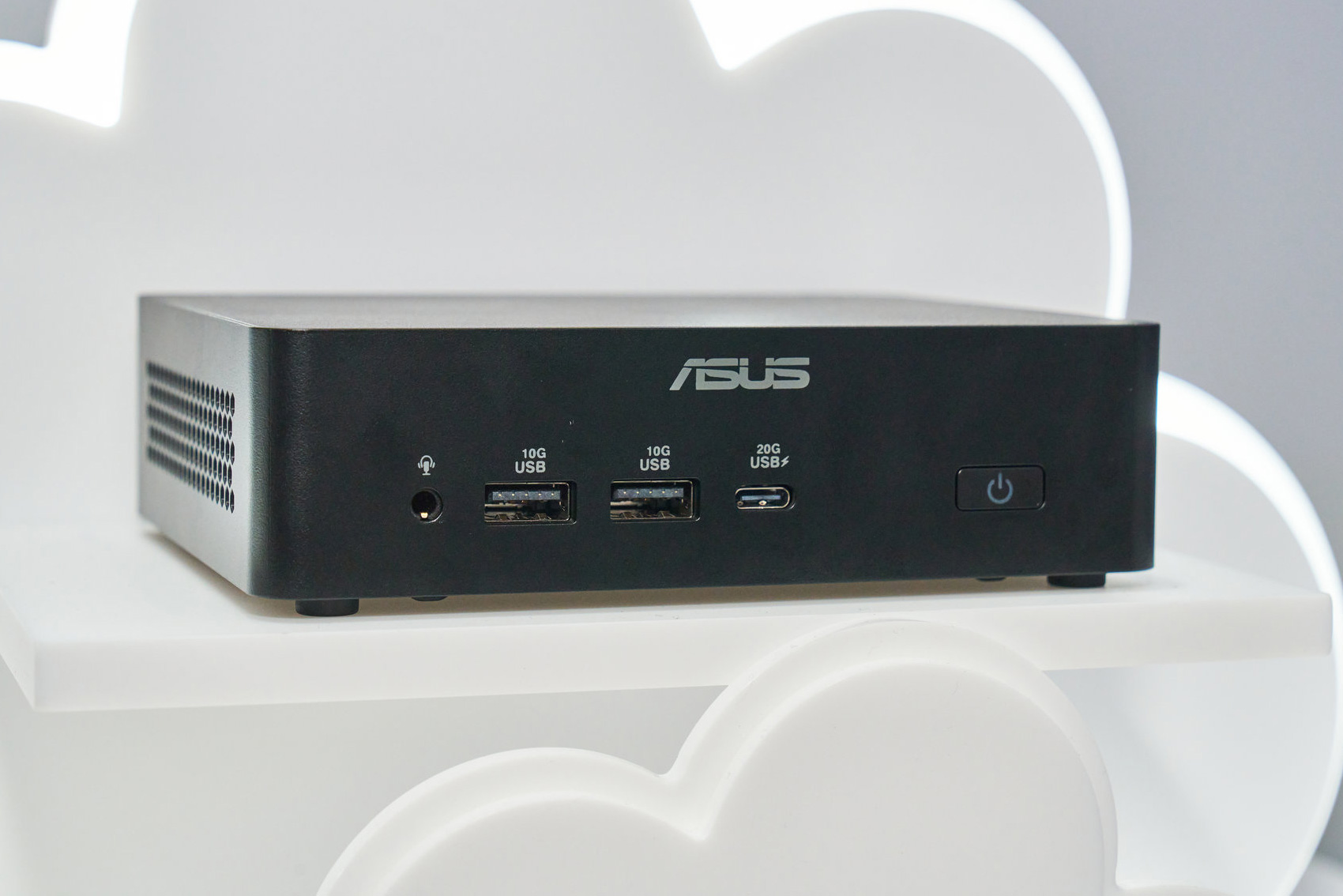
Back in 2013, Intel introduced the Next Unit of Computing (NUC) form factor for ultra-small PCs. The 4-inch by 4-inch motherboard form factor never became a smash hit, but it has persevered over the years thanks to its uniquely small size even amidst a market full of mini-PCs.
These days, the NUC banner is held by ASUS, which acquired the product line from Intel in 2023. Since then, ASUS has continued to update and iterate on the NUC design, producing new NUCs based on Intel’s recent run of mobile processors, including Lunar Lake, Arrow Lake, and, most recently, Panther Lake. At this year’s Computex 2026 trade show, the company was showing off its recently launched NUC 16 and NUC 16 Pro boxes, which incorporate the tag-team duo of Intel’s Core Series 3 (Wildcat Lake) and Core Ultra Series 3 (Panther Lake) processors.
ASUS NUC 16
First up, we have ASUS’s base model, the vanilla NUC 16. This system is based around Intel’s Core Series 3 processor, which launched a couple of months back.
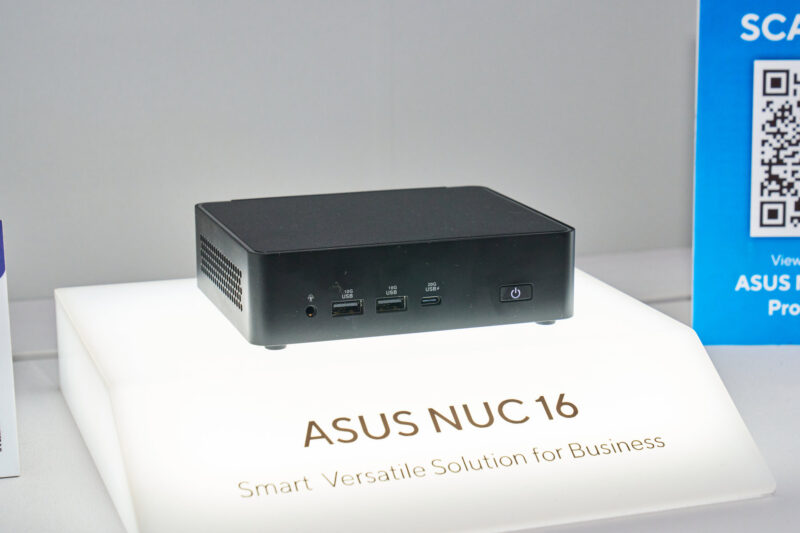
For the fully-equipped mini-PC, ASUS is offering a single configuration with the Core 7 350, which is Intel’s top Wildcat Lake chip. This means it comes with 6 CPU cores, 2 P-cores and 4 LPE-cores based on Cougar Cove and Darkmont, respectively, along with modest Xe3 architecture Intel Graphics iGPU with 2 Xe cores. The power needs of this CPU are similarly low as well, with ASUS running the chip at a cTDP of 28 Watts.
Of note, Wildcat Lake only supports a single channel (64-bit) of memory. So the NUC 16 only includes a single CSO-DIMM and furnished systems coming with 16GB or 32GB of DDR-5600 memory, depending on the SKU.
But what Wildcat Lake lacks in raw computational power, it makes up for with a slate of modern architectures across the board, including I/O connectivity. Which means ASUS has been able to give the budget NUC a reasonably powerful collection of connectivity options. On the front of the system is a set of 10Gbps USB-A and USB-C ports, as well as the ubiquitous combo audio jack.
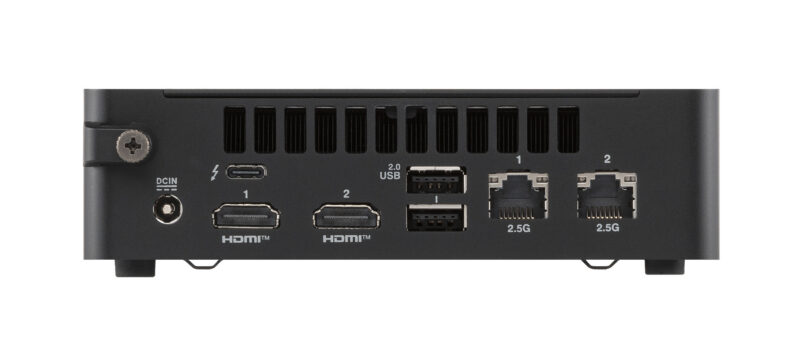
Meanwhile, on the back of the system is a full 40Gbps USB-C/Thunderbolt 4 port driven by Intel’s integrated TB4 controller. Joining that is a pair of HDMI 2.1 display outputs, a pair of 480Mbps USB-A ports, and then a pair of 2.5Gb Ethernet ports driven by Intel’s I226-V controllers.
Not pictured is the wireless connectivity; the mini-PC offers Wi-Fi 7 and Bluetooth 6.0 courtesy of Intel’s BE211 adapter.
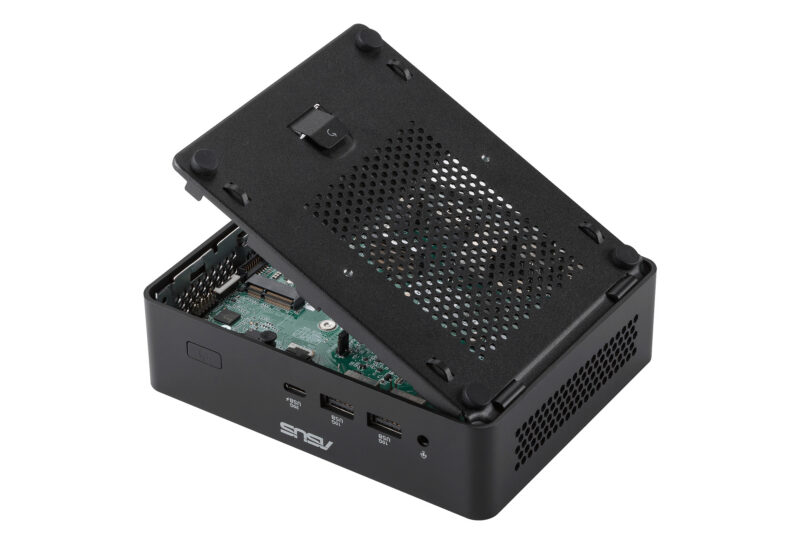
Internally, the system offers a single M.2 2280 slot, which is wired up to the CPU via a PCIe Gen4 x4 connection. ASUS’s furnished SKUs offer anywhere between 256GB and 1TB of storage, depending on the SKU. Otherwise, one notable feature here is that ASUS is touting the NUC as offering a toolless chassis, which allows the bottom of the system to be opened up in seconds for quick SSD and memory upgrades.
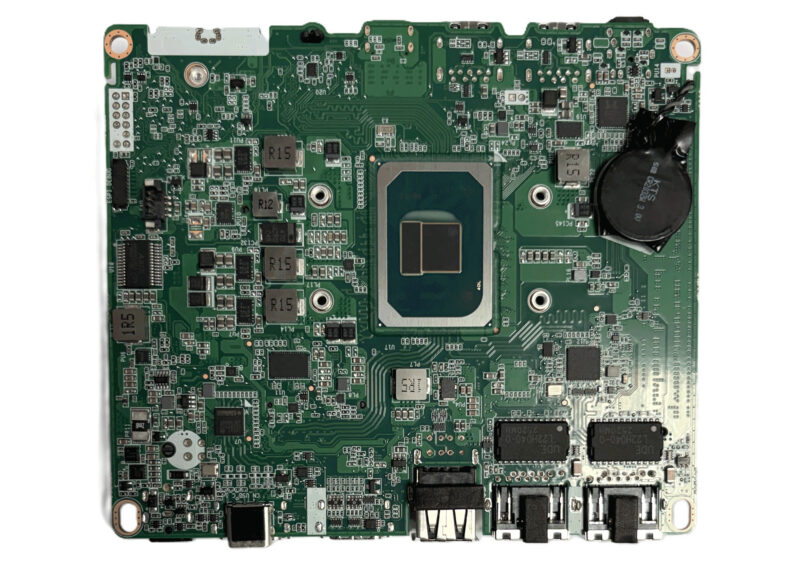
Finally, the NUC 16 is being offered in three different forms. Alongside a fully-equipped mini-PC configuration, ASUS is also offering the NUC 16 as a barebones kit that foregoes the memory, storage, and operating system. Given current memory prices, it is a coin flip whether this is a boon, but it is a traditional option for the NUC lineup. Otherwise, the bare system board itself is also available for customers who want to build out their own systems from the 4-inch by 4-inch motherboard.



Thunderbolt 5 was announced on September 12, 2023 you guys, come on.
Also, I assume none of these support real ECC RAM like I have in my NUC 9 Pro from 2020? ( https://www.servethehome.com/intel-nuc9vxqnx-nuc-review-xeon-quartz-canyon/ )
These NUC’s make great little NAS boxes, but I have a Thunderbolt DAS array running ZFS I want to plug into the thing, and I’m just not feeling like an upgrade without the ECC/TB5.
Note that Thunderbolt 5 currently requires a discrete controller. Intel has yet to integrate it into their PCHes. There are boxes that do integrate it, but it is typically positioned as a premium feature.
Soldered ram in a desktop, hard pass.