

AMD Helios Networking Tray
The networking counterpart to Helios’s compute trays is its six switch trays. With 72 GPUs and their links providing far too many connections to directly connect each GPU to all the others within a system, Helios relies on these switch trays to provide all-to-all connectivity between the processors.
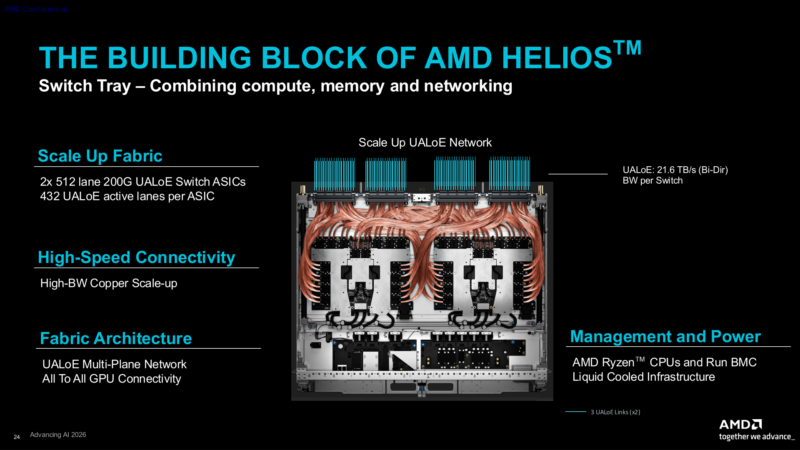
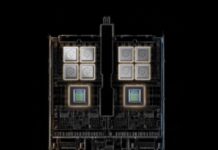
The core component of the switch trays is a pair of Broadcom Tomahawk 6 (BCM78910) switch ASICs, which offer 512 lanes running at 200Gbps. With 432 lanes per switch ASIC, a single tray has a cumulative bandwidth of 21.6 TB/second.
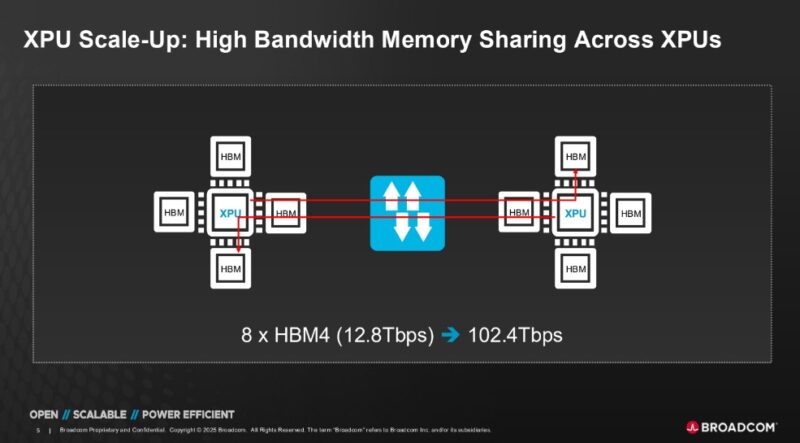
One key design feature of Helios’s scale-up network is its all-copper architecture. Like the industry’s other major players, AMD is holding off on optical networking as long as possible to keep costs and power consumption down. That means that both the switch trays and the associated cable cartridges are fundamentally very large collections of low-loss copper networking cables.
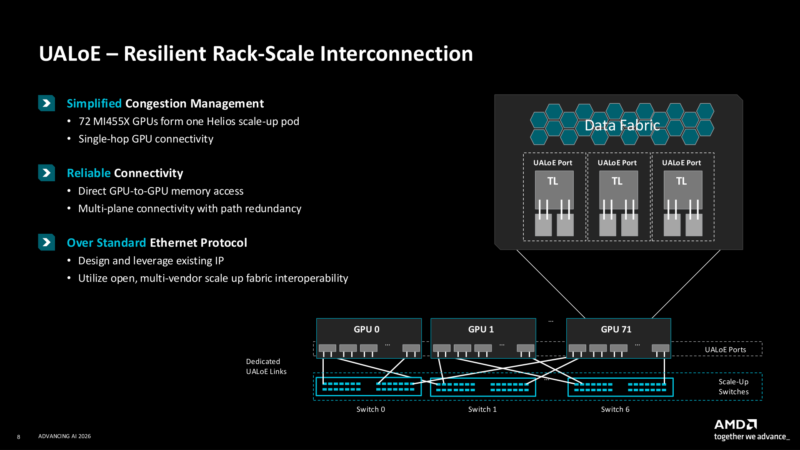
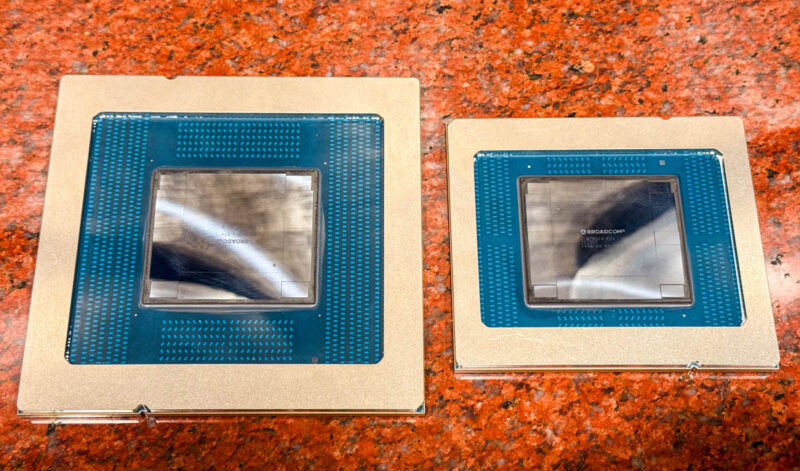
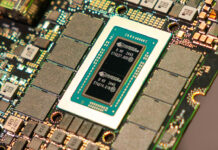
The architecture of the switch tray is also why we are talking about Ethernet (or rather, UAL over Ethernet) for the scale-up network rather than using Ultra Accelerator Link itself. Native switch chips for the new link architecture are not available in time for Helios, so AMD is routing UAL over Ethernet, allowing them to use proven Ethernet switching hardware that is already on the market today. If you just want to see the Tomahawk 6, here is a photo we grabbed last year in The Massive Size of Broadcom Tomahawk 6 102.4T Switch Chips and Tomahawk Ultra Bonus.
Besides the networking hardware itself, each switch tray also brings its own management processor. AMD stuck to in-house hardware here, using Ryzen processors for the task.
And finally, like the compute trays, the switch trays are also entirely liquid cooled. On this note, between the need for the switch tray to mate with the busbar, the liquid cooling system, and the cable cartridges, the insertion force requirements for the switch trays are even higher: it takes 690 pounds of force to insert a single switch tray.

Okay, I’ll bite. How do you apply 690 lbs of insertion force? Gigantic insertion levers on each card? A giant mallet? Only hiring olympic-grade weightlifters as datacenter techs? Some sort of powered switch lifter that then rams things into place somehow without knocking other racks around in the process?
Scott – a lever.