NVIDIA Vera Compute Modules
In the Aivres booth, we also found a number of neat platforms. An example of this is the NVIDIA MGX Vera platform. This takes two NVIDIA Vera CPUs, along with memory, and puts them onto a very different-looking motherboard.
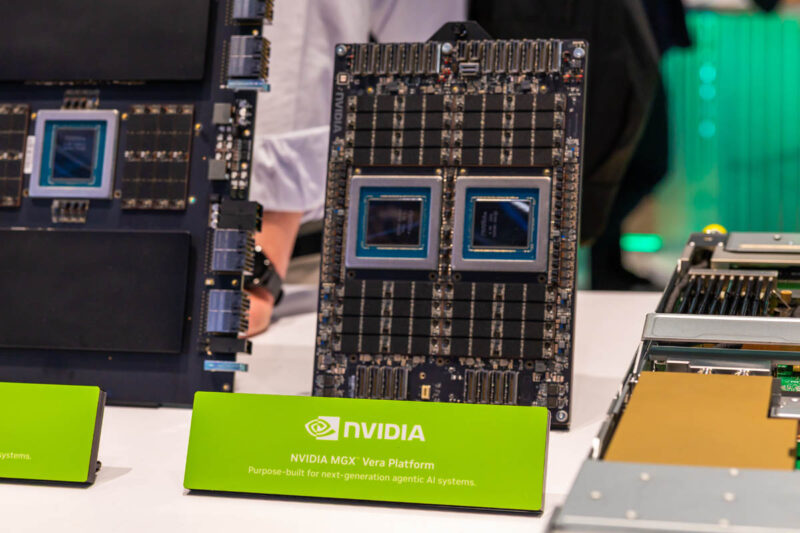
Instead of RDIMM and riser slots, we get SOCAMM modules and MCIO connectors.
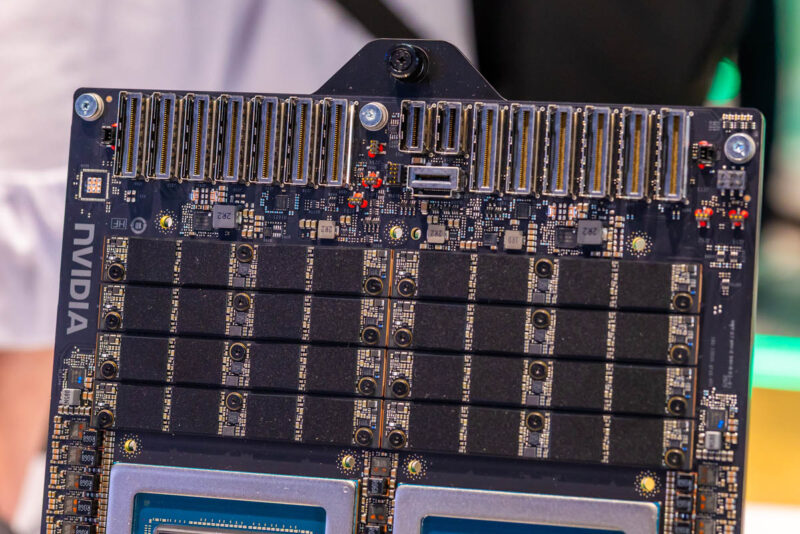
It looks like each Vera CPU gets 10-11x MCIO x8 connectors for 88 lanes exposed via these connectors.
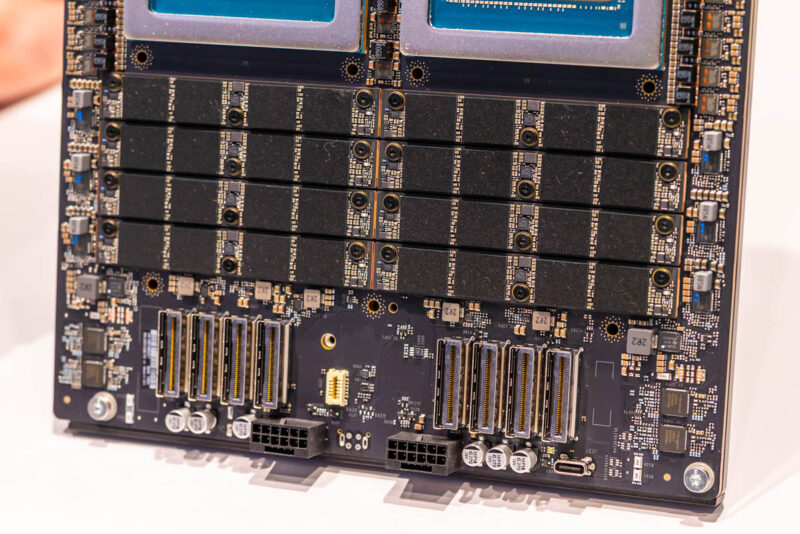
This MGX design is very different from what we typically see with x86 CPUs, but that is the point. NVIDIA MGX is really reimagining system architecture by focusing on high-density compute.
That was not the only platform we saw, as next to it was the NVIDIA HGX Vera platform.
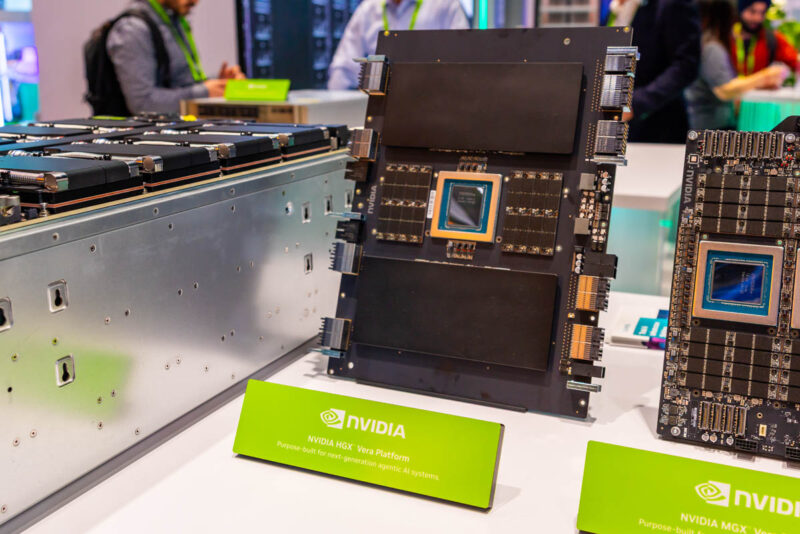
This takes an NVIDIA Vera CPU and puts it into a form factor with the connectors to mate with the HGX 8x GPU platforms we commonly see.
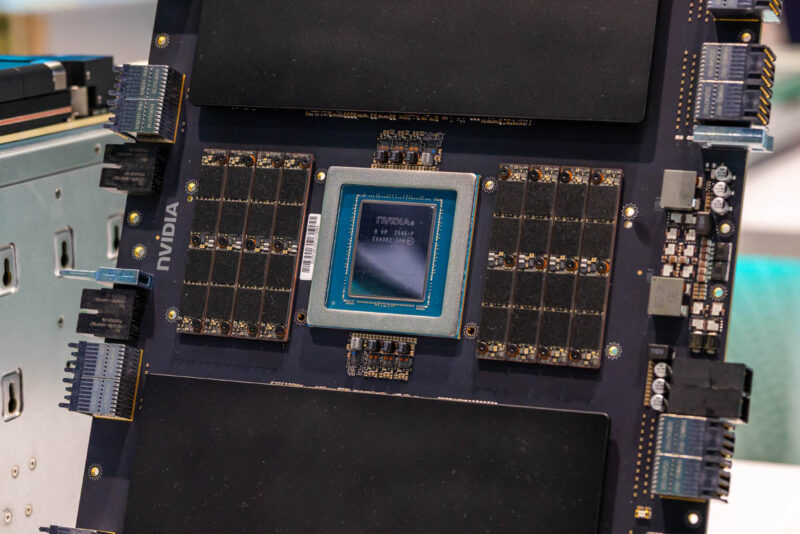
Here is a guide pin and connector example.
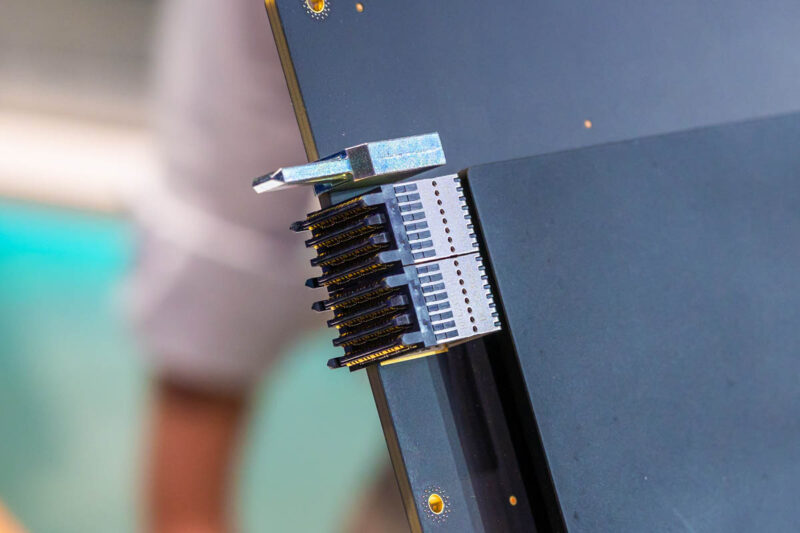
Just so you can get a sense of how this fits, here is a photo we snagged of the compute tray at the show:
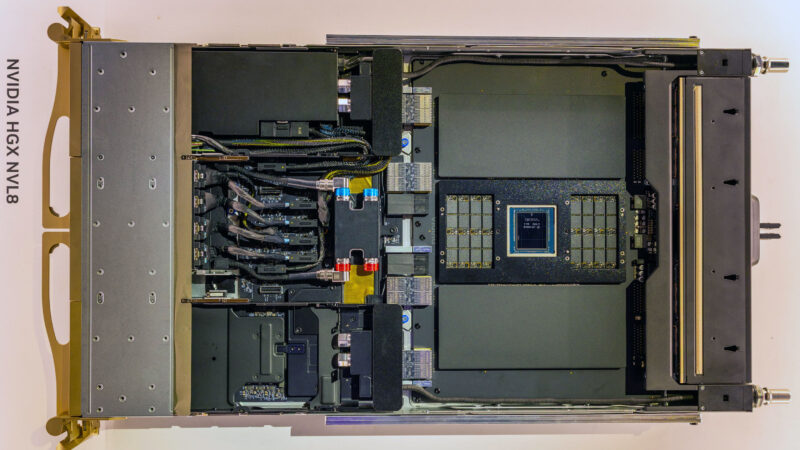
This is a substantial development, as NVIDIA is now considering providing host CPUs for HGX 8-GPU platforms that have typically used x86 CPUs. That brings us to the Aivres NVIDIA HGX Rubin NVL8 liquid-cooled 2U platform that you may have seen in the corners of these photographs.
Aivres NVIDIA HGX Rubin NVL8 Liquid Cooled Platforms
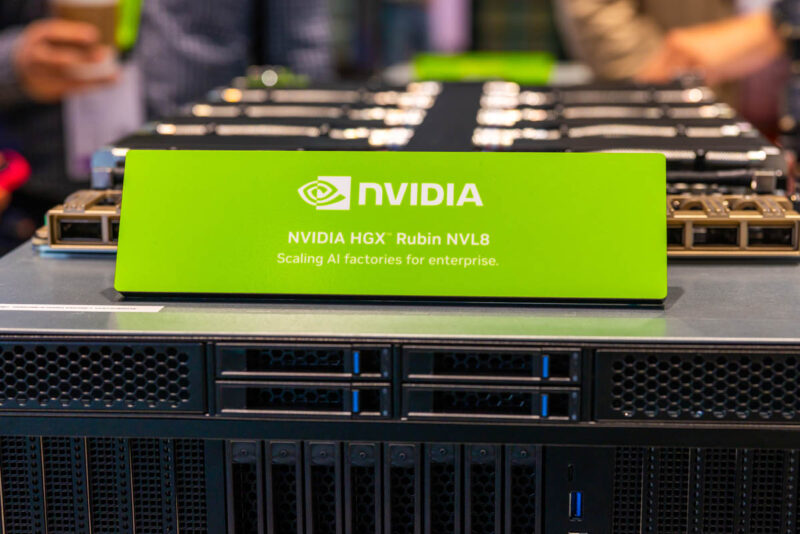
The NVIDIA HGX Rubin NVL8 platforms are really neat. As you can see from the photo below, and we will detail more about later on STH, the new NVL8 platform has a liquid-cooled variant. It has also re-oriented the GPUs for the first time since the P100 generation, with two columns with four rows instead of two rows with four columns.
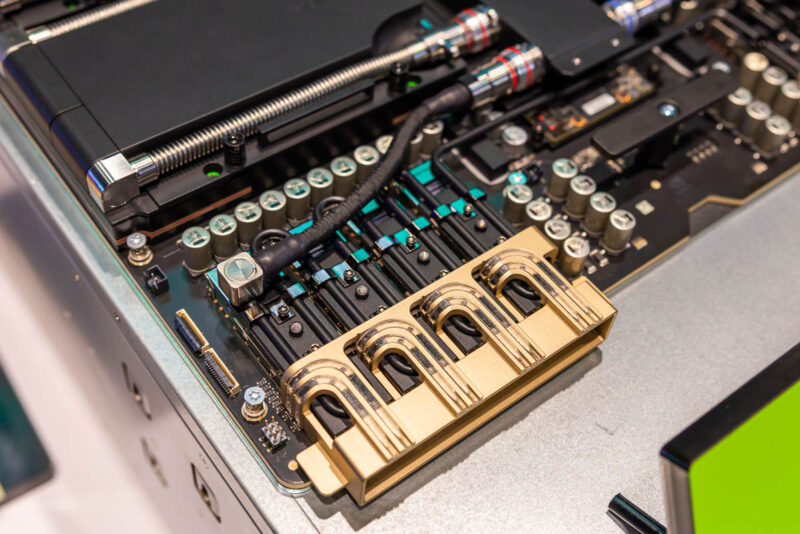
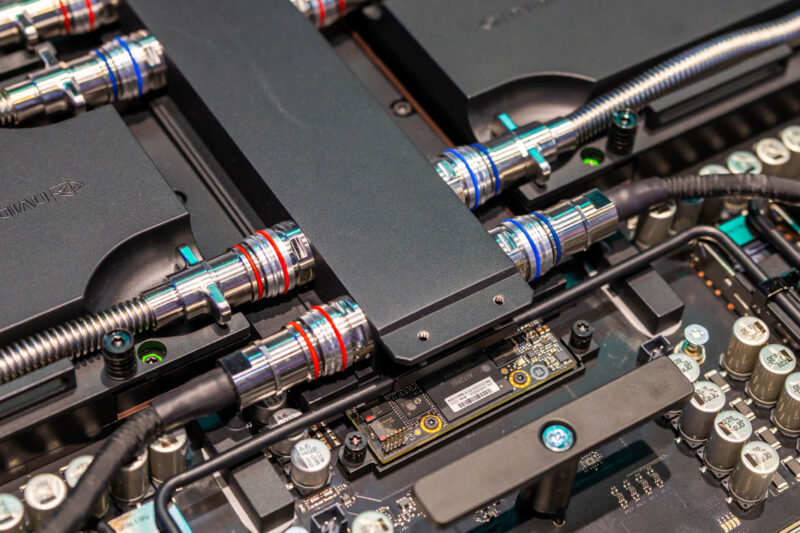
Another huge change is that we get liquid-cooled network ports directly on the HGX platform with the connectors built in.
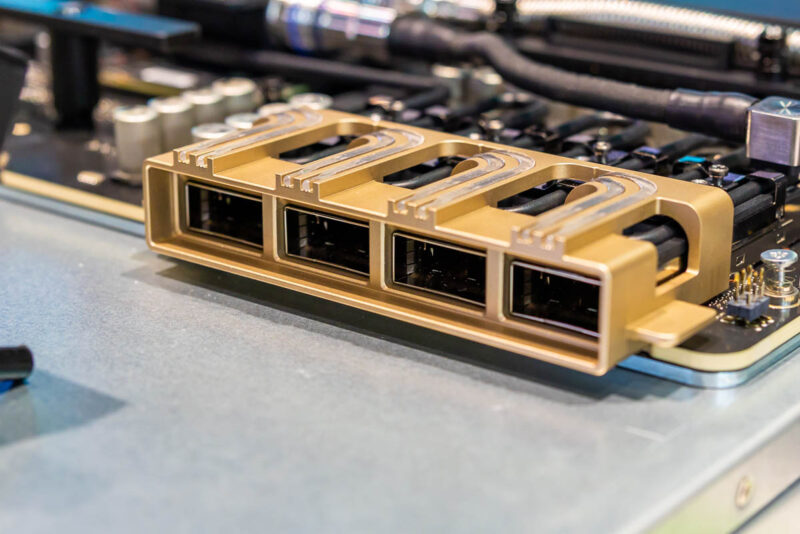
In the Blackwell Ultra generation, we saw NVIDIA integrate its ConnectX-8 networking, but it used cabled connections to the chassis faceplate. Now, these are built-in and liquid-cooled.
There is also an internal manifold through the center of the HGX board, which is a new development in this generation.
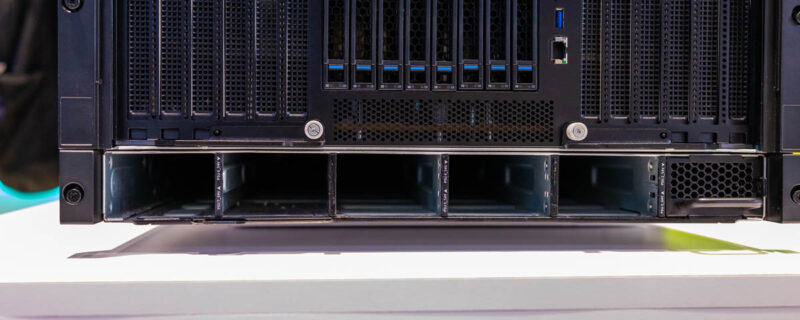
The hybrid air and liquid-cooled system has its power supplies mounted on the front, along with the storage and I/O, but the real magic happens in the rear of the system.
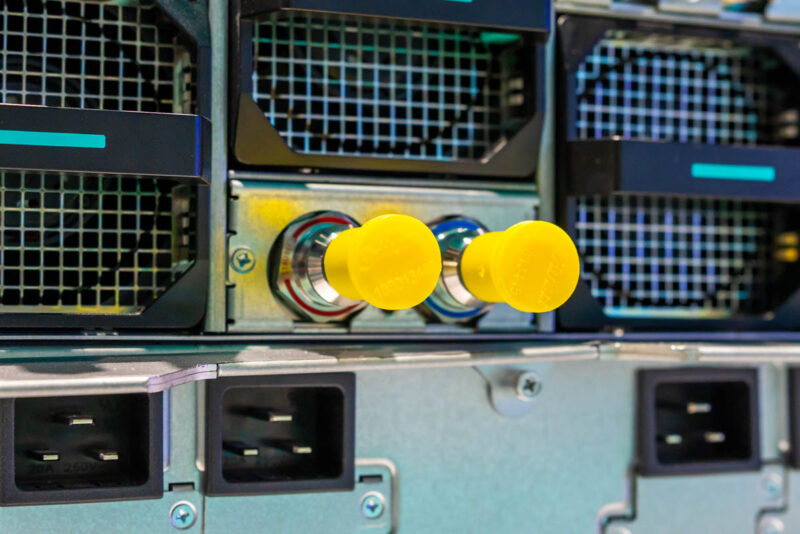
Here is what the rear looks like. You can see fans alongside liquid-cooling nozzles. This is an important hybrid approach since it allows more system flexibility by liquid-cooling the CPUs and GPUs, but then allowing other components to still be air-cooled.
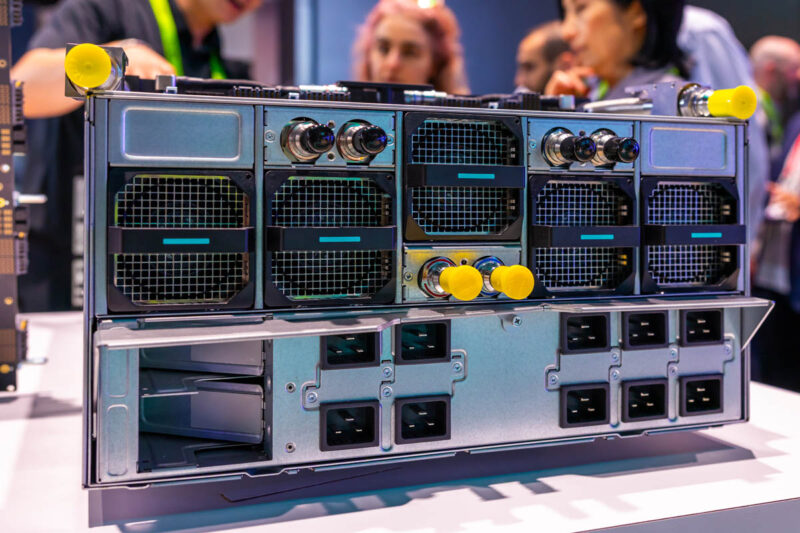
While the new NVL72 racks are focused on liquid cooling, this provides a bridge for data centers that cannot fully support only liquid-cooled racks.
Perhaps the most interesting Aivres NVIDIA HGX Rubin NVL8 system was this 2U variant.
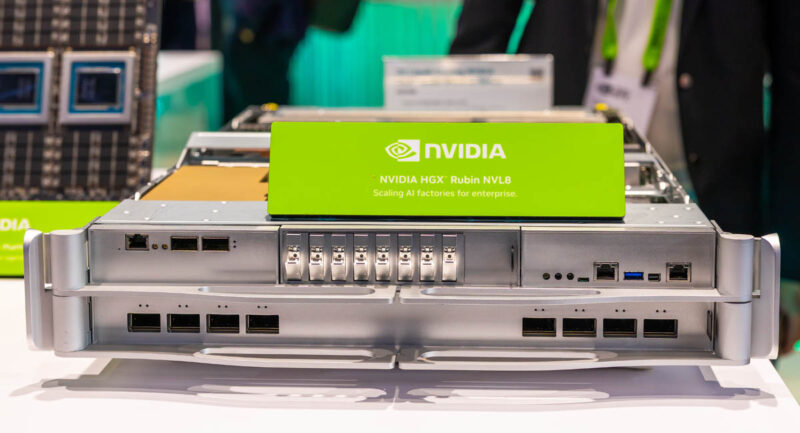
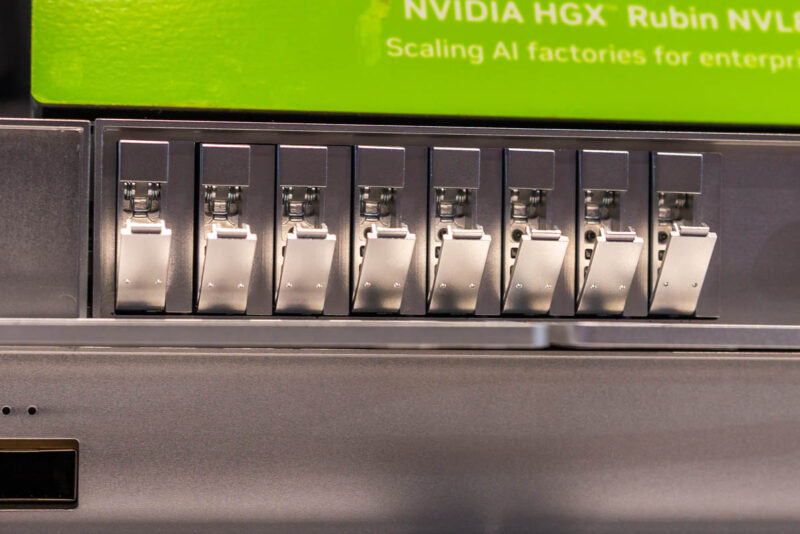
The top 1U has the NVIDIA BlueField-4 DPU, management I/O, and the storage, which is comprised of liquid-cooled E1.S SSDs.
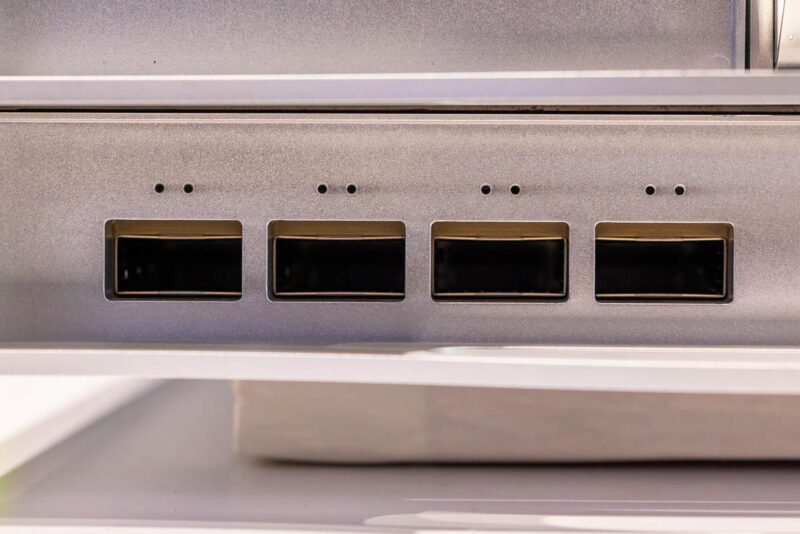
On the bottom, we get the NVIDIA HGX Rubin NVL8 baseboard, so we get an array of network ports from that board.
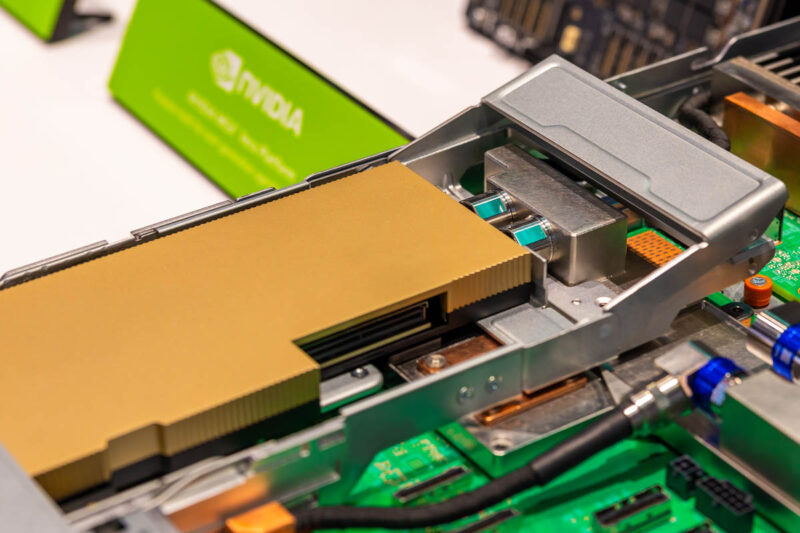
Earlier in this article, we mentioned how the BlueField-4 DPU can be liquid-cooled. Here is a great example of how that works, including the lever mechanism to make it work.
The SSDs also need liquid-cooling since this is a very dense platform.
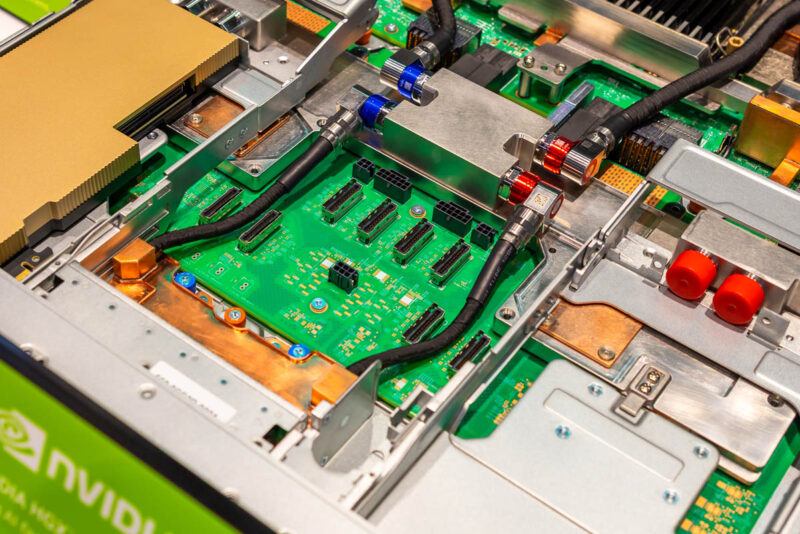
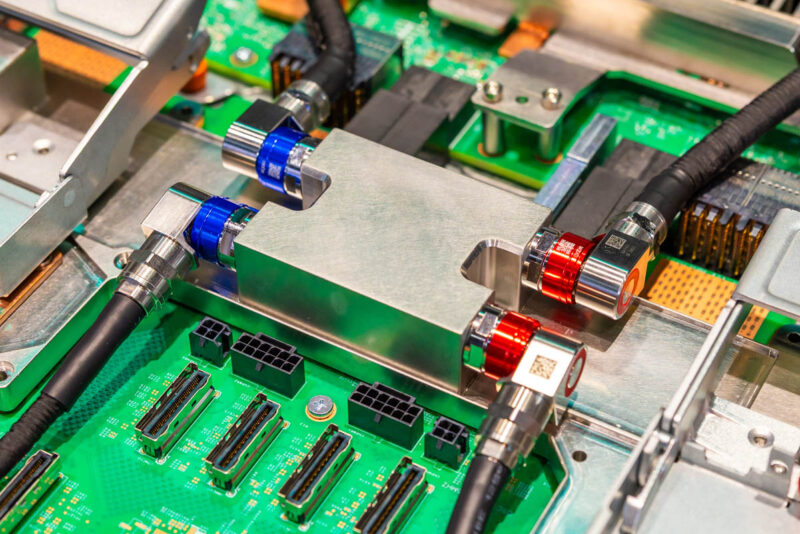
There is also an internal distribution block.
Behind that, we get two CPUs and the DDR5 RDIMM slots. You can see from the retention mechanism that these are Intel Xeon CPUs.
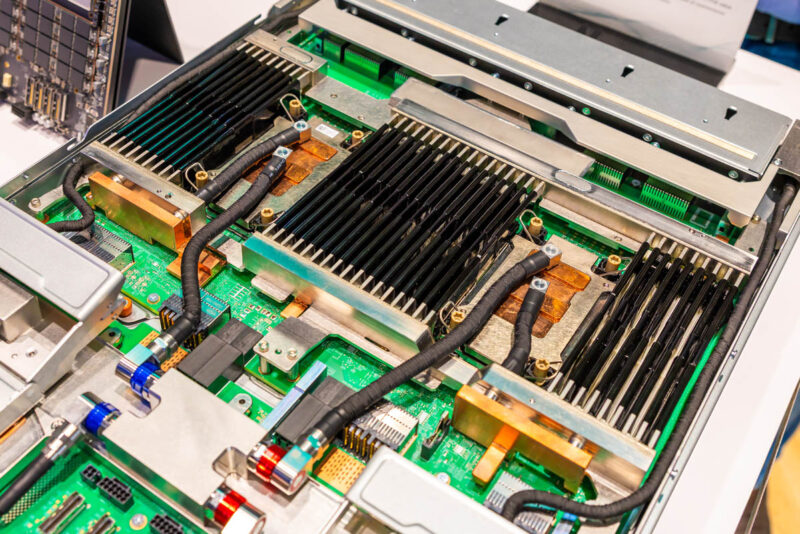
Since these are designed to fit entire systems into 2U of rack space, everything needs to be liquid-cooled, even the DIMMs.
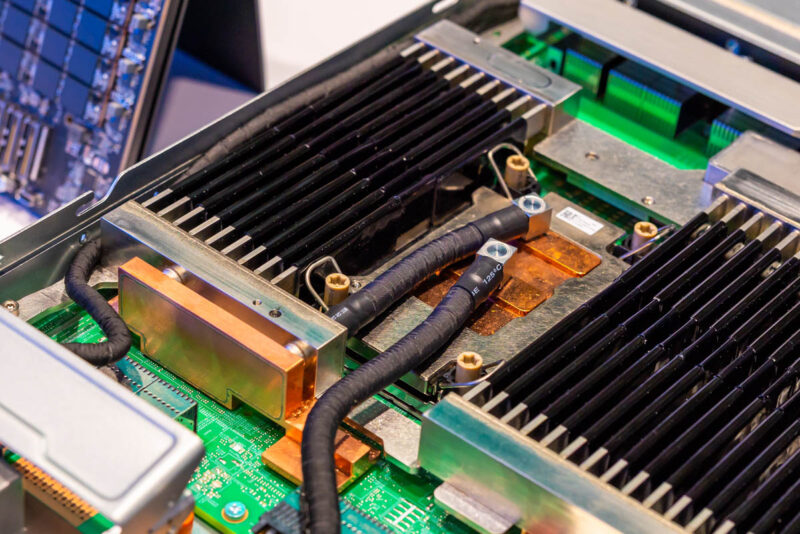
Fitting eight Rubin generation GPUs and two CPUs into 2U means one can scale to 128 GPUs per rack for very high density.
Final Words
Aivres had a booth packed with hardware at NVIDIA GTC 2026, and we wanted to bring you the highlights. Looking ahead to the next-generation of NVIDIA Vera and Rubin devices, we can see just how fast architectures are changing and liquid-cooling adoption is becoming mandatory for many of the systems.
The pace of innovation shown this year really highlights just how fast the industry is moving. Systems are becoming more integrated, and we are seeing designs that are more refined than even just a year ago. These were really neat to see on the show floor.