

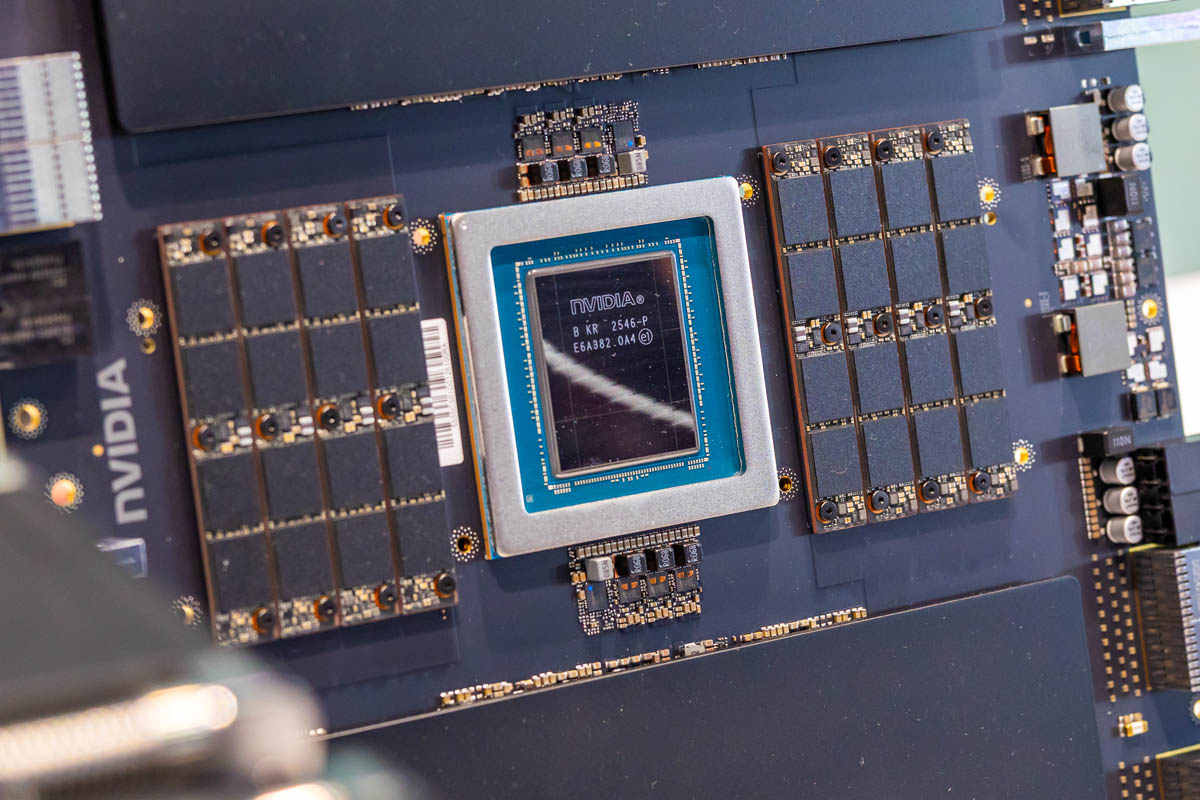
Kicking off our booth tour series, we saw a number of NVIDIA Vera Rubin systems at the company’s NVIDIA GTC 2026 booth. We also saw some neat Blackwell Ultra systems, PCIe servers, and next-generation components.
If you want the quick version, you can check out the short video above. Let us get into it.
Aivres NVIDIA Vera Rubin NVL72 Rack
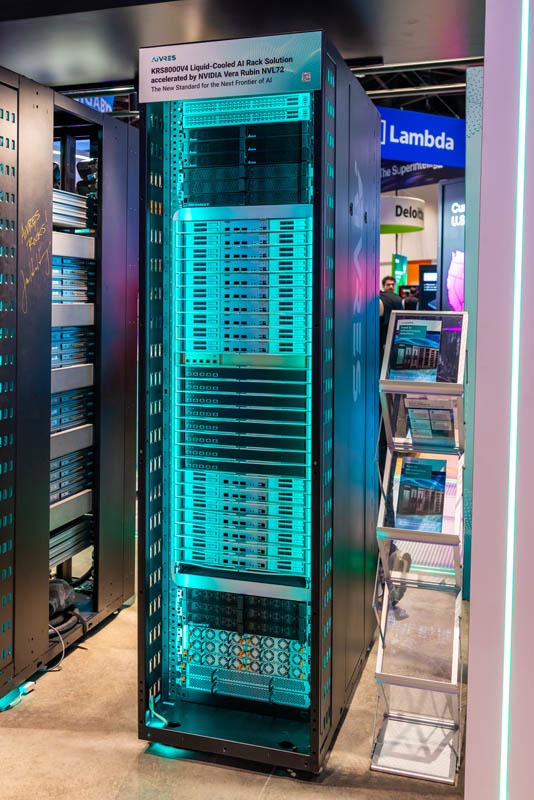
In the booth, Aivres had an NVIDIA Vera Rubin NVL72 rack, which is the KRS8000V4. This is the liquid-cooled rack that combines the Vera Rubin compute trays and NVLink switch trays into a single ORv3 rack.
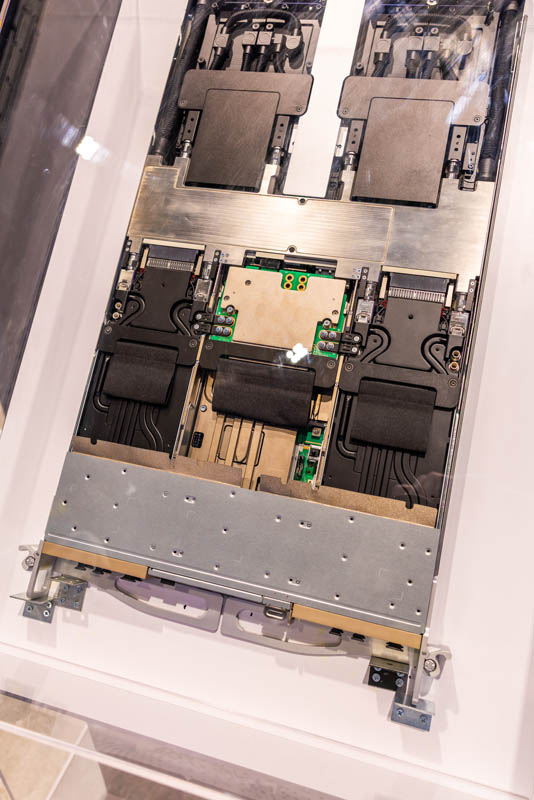
One of the neatest parts of the booth was seeing the compute tray out of the rack. You can see how the tray does not have the large number of cables that we saw in previous generations. Also, there is another benefit. The new generation makes servicing and assembly much faster.
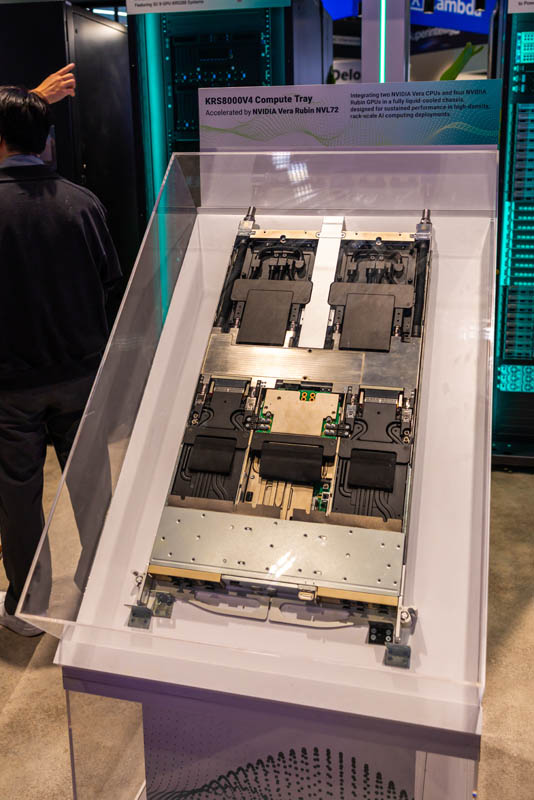
Another key difference is that this is designed to be fully liquid-cooled. There is not a fan partition in the chassis.
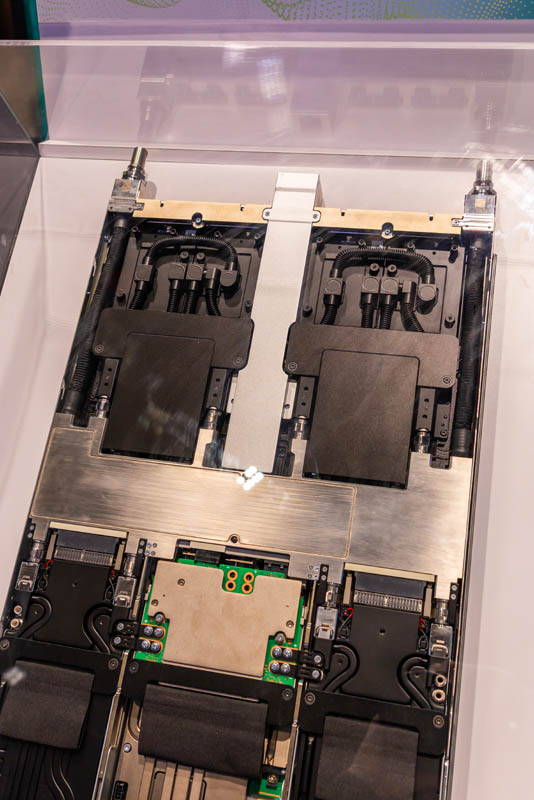
You can also see that the GPUs, CPU, networking, and SSDs are all liquid-cooled. This is another level of integration in order to pack higher density into the rack.
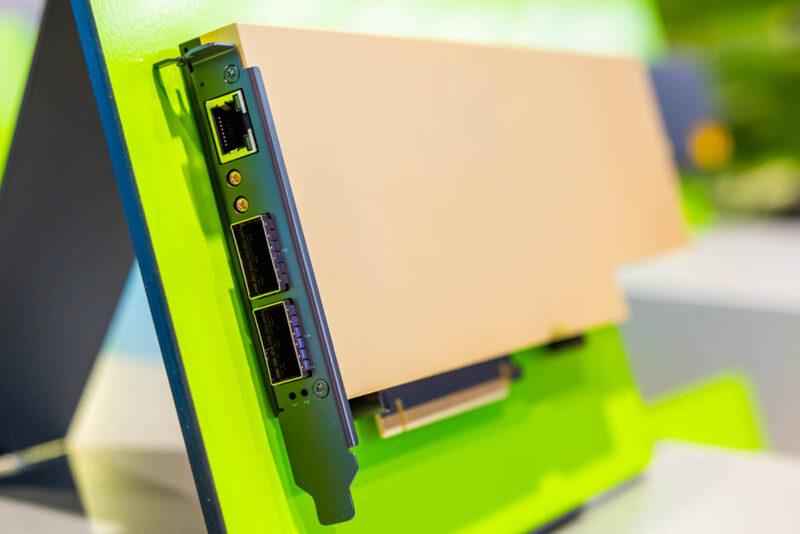
We also found an NVIDIA BlueField-4 DPU. This generation has a massive increase in the compute and memory so that it can handle tasks like KV cache management.
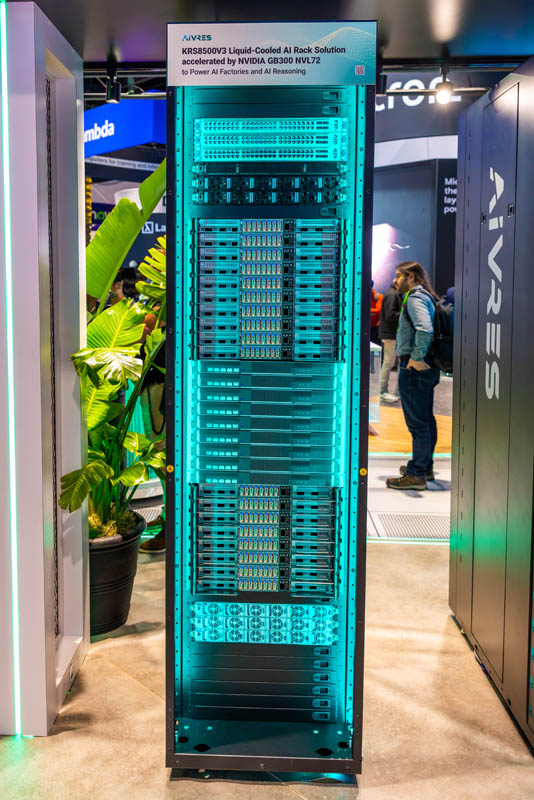
Aside from the Vera Rubin NVL72 rack, there as an NVIDIA GB300 NVL72 (Grace Blackwell) generation rack on display as well.
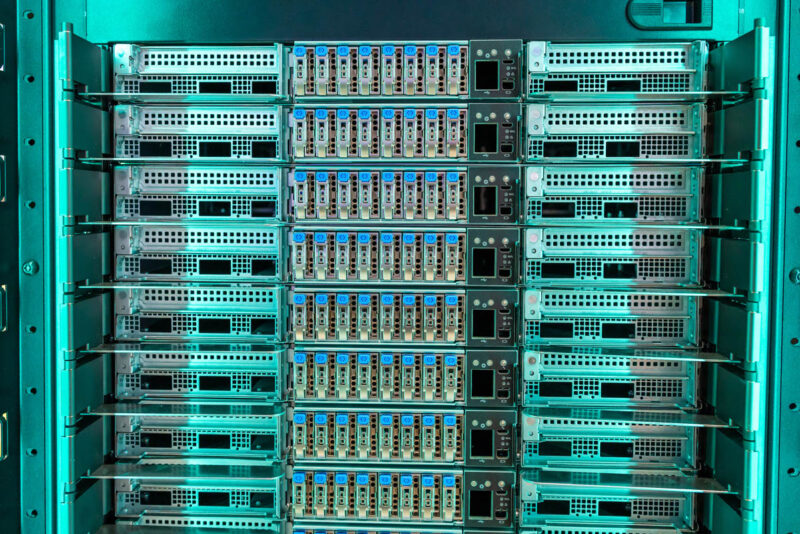
This may seem like a minor point, but you can see some major changes. For example, the integration in the Vera Rubin racks is higher than in the Grace Blackwell racks. Also, there are clear changes, like the storage was changed to make liquid-cooling easier.
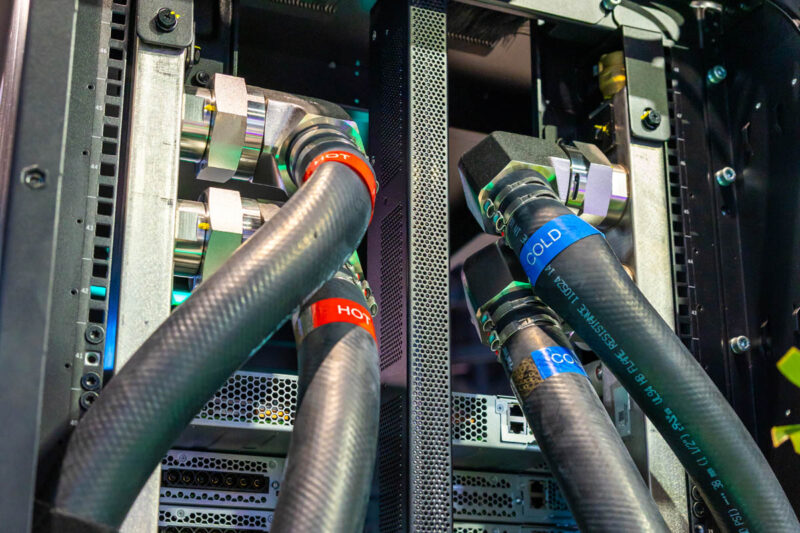
The rear of the rack is where we see the large liquid-cooling hoses for the ORv3 rack manifolds. There is also the NVLink spine, which integrates thousands of copper wires to connect the rack.
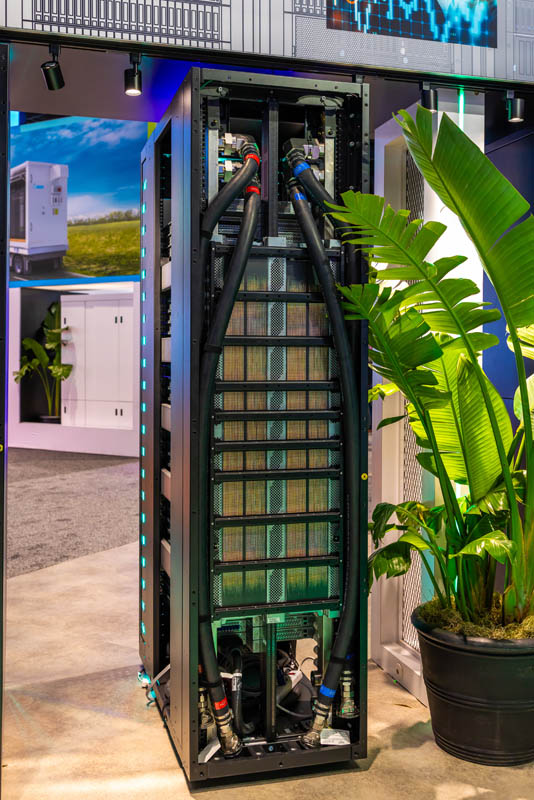
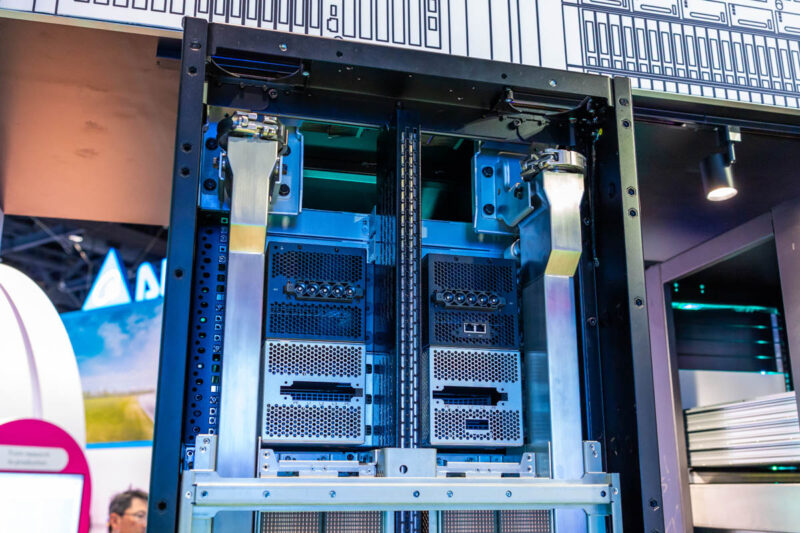
Also, there is a bus bar to provide power to all of the components. By moving the power supplies out of each server node, more space is available for compute and networking.
Here is a closer shot of the liquid-cooling connections to the manifolds.
Next, let us take a second to look at the NVIDIA BlueField-4.

Absolutely NEAT.