

Ever wonder what a quarter-century-old data center looks like? How does it compare to a modern AI data center? Over the past several months, our team, has been working on showing exactly that. We went to the Equinix SV1 data center, famous in the industry and completed at the turn of the millennium, to show how data centers adapt over time as new technologies must integrate with legacy technology. We also toured the new SV11 facility, which houses cloud provider systems, and importantly, a special NVIDIA DGX SuperPOD that you may have seen running. Of course, for this one, we have a video:
As always, we suggest watching this in its own browser, tab, or app for the best viewing experience. Also, we need to say thank you to Equinix and NVIDIA for allowing us access to their facilities with their sponsorship and support. With that, let us get to it!
Equinix’s Silicon Valley Data Center Campus
Our tour of Equinix’s Silicon Valley data center starts from the outside. Equinix’s first data center in the Bay Area, SV1, was built in 2000. Since then, the company has expanded its Silicon Valley operations multiple times, acquiring neighboring land and building additional data centers at the facility.
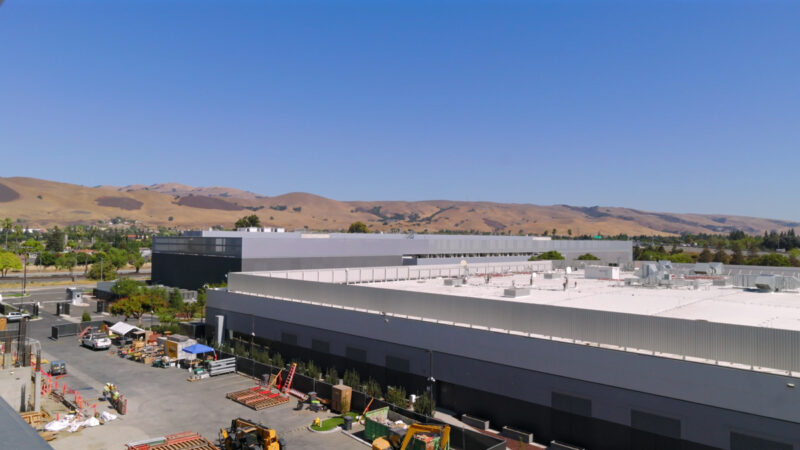
Equinix’s most recent expansion at this campus was the construction of SV11, a brand-new data center that is focused on housing AI clusters – and accommodating the hefty power and cooling requirements of these systems.
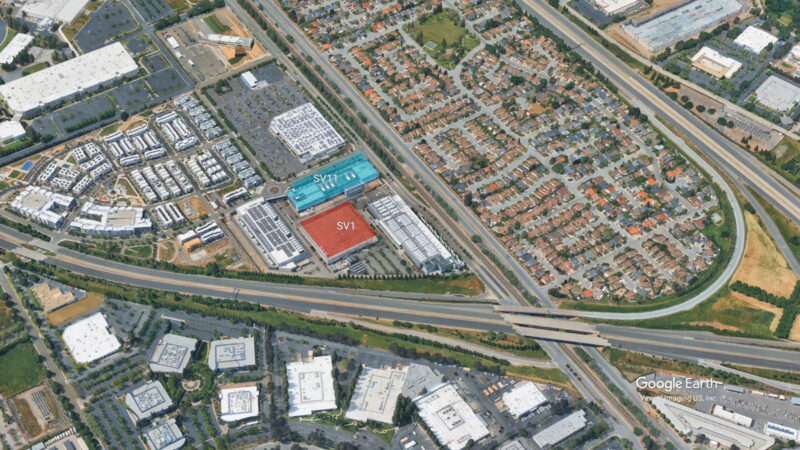
From the sky, the 4 data centers can look a little unassuming. But inside, they house a significant amount of server hardware, and even more hardware and facilities to support those servers.
Touring SV1: The Center of the Internet
The first stop for our tour is SV1. Practically a fossil by data center standards, Equinix’s first Silicon Valley data center is still around 25 years later, having been repeatedly retrofited over the years to keep up with the times.
Nonetheless, SV1 is often referred to as the “center of the internet,” as over 90% of West Coast internet traffic passes through the building.
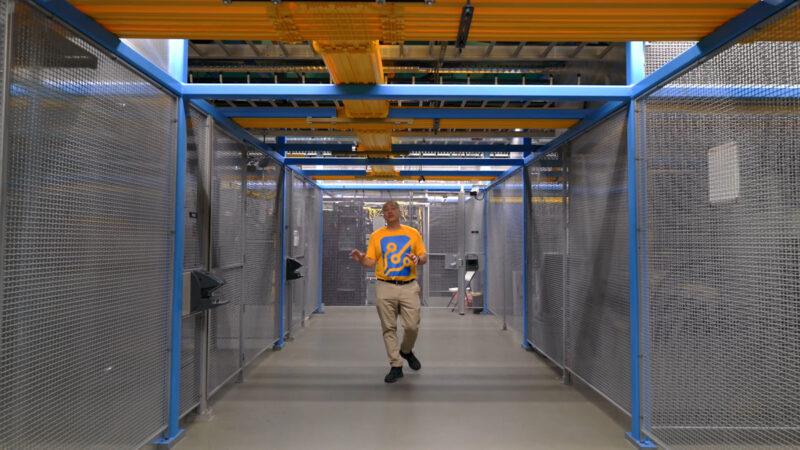
One of the key – and for the time, novel – design aspects of SV1 is the enormous number of carriers with connectivity to SV1. Well over 200 carriers go into SV1, giving customers numerous options to access the most efficient routes to their destination.
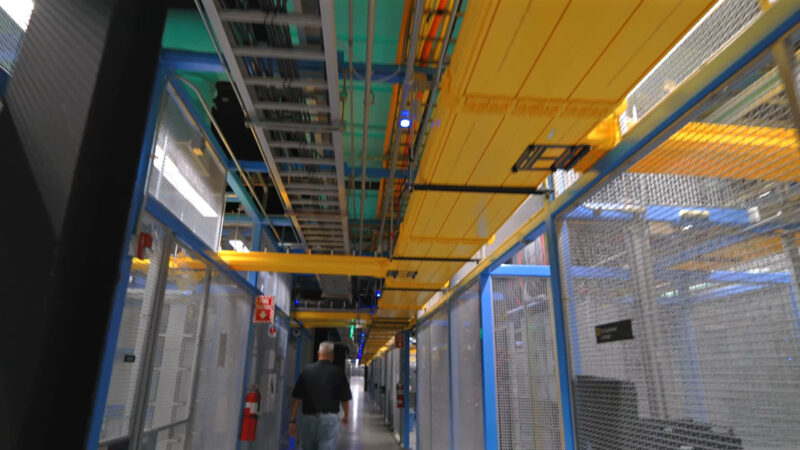
It may seem like a small point, but having so many carriers in the early 2000s was a novel idea since it facilitated the quick interconnect of various parts of the Internet. Many of the modern AI data centers have a few large pipes to specific carriers and locations. SV1 was designed as a place where everyone could meet. Just to give you some idea, if you have two large cloud providers that need to link services, it is much easier to do that when they are housed in the same building. Likewise, if you are a large company and want high-speed access to a cloud provider for your colocated servers, you can put them in SV1 and be a short run away.
Fiber Pits and Fiber Vaults
With so many carriers to connect to, just organizing these external fiber optic connections is a significant task in and of itself. This is why Equinix relies on fiber pits to help manage all of these fiber lines before they ever enter the building.
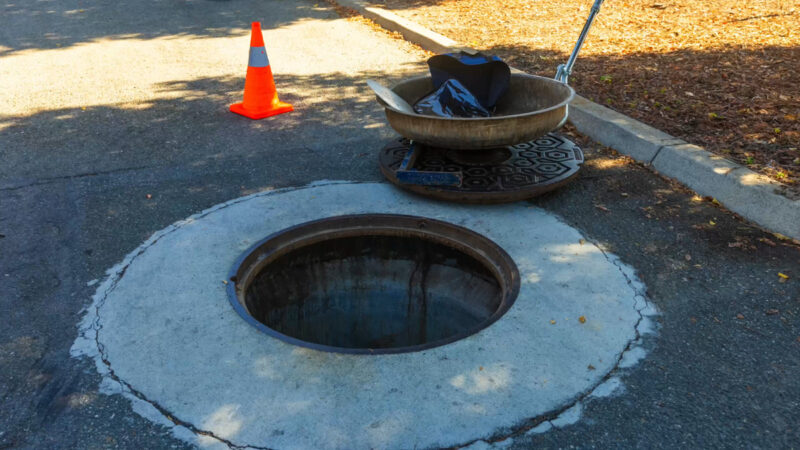
There are over a dozen of these fiber pits at the facility. Their primary purpose is to give Equinix and carriers greater flexibility in laying fiber runs across the campus.
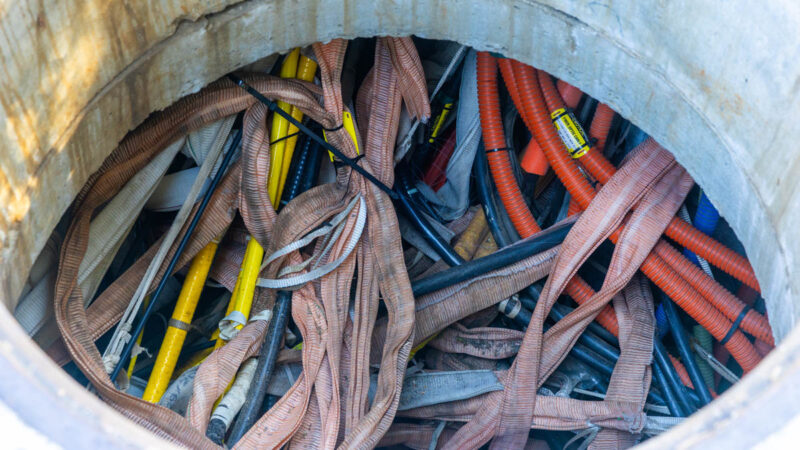
If you have been using the Internet, especially for our California readers, there is a good chance your data has been flowing through the fiber pits. Looking down a manhole cover may not be glamorous, but this is the Internet, and what makes everything we take for granted work today.
Inside the data center buildings themselves, these fiber lines make their ingress in fiber vaults, where the fiber lines are then redistributed throughout the data center.
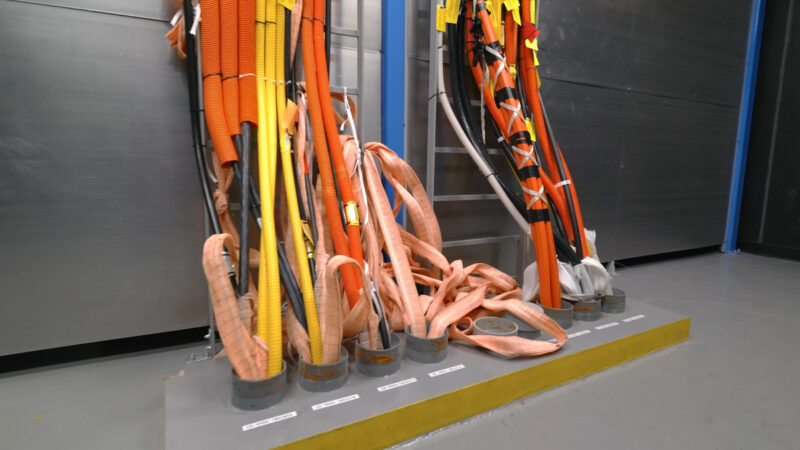
Equinix also has fiber connecting the various buildings and areas of its campus, so there are cabinets for housing fiber runs to those locations. If an organization needs to hop somewhere on campus, Equinix can make that happen quickly because it has cabinets where it can splice fiber.
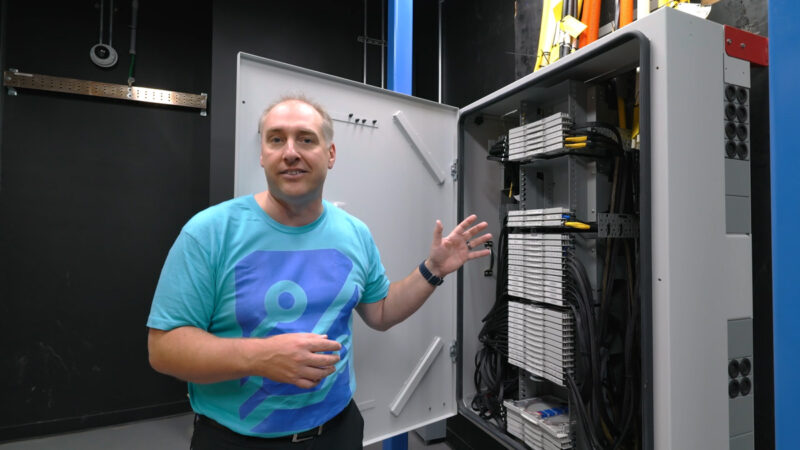
Going further into the labyrinth is the intermediate distribution frame, where fiber from the vault is further routed to customers’ cages.
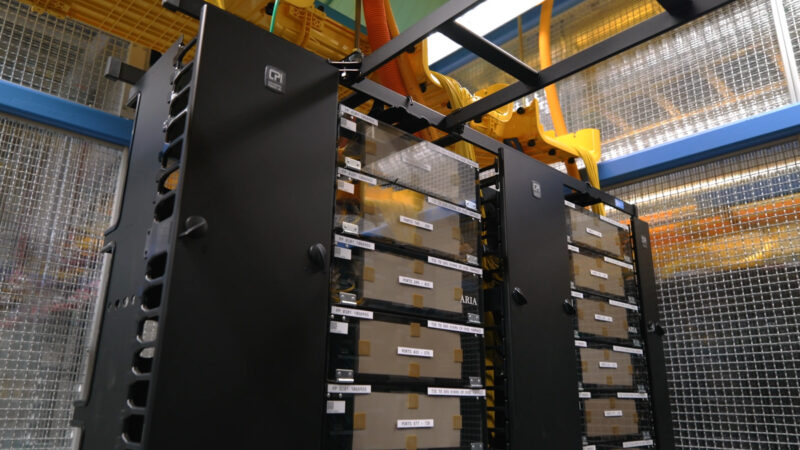
The intermediate frames also house building-to-building fiber connections, providing the point of connection for customers who need to connect to a cage in another building.
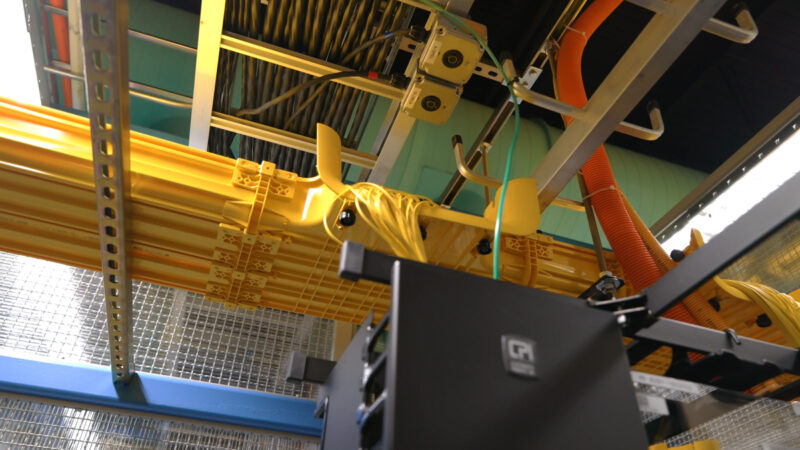
As we tour SV1, it is worth taking a step back. This was built in an era of mostly copper interconnects. It has had retrofit projects over the years to increase fiber capacity. If you have moved something in your rack and bumped a cable the wrong way, or even done something similar, like moving a router at home, you might be able to imagine how intricate the procedures are for upgrading a facility like this while keeping the Internet online.

You gotta visit the One Wilshire meet-me room sometime! (And: awesome!)
Super stellar video sth
Those less technical stories usually refer to open evaporative cooling, used at many hyper scalers, where they use swamp coolers and then humid air enters the servers via air cooling and is then discharged. They often air cool their ai servers
I have fond memories of working on servers and networking in SV1! Being there felt like being in the absolute center of the coolest part of the Internet. Equinix data centers like SV1 had style, and lots of it – shapes, patterns, colors, and just gobs of cool everywhere. Most other data centers were sterile, horrible places to be.