

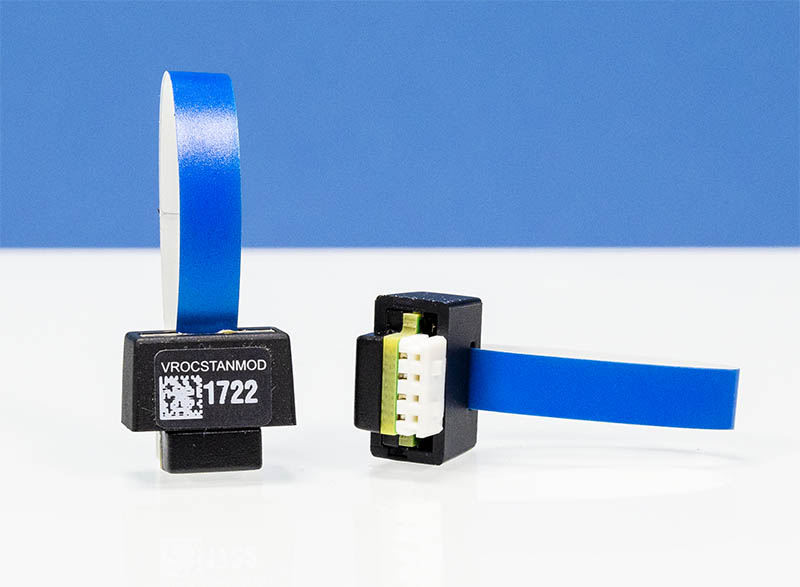
Intel VROC has been a mainstay of its servers for some time. We have an Intel VROC Hardware Key Quick Reference Guide if you want to learn more, but the basic idea is to provide RAID functionality in systems without requiring a Broadcom or other RAID controller. Years ago, Intel planned to discontinue VROC in Sapphire Rapids (5th Generation Intel Xeon Scalable.) Ultimately, we reported that Intel did a 360 on Discontinuing VROC Around Sapphire Rapids Server Launch. Now the company is moving the business to GRAID Technology in a surprise move that is taking almost immediate effect.
Intel Offloads VROC to Graid in Another Streamlining Move
Here are the key highlights and dates that we have now confirmed with industry sources, although we have not seen an Intel or Graid press release on this one:
- Intel VROC products will transition to Graid Technology, where they will continue to be supported.
- There will be blackout periods in October and November where RMA and orders will not be possible.
- After the business transitions, Graid will handle VROC keys and RMAs.
Here are the dates that we received, although these are likely subject to change:
| Date | Key Milestone |
| 10/23/25 | Last day to create new VROC RMA at Intel |
| 10/30/25 | Last day for customer to ship VROC RMA to Intel |
| 11/7/25 | Last day to order Intel VROC HW keys through Intel |
| 11/24/25 | The first day to place new VROC HW key orders and submit RMAs to Graid |
As you can see, the dates for the above leave a blackout period where one cannot order or submit RMAs to Intel but cannot yet submit orders or get an RMA from Graid. There may be a few dates we are missing from the above, but the idea of there being a blackout period during the transition seems to be solid.
With the business transitioning to Graid, it appears as though Graid will be able to set pricing and so forth for VROC going forward.
Final Words
Still, for Intel’s customers, this looks like a big win since it means that there is a plan instead of a straight discontinuance. Many customers still use VROC for legacy server OSes that do not have built-in software RAID, and thus rely upon the functionality.
For Graid, this is likely to be a big win since it provides a customer list to sell its higher-end solution to. The days of traditional RAID controllers are waning and so this is a good way for Graid to get a customer list. For Intel, it should be all-hands on deck figuring out the company’s data center story beyond a heterogeneous compute AI inference accelerator now that the company’s CEO has said that its next-gen CPUs are missing key competitive features.

Is it known whether this arrangement puts Graid on the hook for some sort of continued development that Intel didn’t want to do; or is it just current-gen VROC getting sold off to be used as lead-gen?
If the alternative is nothing I suppose this is an improvement; but anyone who was ever delighted by Intel’s habit of slicing SKUs exceedingly fine seems like they are going to have an even worse time when one of the upsells is now a 3rd party vendor’s least-loved NIH product instead.
How many of these “Legacy OSes” are there at this point that don’t support booting from software RAID and are also used on a server?
Windows is one, but that’s hardly a server OS. I haven’t used chipset/”hardware” RAID for about 5 years. All the arrays I use are defined by the OS.
“Intel planned to discontinue VROC in Sapphire Rapids (5th Generation Intel Xeon Scalable.) ”
– SPR is the 4th Gen Xeon-SP, the 5th Gen is EMR.
Vmware
>>How many of these “Legacy OSes” are there at this point that don’t support booting from software RAID and are also used on a server?
VMware
It’s intriguing to see Intel transition VROC to Graid Technology, although the blackout periods may pose challenges for users. This change might lead to improved support and pricing flexibility in the long run. On a lighter note, if you’re in need of a fun way to unwind during these transition times, check out Snow Rider 3D for some exhilarating adventures on the slopes!
Comments are closed.