

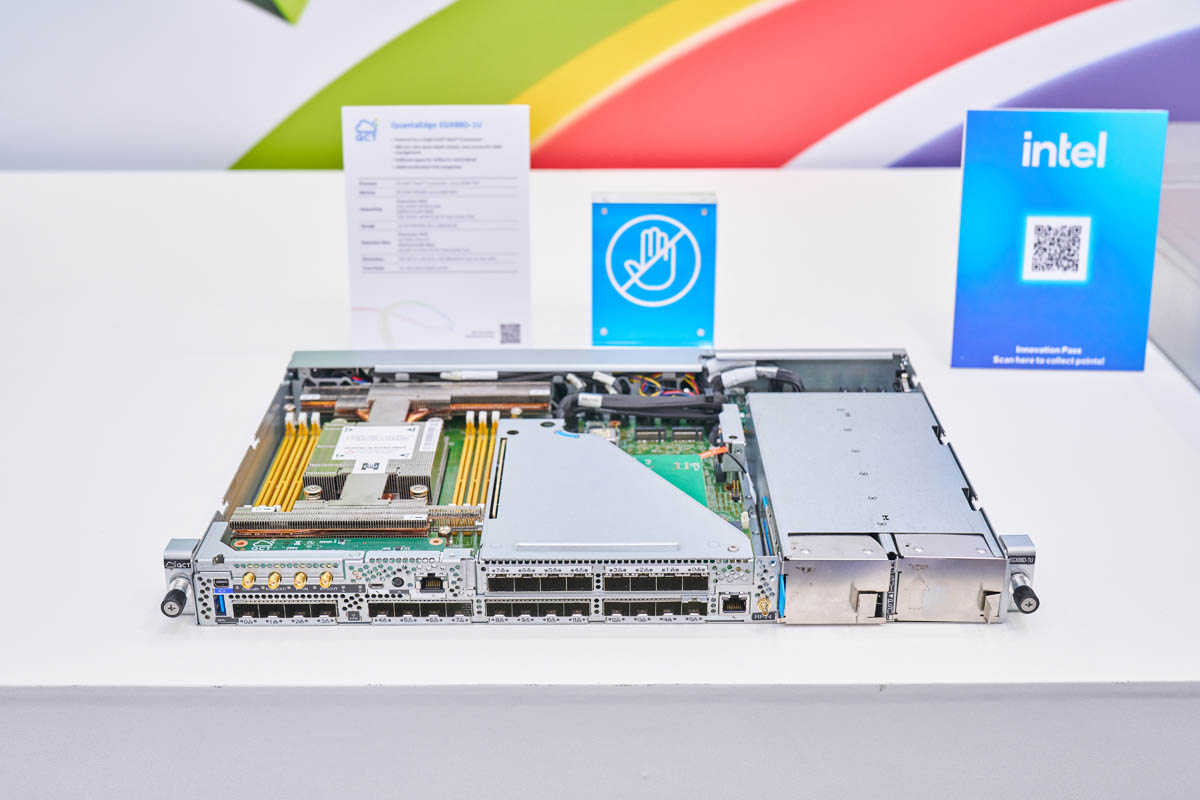
The new generation of Intel Xeon 6 SoC, or, for those looking to traditional naming, the new Xeon D/ Granite Rapids-D, is starting to trickle out. Usually, QCT and Supermicro are the two vendors who put out the first Xeon 6 SoC machines due to the customers they serve. At Computex 2025, we saw QCT’s 1U Xeon 6 SoC box. The QCT QuantaEdge EGX88D-1U has a lot of networking onboard.
QCT QuantaEdge EGX88D-1U
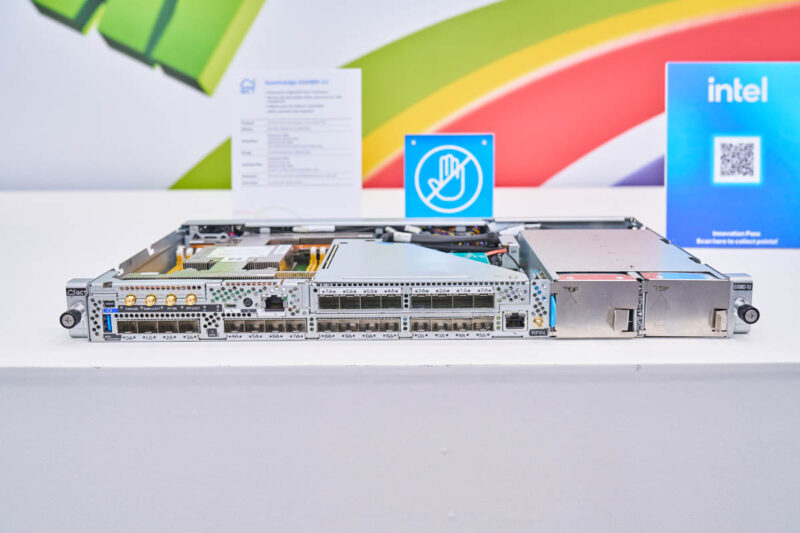
The box itself is designed to have a lot of networking. There are possibilities for 24 ports of 25GbE ports.
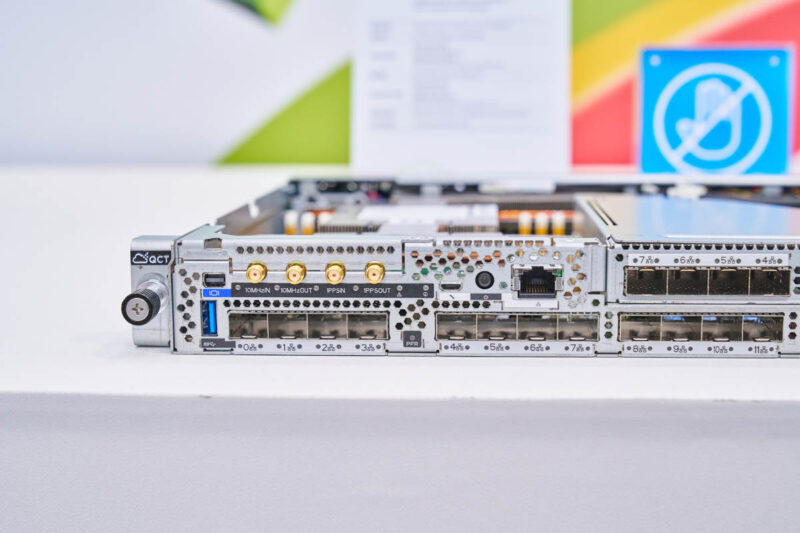
On the left, we get a USB port, a miniDP port, antenna connection poitns, and a management port. There are also the first eight network ports.
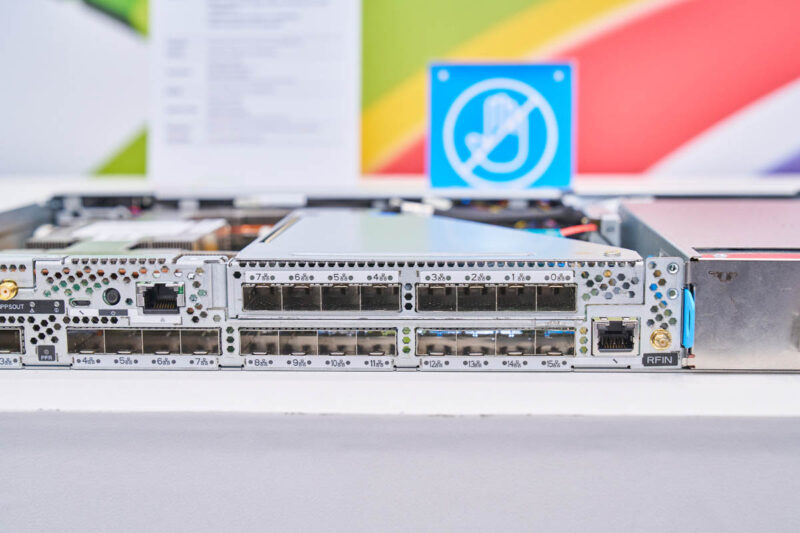
In the center, we get two sets of eight ports for sixteen total.
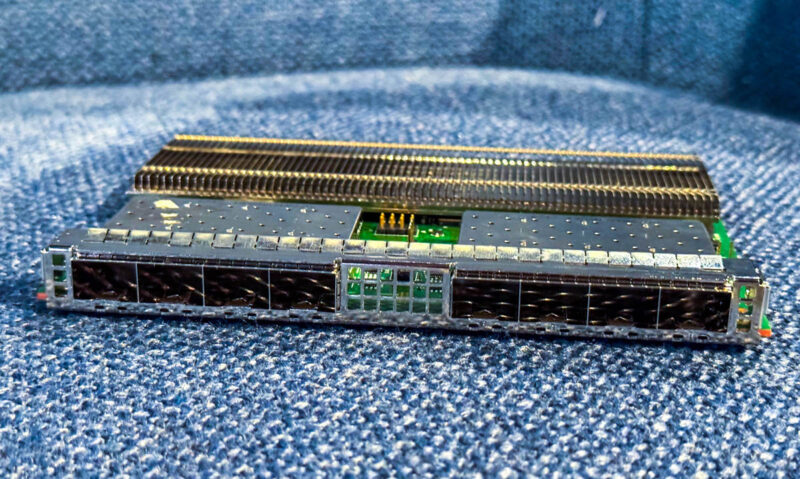
QCT also has another version of this that can use OCP NIC 3.0 DSFF cards, like the New Double Wide NIC with 8x 25GbE Ports Using the Intel E830 NIC we showed at HPE Discover 2025.
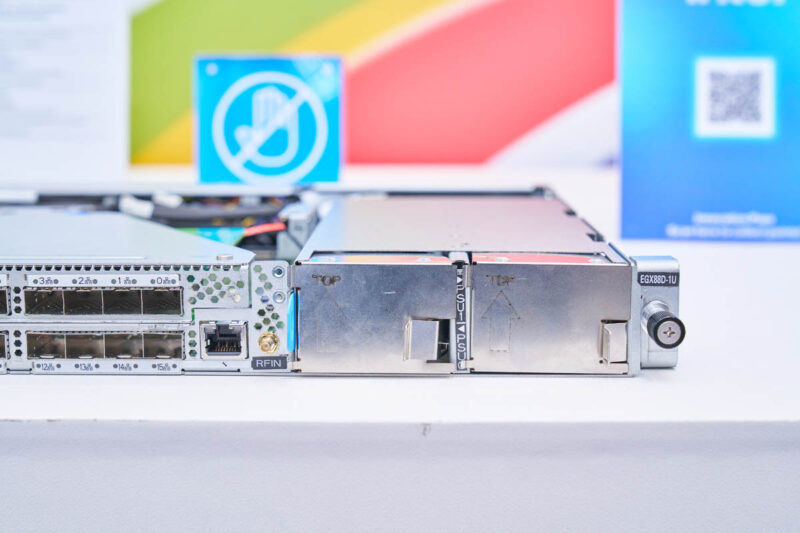
On the side, there are places for two power supplies, but they were not installed on the Computex 2025 floor model.
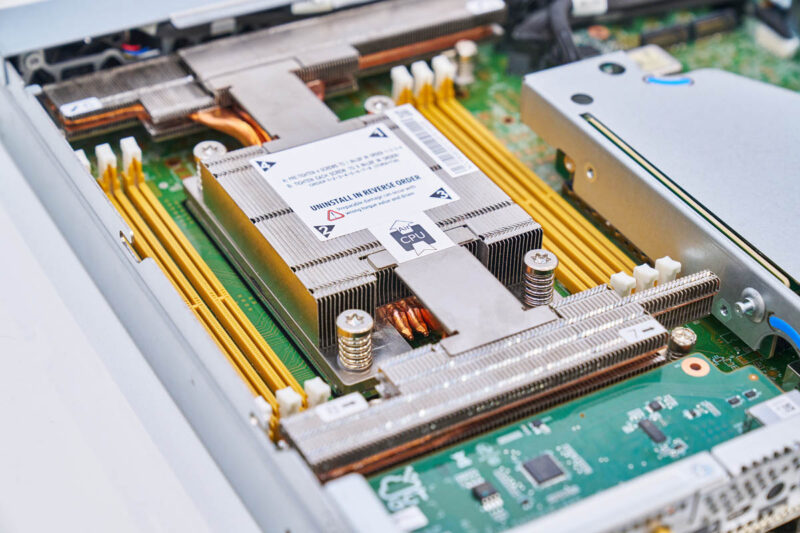
Neat in this one is the Intel Xeon 6 SoC. This might look like a crazy cooler design, but that is for good reason.
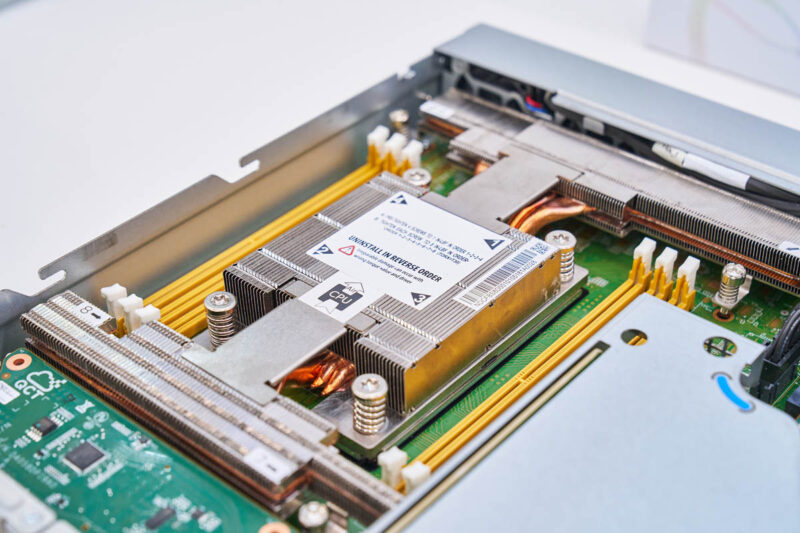
The placard said it is able to handle up to 325W Intel Xeon 6 SoC (Xeon D) designs. We would guess these are for the higher core count parts that come out in Q4 2025. That same placard also said there is support for 8 channel memory. The initial line of Xeon 6 SoC launch parts from Q1 2025 only included up to 4 channel designs. You can read more about the CPUs here. Intel Xeon 6 SoC is Here Granite Rapids-D is HUGE.
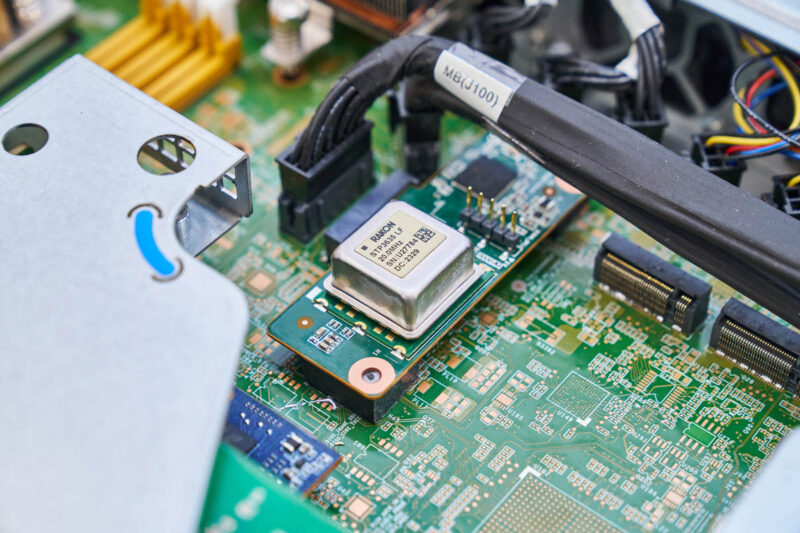
This is more of a network appliance 1U design so we see a Rakon OCXO installed as a local oscillator to help keep time.
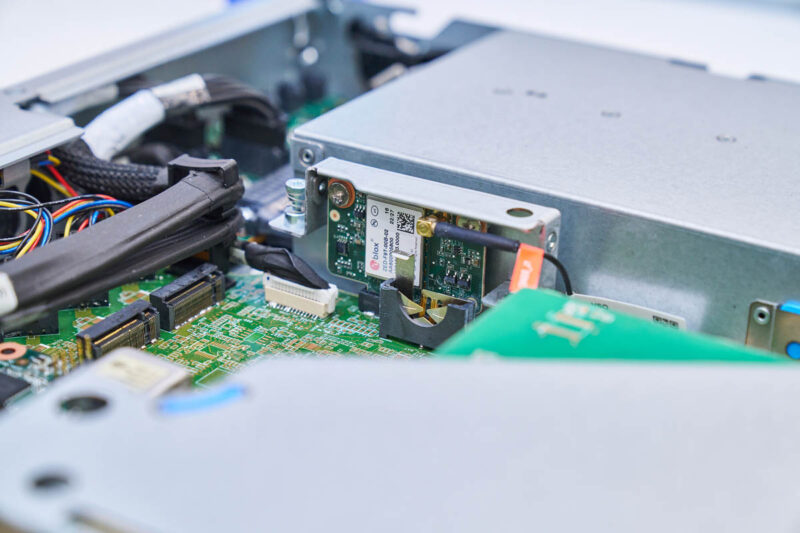
There is also a u-Blox GNSS receiver that is wired to the front antenna points.
We even saw dual M.2 slots in here.
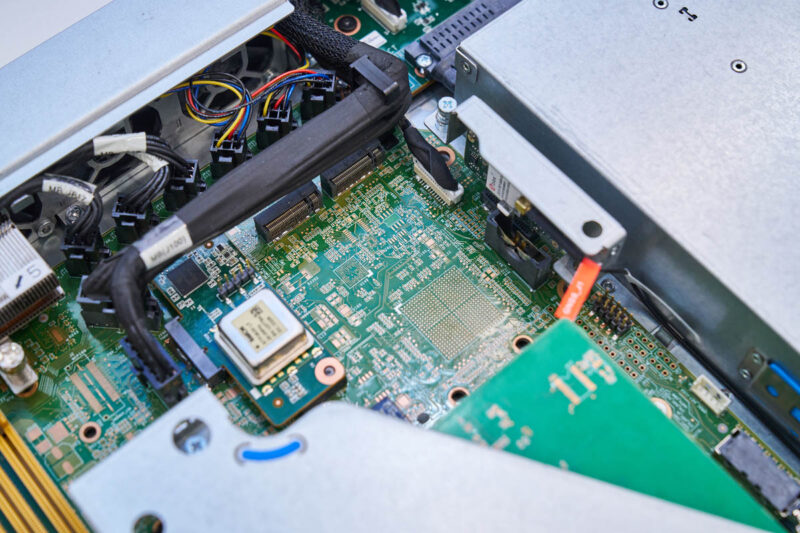
Overall, this is a neat design.
Final Words
The Intel Xeon 6 SoC is a neat platform. Not only does it have the new performance cores with features like Intel AMX, but it also has high-speed networking and a host of built-in accelerators for the Open RAN and similar markets. If you work at a big hyper-scaler or telco, then QCT might sell something like this to you. Otherwise, most on STH will be looking at the Supermicro solutions and later solutions from other vendors. We recently featured ASRock Rack Intel Xeon 6 SoC platforms that were targeted at first for a specific customer. Supermicro tends to get big customers in this arena as well, but also sells to smaller customers. Hopefully we will get to show you Xeon 6 SoC soon.
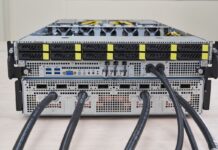

 with up to 24 ports of 25GbE and more)
I’m not surprised that VGA was just too big to keep getting the nod; but I’m a little surprised that, if you are going to break with tradition, you’d do miniDP+typeA rather than just typeC.
Is the server side just revisiting display connector history more slowly; or is physical separation of display output and a much more capable bus a security thing?
I’m adding that to ebay watch lists already. Looks like a neat opnsense edge box for my next firewall when used ones start showing up.
Sad network-heavy boxes don’t get any amd love like this. Love to see some higher rate qsfp/osfp in these form factors too.
Those coax connectors are not for antennas; they are 1PPS and 10MHz inputs for time synchronization, probably coming from a GPS receiver.
@José the GPS receiver is the add-in board in one of the pictures.
@Frank the article said the connectors on the left are for the antenna, but if you zoom the picture they are clearly labelled as “10 MHz in”, “10 MHz out”, “1 PPS in”, “1 PPS out”. Those are used for time synchronization against a high accuracy external clock.
But you are right that there is a GPS receiver board. I guess that the real antenna connector is the small one on the *right* side, close to the power supplies, labelled as “RF in”.
Now that you mention it – I was wondering why there’s only one antenna connector on the GPS module and multiple on the rear of the system.
The GNSS and OCXO in the QuantaEdge are a neat gimmick, but it looks like it falls short of 5G Telco standards of the OscilloQuartz PTP grandmasters, NTP network time servers, or “OSA 5400 SyncModule”; using the QuantaEdge’s included hardware would leave you wondering if you were spoofed or unsynced and likely to have a bumpy failover.
It’s a ublox F9T, which is the standard for high-end GNSS timing modules right now. Intel makes a couple timing NICs with those and an OCXO like this; they’re able to keep time with ~250 ps of jitter pretty effectively, and I doubt this is much worse. I haven’t looked into the F9T’s spoofing prevention, but it’s a top-of-the-line multi-band, multi-constellation module from the biggest vendor of GNSS modules, so I doubt it’d be *that* easy to spoof, and in any case you have the OCXO to fall back on. if the GNSS and OCXO disagree by more than ~1 PPB then *something* is going wrong, and you should be able to detect that. Beyond that, it’s mostly just a matter of engineering.
I’m not a 5G guy, but I spent *way* too much time testing GNSS/PTP/NTP hardware and software earlier this year.
Comments are closed.