

Ubiquiti UniFi USW-Pro-XG-10-PoE Power Consumption
At idle, we saw power consumption of 21.6W.
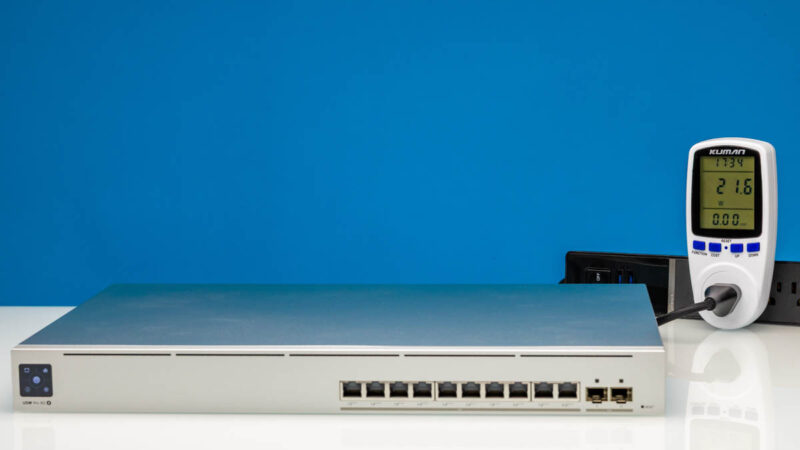
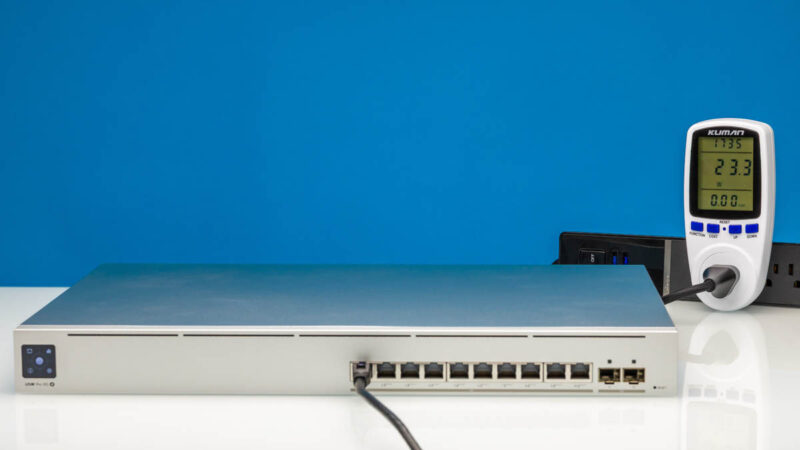
With a single 10Gbase-T port installed, we saw 23.3W of power being used for a 1.7W increment. Usually, on PoE switches, we see connected ports use more power than non-PoE switches, even if they are not delivering power via PoE.
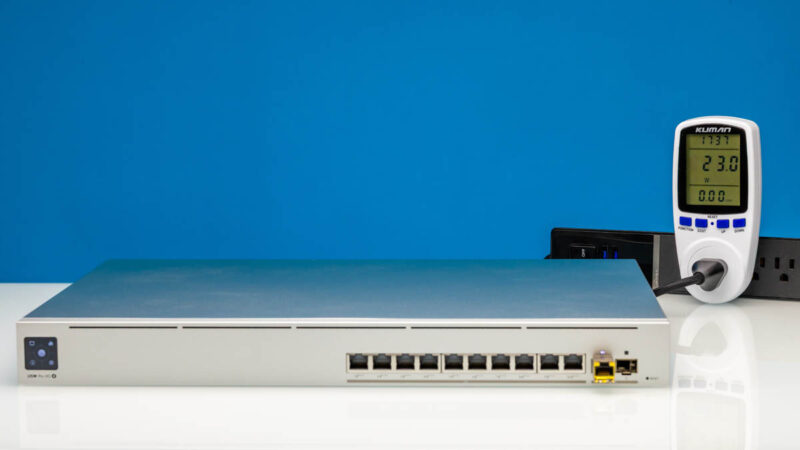
Adding an SFP+ to 10Gbase-T adapter, we saw 23.0W for an incremental 1.4W, which is fairly mid-range for switches we have tested.
Next, let us get to the performance.
Ubiquiti UniFi USW-Pro-XG-10-PoE Performance
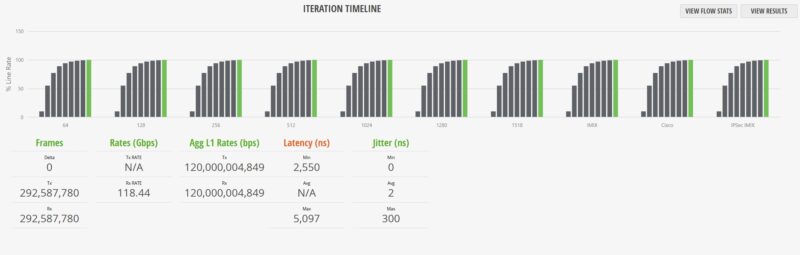
To test this, we are using a single Keysight XGS2 with a NOVUS 1/10G dual PHY card. We also upgraded our IxNetwork 11 revision to IxNetwork 26. One of the advantages of using a high-end FPGA-based tester is that we can generate not just 64B packets at line rate and over 1.6Tbps on our setup, but we can also get solid metrics on latency and jitter. We are using the RFC2544 Quick Test template and adding extra time per step, along with some additional IMIX variants, to provide more data. Starting with the 64B line rate test, here is what we saw:
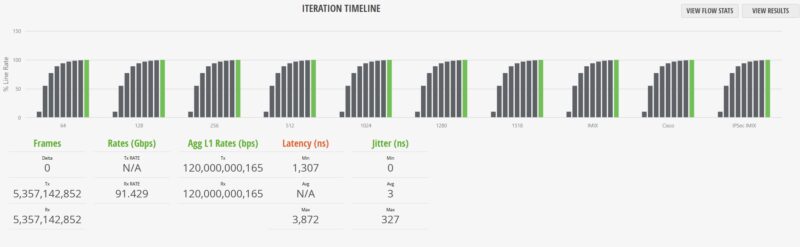
As you can see, we are hitting 100% line rate L1 traffic of 120Gbps (12 ports at 10Gbps) with no frame loss. That is only around 92.4Gbps of 64B packets since there is overhead. The scaling starts at 10% of the theoretical line rate, then increases to find how close the device can get to that theoretical rate without dropping packets. When you see the bars all the way to the right in green, on the 9th iteration, that means we got up to 100% line rate without dropping packets.
Something that caught our eye here was that the minimum latency and maximum latencies were close to the Sodola 12-port 10G switch that we just reviewed that also uses the RTL9313. Overall latency and jitter, however, were very close to the Ubiquiti UniFi USW-Pro-XG-8-PoE.
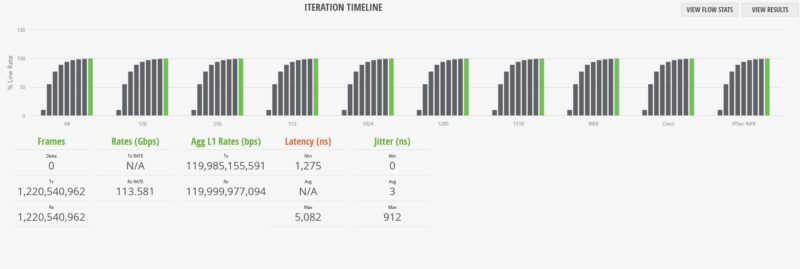
Moving to the 1518B results, here is what we saw:
There you see the 1518B packets fill the pipe with more data and less overhead, but we are still at 120Gbps L1 line rate and over 118Gbps. The latency, as we would expect, increased.
Aside from uniform packet sizes in 64B, 128B, 256B, 512B, 1024B, 1280B, and 1518B sizes, we are also using three standard IMIX profiles where the traffic generator is using different-sized packets in a mix. First, we have the standard IMIX profile:
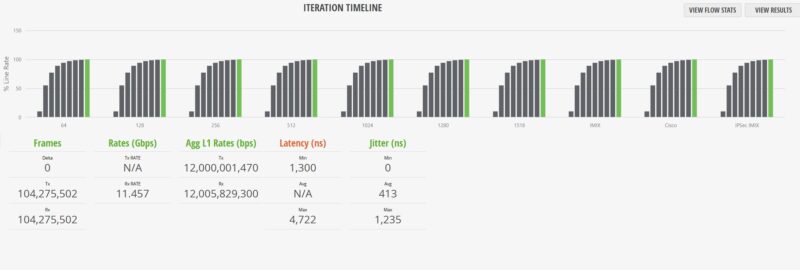
Cisco has its own IMIX profile in IxNetwork, so here is the Cisco IMIX profile:
For those who plan to run more VPN traffic through their devices, we also have the IPSec IMIX profile running.
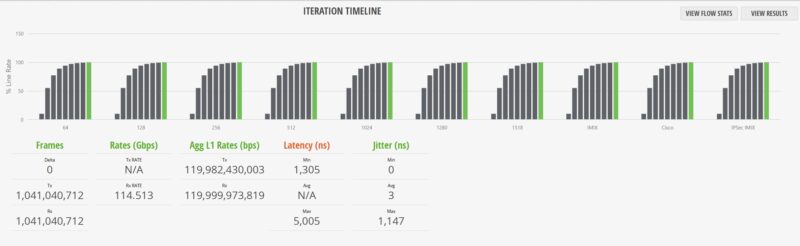
Overall, performance was similar to the switch’s smaller stablemate and other Realtek RTL9313 switches. Again, it was great to see all of the tests running at 100% line rate without frame loss in our testing.
Ubiquiti UniFi USW-Pro-XG-10-PoE PoE+++ Testing
We hooked up both the Fluke LinkIQ-Duo (Amazon Affiliate) and the MicroScanner PoE (Amazon Affiliate.) Here you can see on the LinkIQ-Duo the 2.5GbE and 5GbE speeds being validated, as well as both instruments showing PoE+++. That is different from the Ubiquiti UCG-Fiber where the MicroScanner PoE did not detect PoE.
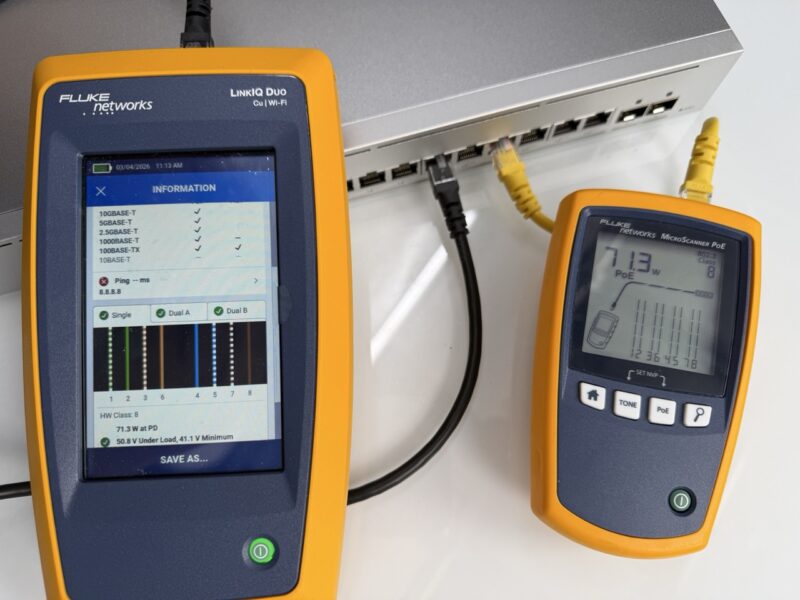
This is what we would expect to see, so it was good that the switch is providing this kind of output.
Final Words
At $699 for just a 12-port Realtek-based switch, this would not be a great value. The networking switch chips are what we often find in $200-300 web-managed switches. Instead, the value here really comes from the Ubiquiti touches and the PoE+++ capabilities. Integration with UniFi, the little status screen, and the Ubiquiti Etherlighting are all nice touches. Even bits like the second DC input add additional capability. To us, the $200 premium over the 8-port model would seem steep, but this is also a 400W PoE+++ switch. $699 for a 400W PoE+++ is awesome, and it certainly delivers on 10GbE performance across its ports. If you have one or two lower-power PoE devices and only plan to connect a few ports, then the $499 8+2 model is likely a better buy. On the other hand, if you just want a lot of power and 10GbE, then this is well worth the $200 upgrade.
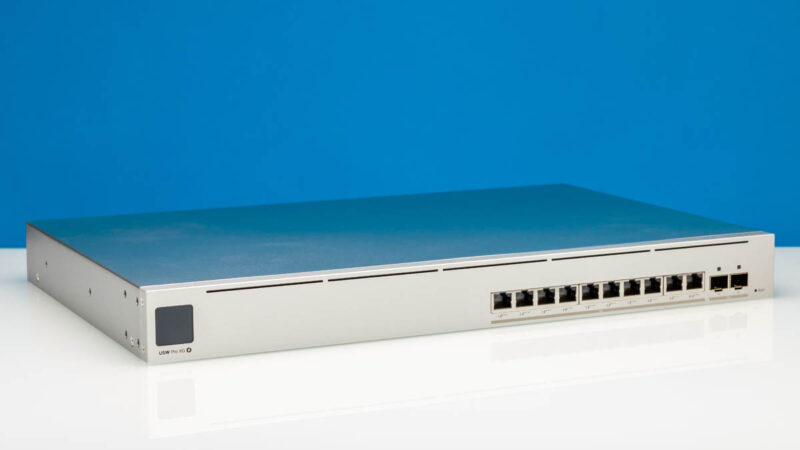
Overall, this is a great switch that worked well for us, so if you are in the Ubiquiti ecosystem, the premium for this over the 8-port model is well worth it.
Where to Buy
You can find these on B&H Photo via an affiliate link here. For the 8-port model, here is a B&H affiliate link.

Thanks for that, but you said you’d review the noise level: the fans mist have run up during your throughput testing, even if you were not hammering the PoE.
The ugly side:
https://militarnyi.com/en/news/investigation-80-of-russian-troops-linkups-on-the-front-line-produced-by-u-s-company-ubiquiti/
https://leave-russia.org/ubiquiti
https://theins.press/en/news/289602
Just bought this switch a couple months ago, the noise is very reasonable. Outright quiet when not using the PoE. I use about a 1/3 of the PoE budget from this switch, and you can hear it, but it isn’t something you would notice in a room running other computers at all.
I have one of these too. Used for me 2 x E7 APs which are POE and a couple of DGX GB 10 boxes. Quiet and obviously ties into the rest of the stack. Bought it when it first came out. So well over a year ago.
@Drello
nobody cares brainlet.
bought mine a few months back on an offer with a AI Pro camera. Both devices are not cheap but excellent. Future proofs the whole network for those hungry Wifi APs.
@Drello That is super disappointing.
@Kikelensky you are mistaken.
@John
It’s hypocritical to single out one company when, by that logic, you shouldn’t buy from any of them, since they’re all “””evil””” in the end.
How loud are the fans? Could you have this outside of a server closet?
@Drello
much better to go to Russia than Ukraine or Israel both of which are backed by the Synagogue of Satan. Do your research and enlighten yourself.
@Drello I was under the impression the Ubiquiti didn’t operate in Russia and that there are several different Russian entities that use Ubiquiti’s brand and logo without permission. This is based on reporting last year that detailed how Ubiquiti equipment was used by the Russian military in the war with Ukraine. A lot of the equipment seemed to be smuggled into Russia if I recall correctly, similarly to how people there still have access to high-end cars etc. from countries that no longer deliver to Russia directly. Essentially, my understanding is that you see a lot of Ubiquiti equipment simply because it’s very cost effective, not because Ubiquiti is actively selling it there.
With that said, I would also like Ubiquiti to stop selling to distributors that are shown to violate sanctions whenever new ones are identified.