

Systems with the AMD Instinct MI350P
At Dell Tech World 2026, we saw the AMD EPYC powered Dell PowerEdge XE7745 which is Dell’s 8x GPU server solution.
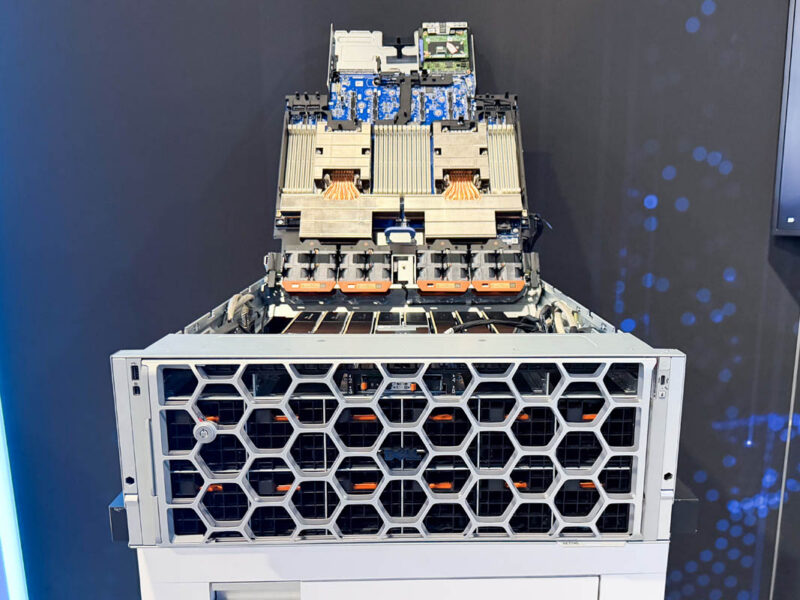
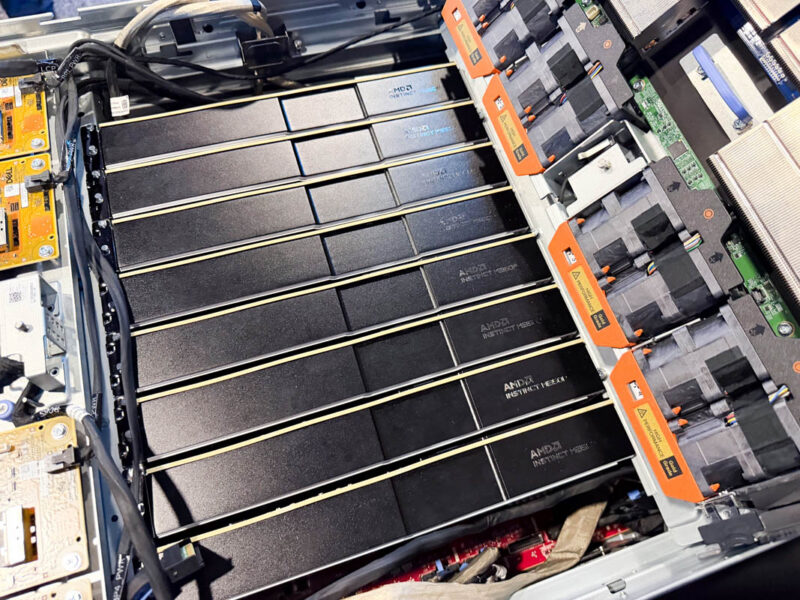
Inside, there were eight MI350P accelerators.
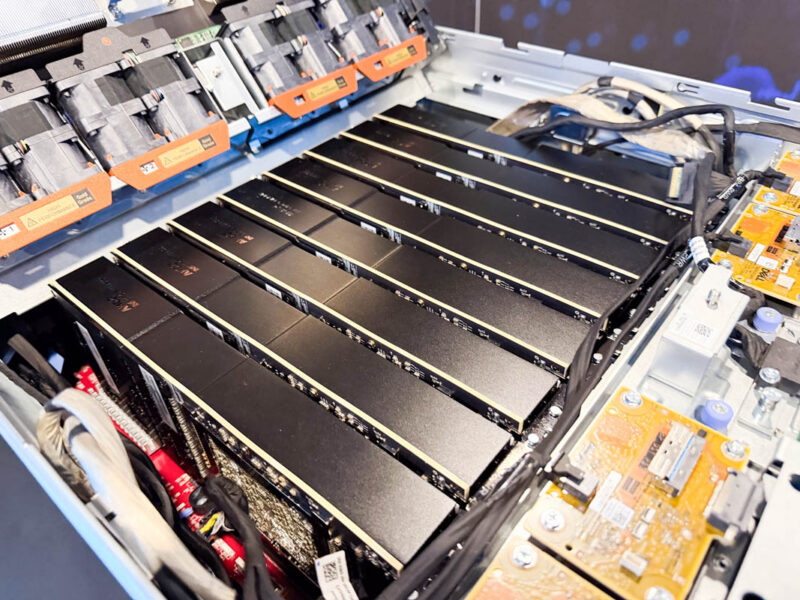
This may not be obvious, but Dell has a very different way that it packages the GPUs. Instead of having rear I/O directly outside of the rear of the case, Dell has turned its GPUs and system around.
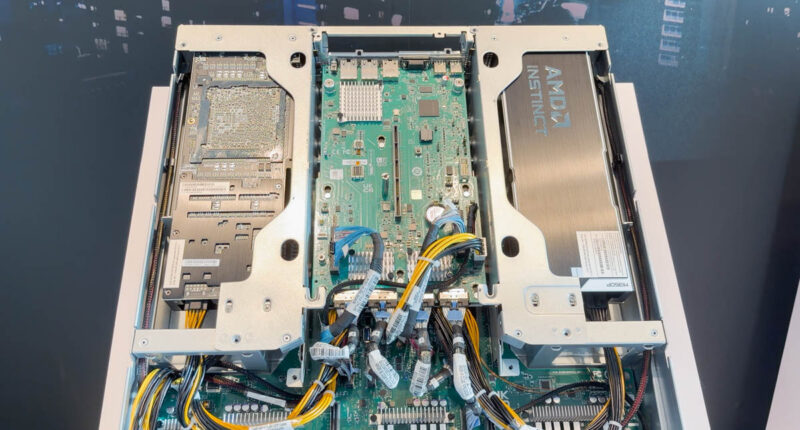
At Computex 2026, the MI350P was everywhere. For example, we saw this in the Gigabyte G294-Z22-AAP2.
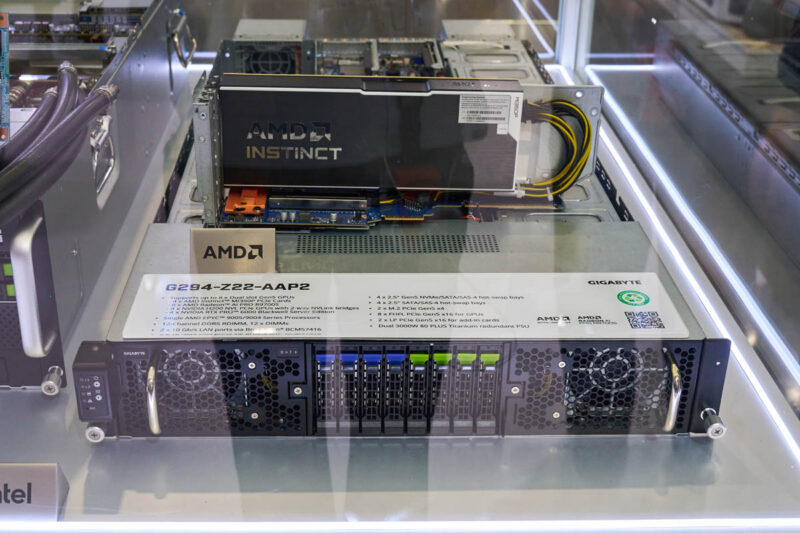
This is a 2U design with GPUs on either side of a slender motherboard. That is also important here. The Instinct MI350P does not have the same Infinity Fabric link between GPUs, and in this form factor, the larger bridges typically do not fit because the 2U chassis simply stacks groups of 2 GPUs.
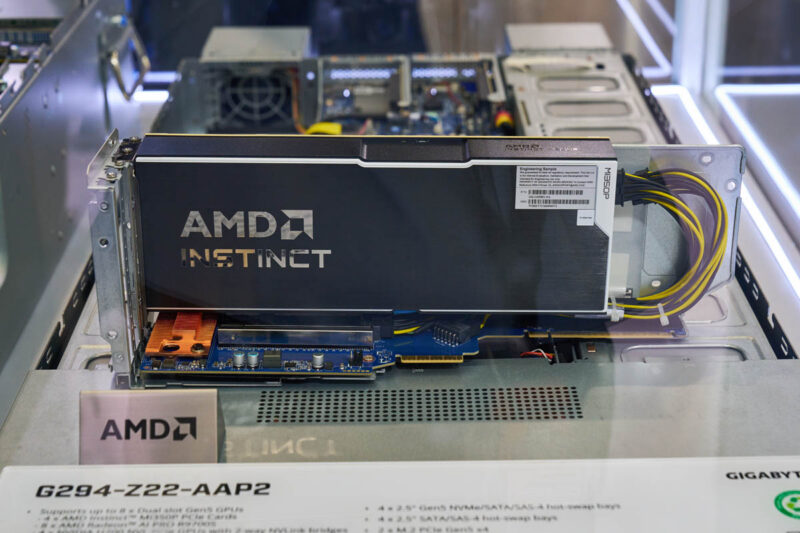
As a result, the impact of using a 2U server is less than if you were trying to use a bridge PCB series of GPUs.
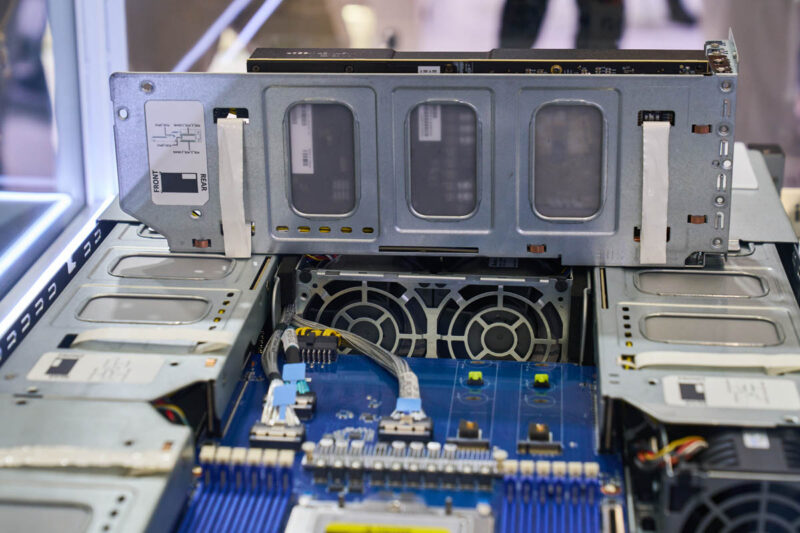
Also at Computex 2026 we saw the Inventec P5000AG7. This is a front GPU I/O design.
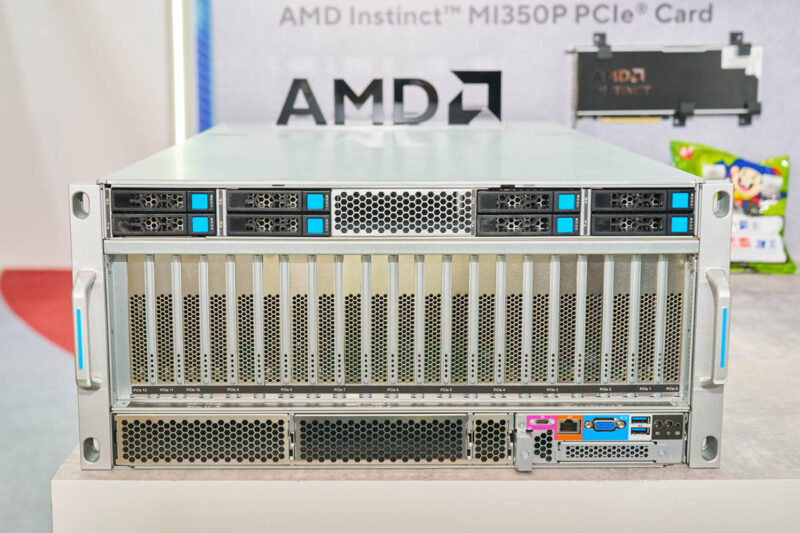
Although you can see the AMD MI350P in the background, a fun spot here was that Inventec still had the 8x “B300 NVL” configuration as an option. NVIDIA has not released the B300 NVL PCIe card, as it has focused more on the SXM and GB300 variants. This small relic actually is one of the reasons folks are excited about the MI350P, because NVIDIA has not released a Blackwell generation PCIe and HBM GPU. That hole is what the MI350P is targeting.
For its part, MiTAC also had a 2U server. The MiTAC TN85-B8261 is another 2U GPU server design displayed with the MI350P.
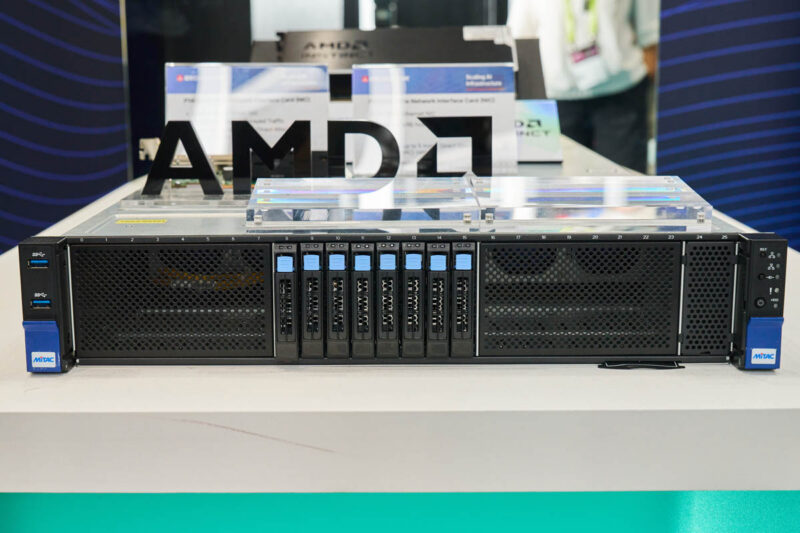
Here is a quick look at the MI350P cards installed.
Another 8x GPU server we saw at Computex 2026 with the MI350P was the ASUS ESC8000A-E13.
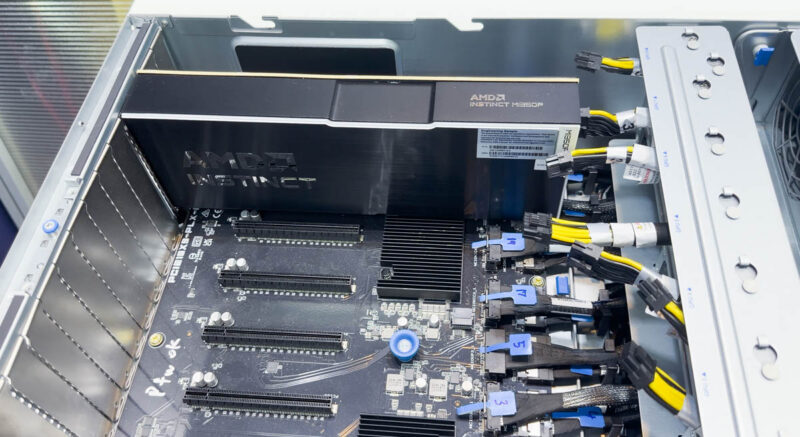
This is a PCIe-switched design, which means you can use lower-cost Broadcom NICs. We actually did an ASUS ESC8000A-E13P Review a little over a year ago with NVIDIA GPUs.
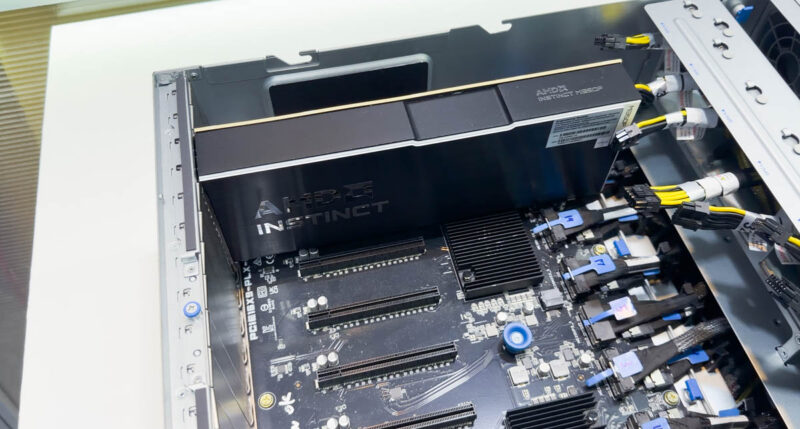
At Computex 2026, the MI350P was all over. We asked, and one of the reasons was just that customers were asking about the new HBM3E PCIe card because they wanted to use MXFP4 and still get the capacity and bandwidth from the HBM3E.
Just after Computex, we were at HPE Discover 2026. One of the big takeaways was that HPE was not interested in the hyper-scale/ neocloud size AI deployments, and was more focused on smaller-scale enterprise AI deployments, but really networking. We covered this very different focus in our Substack:
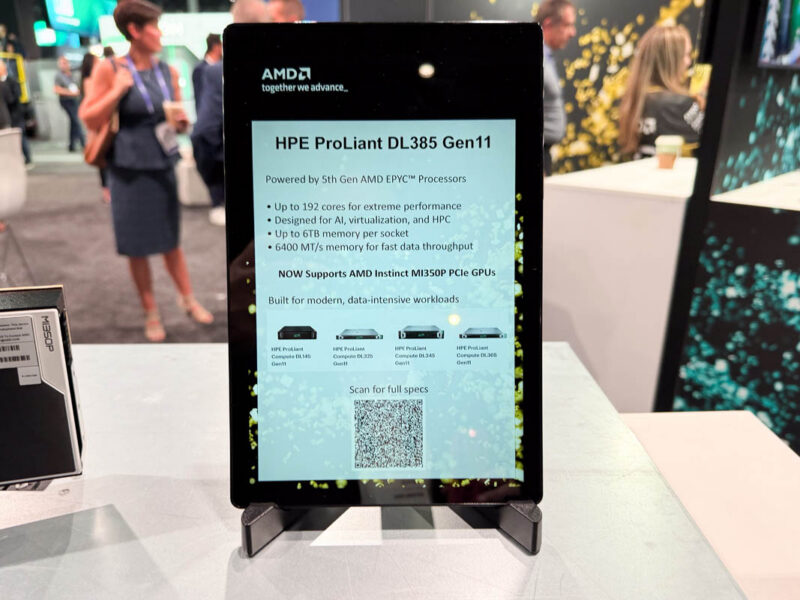
Still, HPE had its ProLiant DL385 Gen11 with the Instinct MI350P.
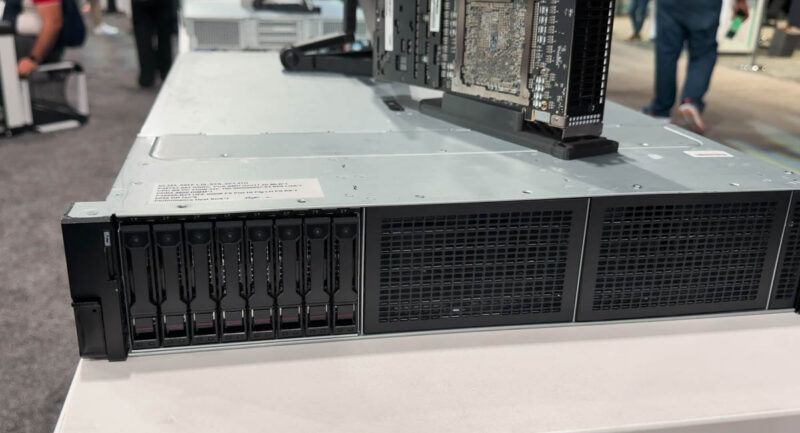
Even on the tag, HPE was highlighting the MI350P. When you recall that there is an option to run cards at 450W, that is one of the reasons. 450W makes the cards easier to integrate into standard compute servers. As a bit of industry aside, that is another reason we have not seen as many NVIDIA T4-to-L4 successors in this generation. Instead, the idea is to use a bigger GPU with a bigger resource pool. If you need multiple GPUs, partition the larger one. 450W is still more than 4x 75W GPUs, but it is denser in standard servers and offers greater flexibility because you can adjust the partitioning.
When we say we saw these all over, it was not just one vendor and one form factor. There was everything from dedicated 10kW+ servers to adding the GPUs into standard high-volume CPU compute servers.
Final Words
Originally, I wanted to get onto an Instinct MI350P and show you the performance compared to the RTX Pro 6000 Blackwell Server Edition. This became one of those launches where, even though AMD ran a higher volume of sample cards, I kept hearing that there was so much customer demand that we could not get on one (or eight). That seems to correlate with how popular Ryan’s original launch piece was a few weeks ago. When I saw the reaction to that one, I was actually shocked at first. Then I realized this is a segment of the market that will be popular, since many enterprises cannot handle running 100 kW+ racks. For that market, they know how to run PCIe GPUs, and it was a segment that had not seen a real HBM-based PCIe GPU launch in many years.
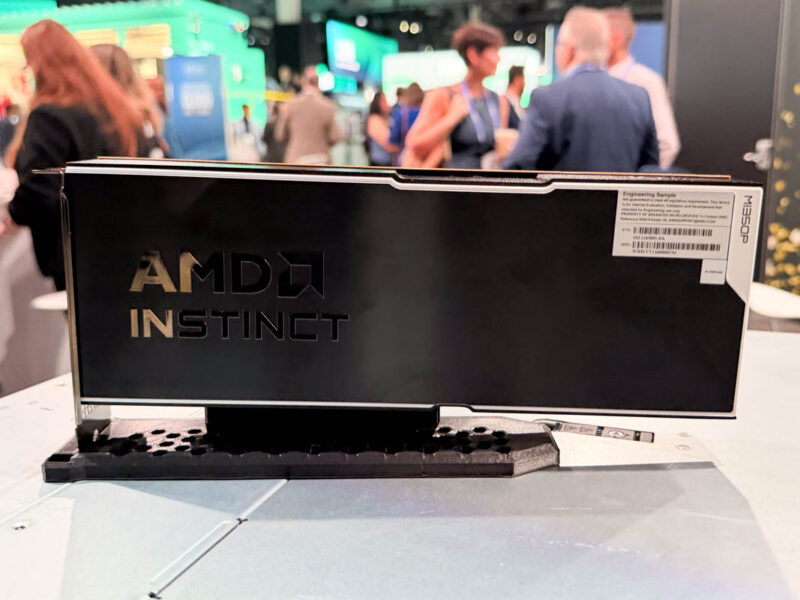
We have been reviewing 8x PCIe GPU servers since 2015, and I hope this market continues. Ultimately, having newer, more modern GPUs is a part of ensuring the health of the ecosystem. Likewise, having GPUs that use less than 1kW each makes them much more attractive to enterprises, as they can be integrated into existing racks and even standard compute platforms. Hopefully, you liked this look at the AMD Instinct MI350P because we have been seeing them just about everywhere.

While the popular focus these days is low-precision math for AI, these AMD accelerators do not skimp on the double precision floating point used in science and engineering. As a result, the MI350Ps are just a well suited for numerical computing as they are for making chatbots.
Such versatility–not shared with Nvidia’s Blackwell–should allow the AMD accelerators to hold value over a longer time and be repurposed if the AI bubble bursts.
It looks like I may have a long wait before used MI350P boards appear on eBay at my price.
The tradeoff with trying to be general is that by including a wide variety of hardware, every use case has a substantial portion of the chip that isn’t as useful to them.
At $18k-$25k per AIC, I would expect demand for these to be low. At that price, just buy a chip tailored to your particular use case.
> Like NVIDIA cards, the power connector is on the opposite side of the card (front) from the I/O plate.
Having the power connector not on top of the card just means the cards follow the official PCI specification with respect to max height, width, and length.
It’s nice to see some companies following standards. Standards enable interoperability and enhance competition on markets.
The PCIe form factor could make this easier to deploy than tightly integrated accelerator platforms. Power, cooling and software support will probably determine whether that flexibility matters in practice.