

Solidigm D5-P5336 122.88TB Performance by CPU Architecture
Now that we are firmly in the PCIe Gen5 era, we have a number of AMD, Intel, and even AmpereOne platforms to test the drives in to see the differences in performance based on architecture. These are small, but important.
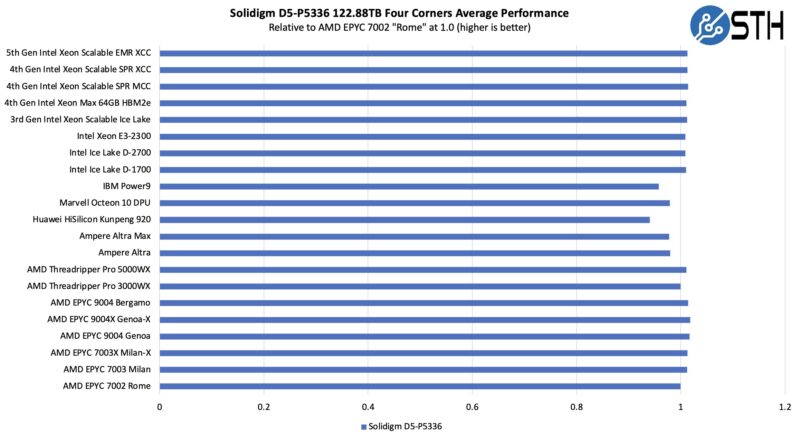
Since that is hard to read, we have a zoomed-in view below without a 0 X-axis.
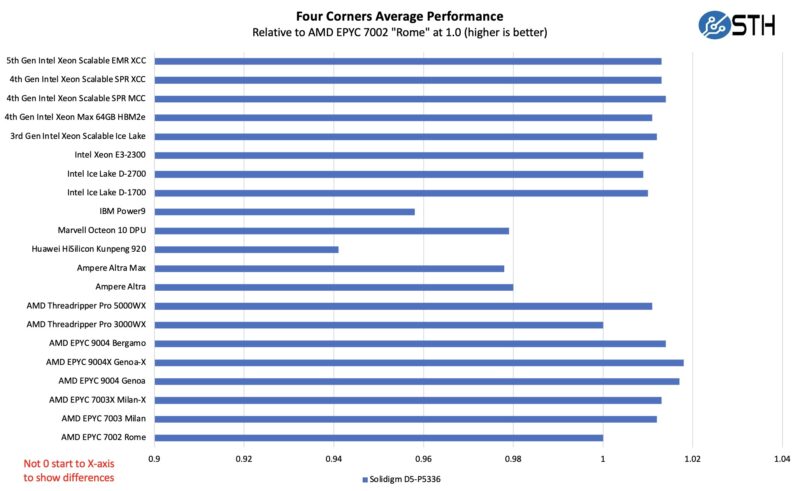
We see a similar trend to the previous PCIe Gen4 generation and actually very similar performance on the different architectures for both the 61.44TB and 122.88TB drives. That in some ways validates that we are really seeing architectural differences.
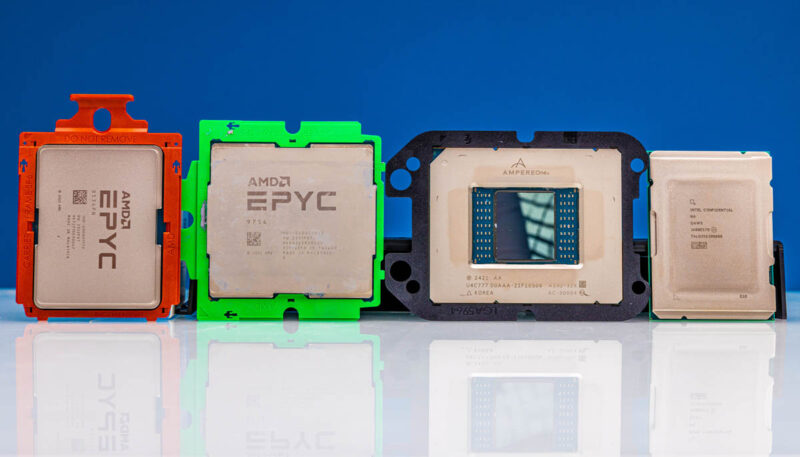
It is fun to see that not all PCIe controllers are created equally and that there are differences even based on the platform the drive is put into. It logically makes sense, but it is cool to see.
Key Lessons Learned
Something that we wanted to address is the 0.6DWPD metric. Some organizations only buy 1 DWPD and higher SSDs. Solidigm has a different way to look at this, and it is a bit of a crazy chart when you think about what is happening.
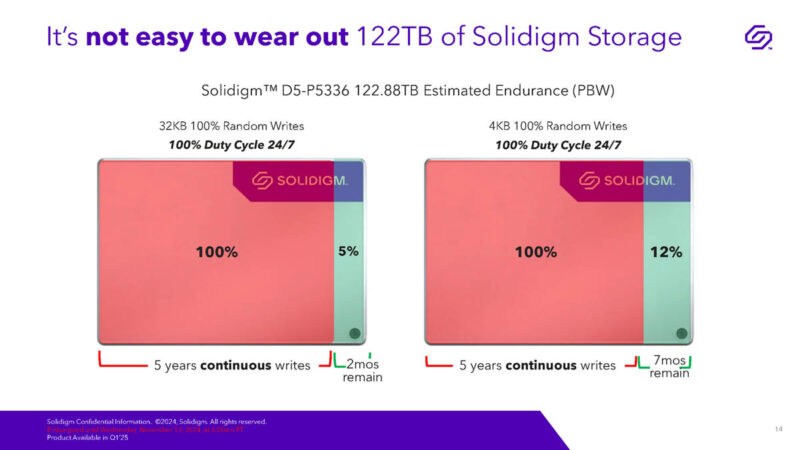
What this says is that if you use your read-optimized drive to write 24×7 to it for 5 years, you will not wear the drive out. There is a somewhat fun reason for this. The drive has great capacity, but not great random write speeds. Practically that means that the drive cannot service these random writes fast enough to have the media wear out.
Perhaps that is the bigger message behind these larger drives. Last year we highlighted how We Bought 1347 Used Data Center SSDs to Look at SSD Endurance. The thesis was that with larger drives, we would have less of an issue with media wearing out, and that played well with smaller drives. With 122.88TB, there are two aspects to look at. First, it is impossible for the drive to do enough 4K random writes to wear the drive out in 5 years. Second, that would assume constantly writing to this drive which is the exact wrong use case and wrong tool for that kind of job. This is more of a drive that you might put files on that you want to be accessed by many clients many times in the future. Another way to look at it is something like an AI training cluster where you need a lot of data stored that will then be accessed
Final Words
This drive is nothing short of cool. 122.88TB. That is a capacity in 2.5″ that would take four or more 3.5″ hard drives. Add to those the extra controller/ expander ports, extra backplanes and cables, and so forth. Hard drives may be less expensive, but one is not going to get around 7GB/s of sequential read bandwidth from four hard drives. Either looking at capacity per volume or performance per volume, the 122.88TB form factor, even in a PCIe Gen4 NVMe SSD like the Solidigm D5-P5336 is really neat.
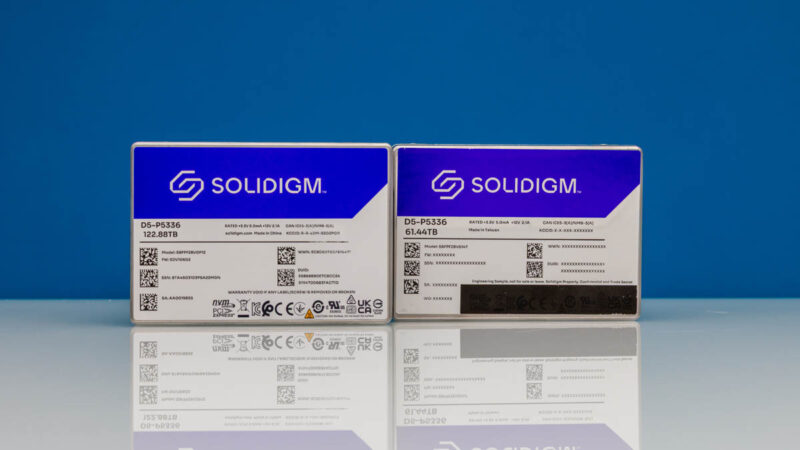
One way to look at this might also be that this is not the fastest drive. That is not really the point. The Solidigm D5-P5336 is designed to offer massive capacity in a small space. What it also delivers is a direct line-of-sight to sunsetting the DWPD metric in data center SSDs.

I personally would like to state that I LOVE the side-by-side shots of the small/large runs of the benchmarks!
Please keep it up. Heck, please remove the individual shots to save some copy and just standardize how you show the side-by-sides. (I.e. always smaller run on the left for example.)
Saving time scrolling, and being able to quickly address any differences between the runs in a single paragraph seems like a win for your readers, without losing any functional content!
It’s a shame the 61TB drives skyrocketed in price. Otherwise it might have been possible to get this for around $7k which would be a steal.
My Norco 4224 with 24 of these, for my plex server