

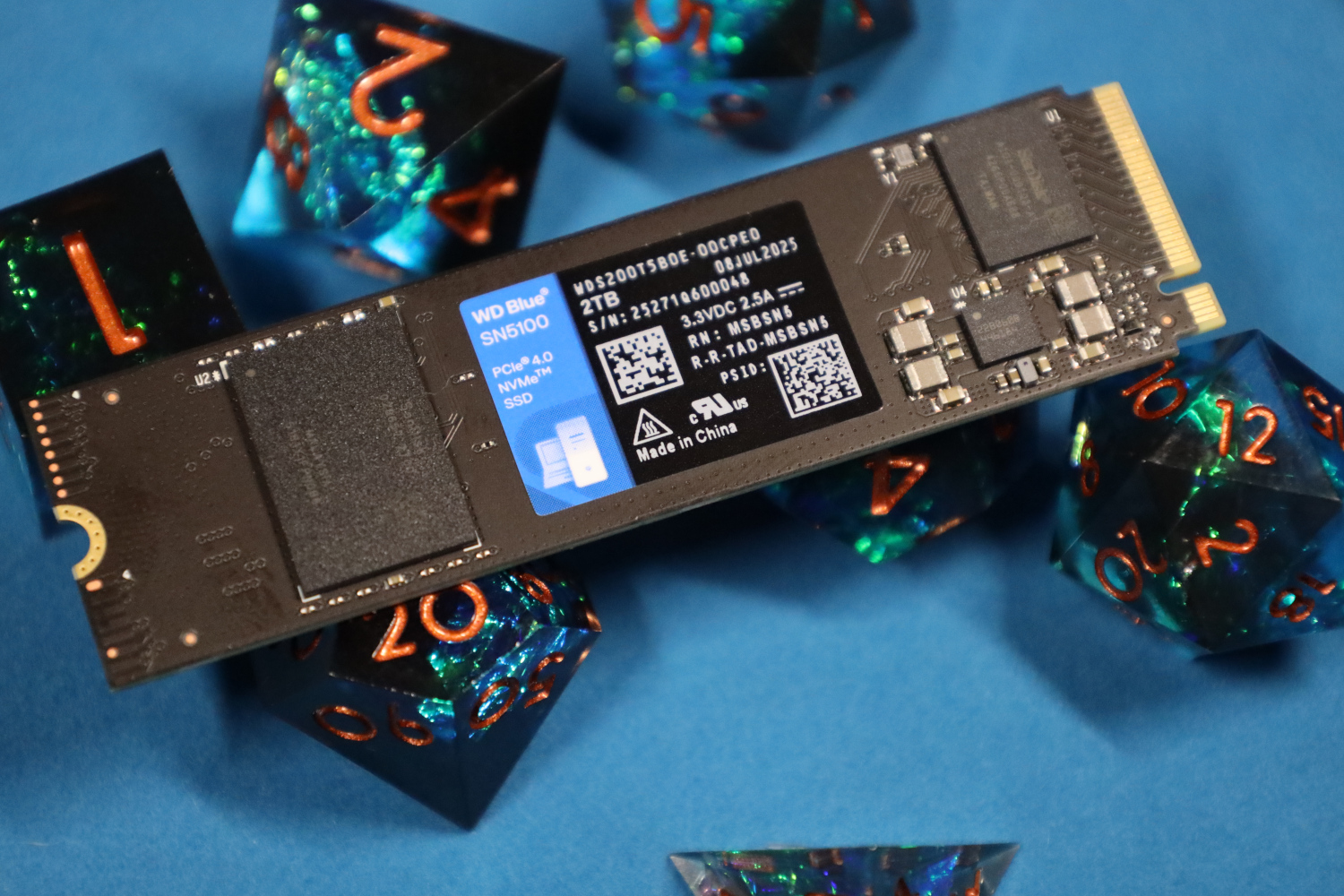
Today, we are looking at the WD Blue SN5100 2TB NVMe SSD. Really, it is the Sandisk WD Blue SN5100. Western Digital (WD) now is the hard drive maker, and SanDisk has taken over the SSD lines, almost as it was pre-merger. This is a drive that is in the middle of that transition to the go-forward state. Regardless, I have a history of looking at the Blue line of drives from WD, most recently the SN5000 earlier this year, and they have been reliable brand-name options for the mainstream market for years. The SN5100 looks to continue that tradition while upping the performance ante, and I am excited to have a look at it.
Note: You can find these and check the current pricing on Amazon (Affiliate link).
WD Blue SN5100 2TB PCIe Gen4 NVMe SSD
The WD Blue SN5100 2TB comes in a single-sided M.2 2280 (80mm) form factor.
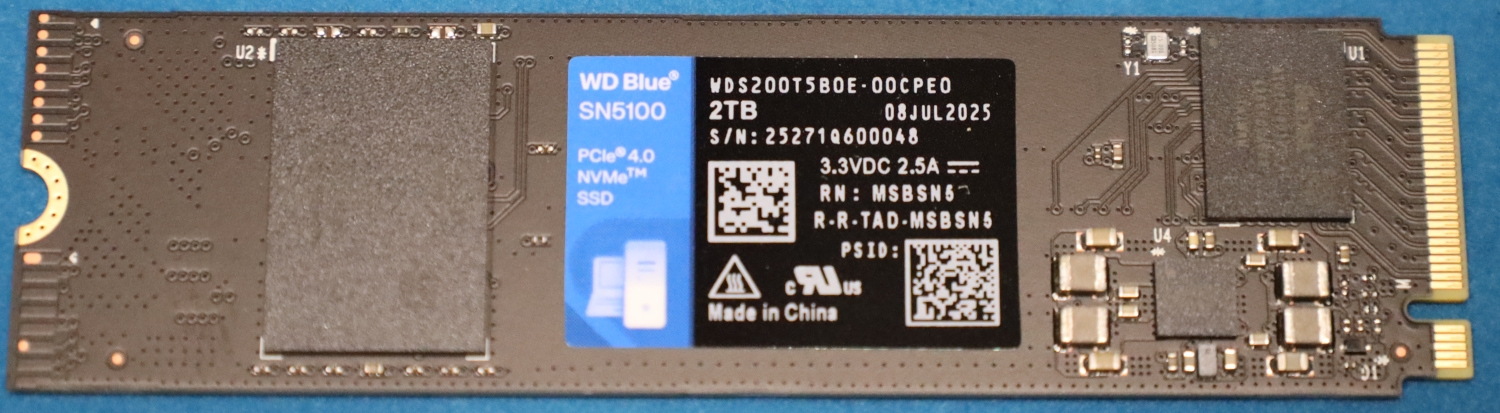
The Sandisk/WD Blue SN5100 has a familiar visual layout to generations of past WD Blue M.2 SSDs, with the single NAND package physically separated from the controller on the drive. While the visual layout of the drive remains similar, the components have significantly changed.
Most importantly, the SN5100 features Sandisk QLC NAND, whereas all previous Blue drives came equipped with TLC. QLC is normally known for lower performance, especially write performance, than TLC, but Sandisk is making some big claims for performance on this new drive. As with previous Blue drives, there is no DRAM cache, and the drive is powered by an in-house controller.
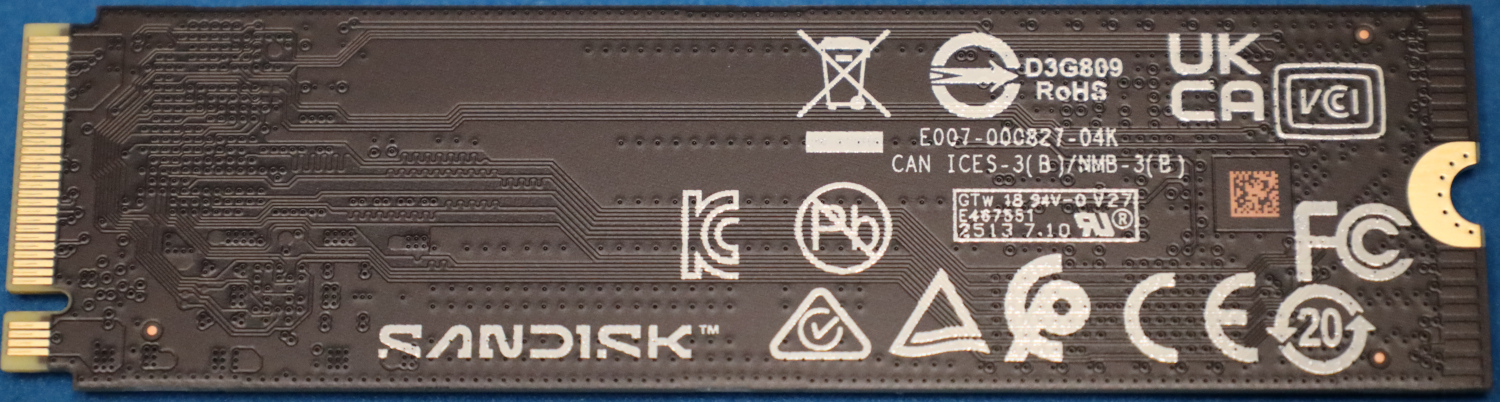
The backside of the Sandisk WD SN5100 has nothing on it except screen-printed logos, which is to be expected.
WD Blue SN5100 2TB SSD Specs
The WD Blue SN5100 is launching at 500GB, 1TB, and 2TB capacity points.
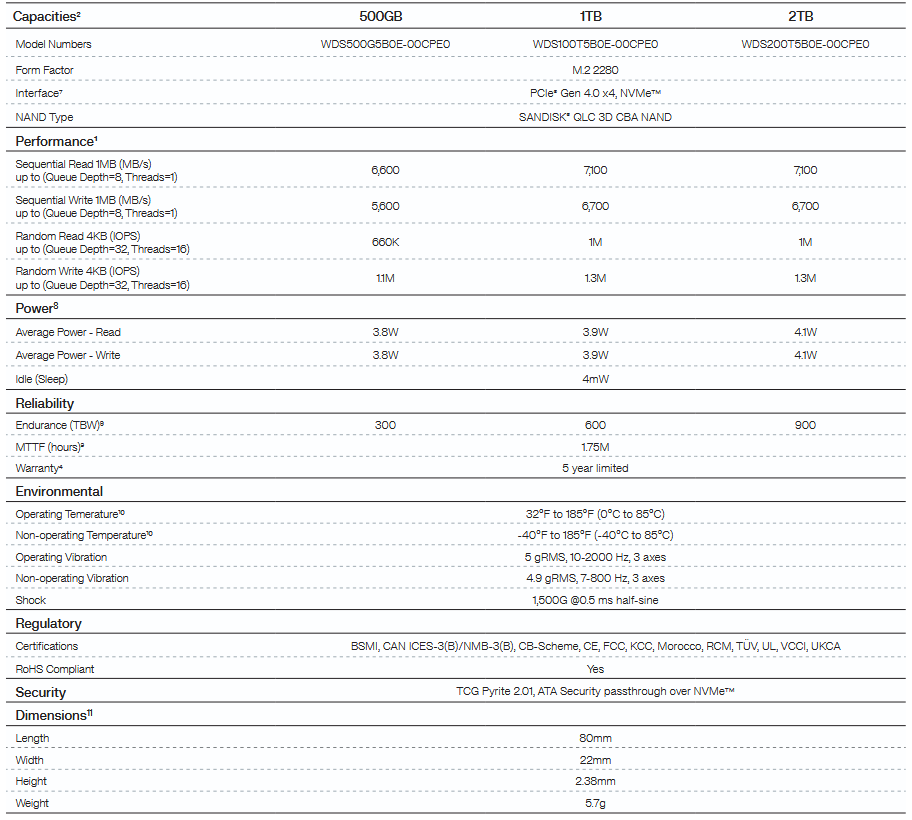
The 2TB model has specified 7100 MB/s read and 6700 MB/s sequential write speeds, which would position this drive near the peak possible performance for a Gen 4 SSD.
Endurance ratings on these drives are a bit of a mixed bag for me. The 1TB and 2TB SKUs have what I consider an ideal endurance per capacity ratio, but the 2TB drive has twice the capacity but only 50% more endurance. In reality, 900TBW is probably enough for most users, but it is lower than the 600 TBW per TB of capacity ratio I have come to expect from premium drives. With that said, the SN5100 does come with a premium-drive standard 5-year warranty, something budget-oriented SSDs tend to skimp on.
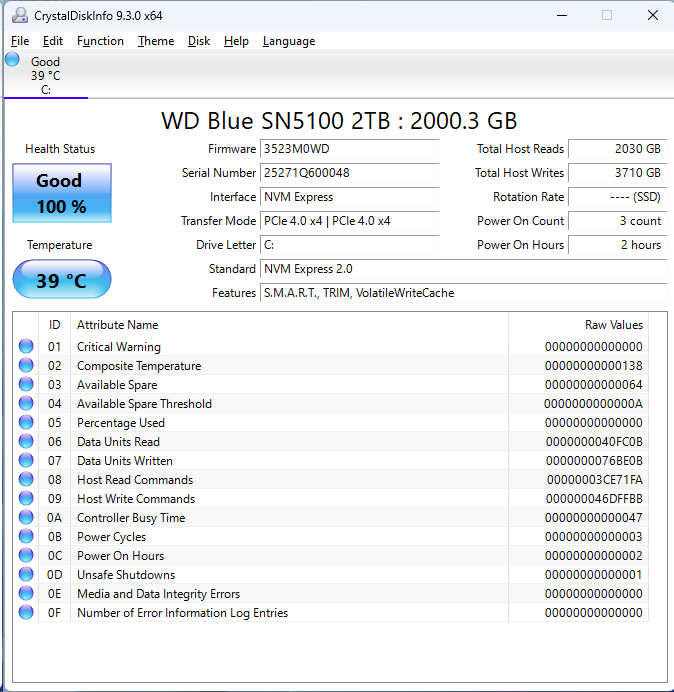
CrystalDiskInfo can give us some basic information about the SSD and confirms we are operating at PCIe 4.0 x4 speeds using NVMe 2.0.
Test System Configuration
We are using the following configuration for this test:
- Motherboard: MSI MAG X670E Tomahawk
- CPU: AMD Ryzen 9 7900X (12C/24T)
- RAM: 2x 16GB DDR5-6000 UDIMMs
Our testing uses the WD SN5100 2TB as the boot drive for the system, installed in the M.2_1 slot on the motherboard. This slot supports up to PCIe Gen 5 x4. The drive is filled to 85% capacity with data, and then some is deleted, leaving around 60% used space on the volume.
Next, we are going to get into our performance testing.


Great in-depth review of the WD Blue SN5100! I really like how you highlighted the transition from TLC to QLC and its impact on performance. The endurance details were also very helpful, especially for those comparing different Gen4 NVMe SSD options. Personally, I’ve had good experiences with WD Blue drives for mainstream setups, but when it comes to larger IT hardware needs—like servers and enterprise storage—I usually check out specialized suppliers. If anyone is looking for reliable refurbished servers or enterprise hardware at competitive prices, I’d recommend checking ServerTechCentral.com
. They’ve got a solid range of Dell and other server brands.