

The second major Computex keynote for the day comes from Qualcomm, who has become a regular presenter at the show.
This year’s keynote is once again being presented by company CEO Cristiano Amon, and the theme is “The Year of Agents,” marking a shift from a PC-centric 2025 keynote to something that, at least at a high level, is going to be more broadly focused on AI matters in general.
Qualcomm Computex 2026 Keynote Preview
Unlike past years – and unlike some rivals – Qualcomm is holding their metaphorical cards a bit closer to their chest than most. The company has not extensively telegraphed what they will be presenting at this year’s Computex trade show beyond the fact that it is going to be AI-focused (which for better or worse, is just like everyone else).
The recent agentic AI boom in particular has been a rising tide that has floated all of the boats in the tech industry. Not only have GPU and accelerator vendors benefited from yet more demand for AI inference hardware, but those agentic AIs are further spawning traditional compute workloads that then need to be processed. So this has created a second boom particularly for CPUs, as well as memory and storage. And Qualcomm stands to be a beneficiary of that.
In the past the company has laid bare that it intends to get into the data center space. There have been some misfires along the way – and some products like the Cloud AI 100 series that did not quite achieve orbit – but those broader plans remain in play. So for an agentic AI-themed keynote, we would expect to see at least a bit more from Qualcomm about some data center hardware that will be used for that purpose.
Meanwhile on the client side of matters, the first laptops based on Qualcomm’s Snapdragon X2 Elite SoC recently began shipping. Featuring major CPU and GPU architectural improvements, Qualcomm is now in the process of cascading that hardware down to lower-tier hardware such as the Snapdragon X2 Plus series, which was first announced at CES this year. Laptops based on those chips have yet to begin shipping, so Computex will provide an opportunity for Qualcomm to detail those release plans.
As for low-end laptops, Qualcomm announced the Snapdragon C a few days ahead of Computex. This ultra-budget chip is aimed at laptops starting at $300. Qualcomm did not release any technical details about the chip with their announcement, so it is a tossup whether we will get anything else during the keynote itself. Though based on Qualcomm’s history with budget smartphone SoCs, as well as the prices they are looking to hit, it would not be surprising to find out that this was a recycled/rebadged version of an earlier Qualcomm chip – something that is already paid for and which they could more cheaply produce on an older process node.
Finally, Qualcomm’s press release announcing the keynote name dropped the company’s Dragonwing brand as well, which is Qualcomm’s IoT, embedded, and robotics computing product lineup. The company seems to be increasingly on a collision course with NVIDIA in this segment, so it could prove interesting to see what they have to announce here.
The Qualcomm keynote is scheduled to run for 75 minutes, and will kick off at 11pm PT/2am ET/2pm CST/06:00 UTC.
Qualcomm Computex 2026 Keynote Coverage Live
It’s a few minutes before showtime, and at this point we are just waiting for the keynote to kick off.
That Amon is going to be following NVIDIA just an hour later with a keynote that it apparently just as heavily focused on agentic AI is certainly going to invite some comparisons. Whether those are in Qualcomm’s favor or not is the big question. If nothing else, it’s fair to say that Qualcomm is looking to make up for lost time here.
Being that this is an official Computex keynote – and the official opening keynote at that – we are expecting Qualcomm’s presentation to actually be the second part of the keynote, with event organizer TAITRA using the opening segment to promote the show and the Taiwanese vendors attending. That will probably take up the first 15 minutes or so of the 75 minute slot.
And a couple of minutes late, but here we go! Things are starting off with a promo video for Computex.
First up is James Huang, the chairman of TAITRA, who is welcoming the audience to Computex 2026.
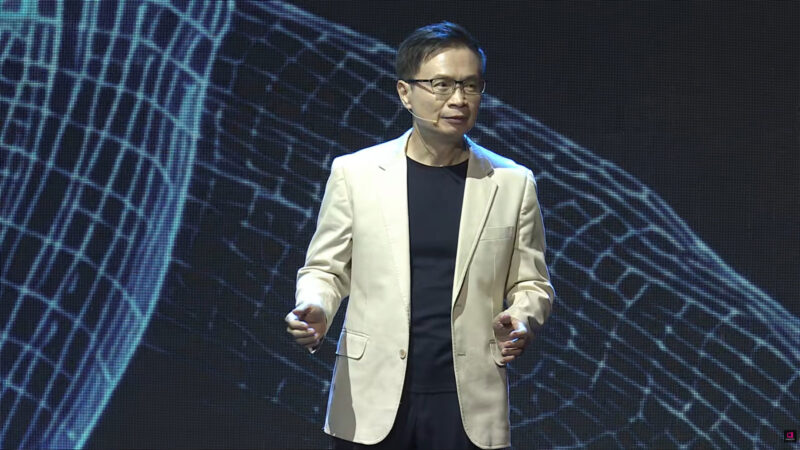
Huang is briefly addressing the current political environment and general uncertainty, and how technology marches on.
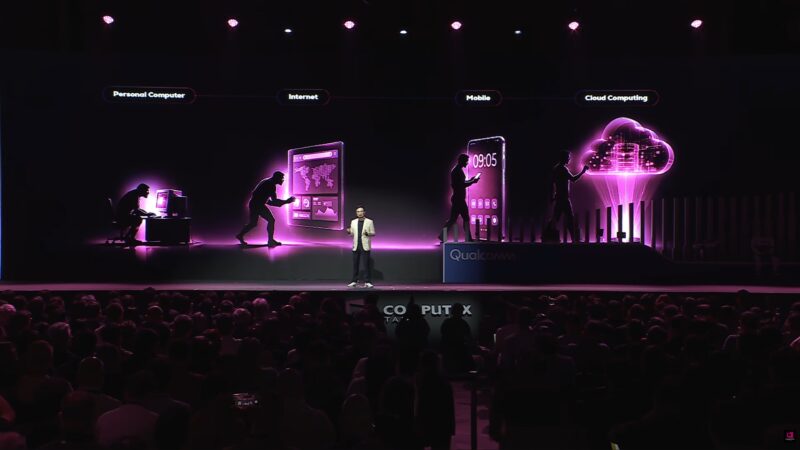
“Today the world comes to see where humanity goes next.”
Computex is no longer just a tech show, but a conduit to the new world.
This year’s theme: AI Together.
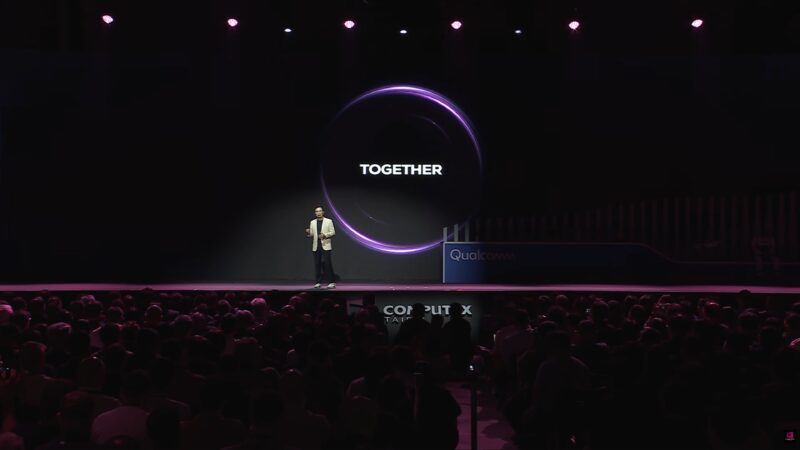
This is the largest Computex in TAITRA’s history.
There will be four major keynotes: Qualcomm, Marvell, Intel, and NXP.
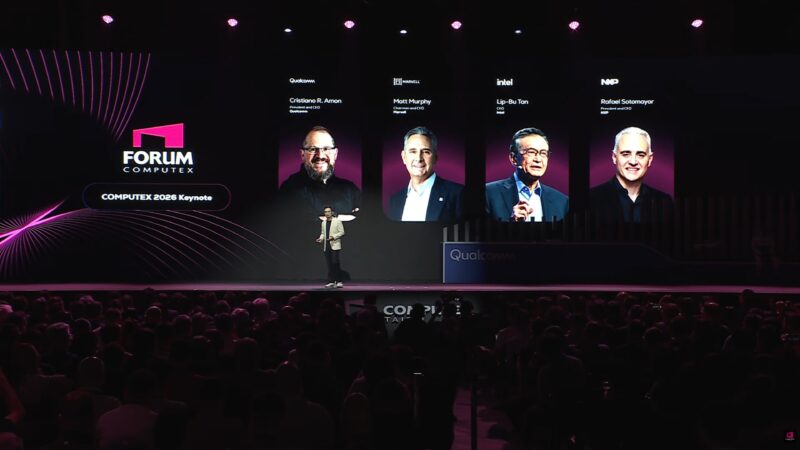
This year’s show is also devoting a whole pavilion to robotics for the first time.
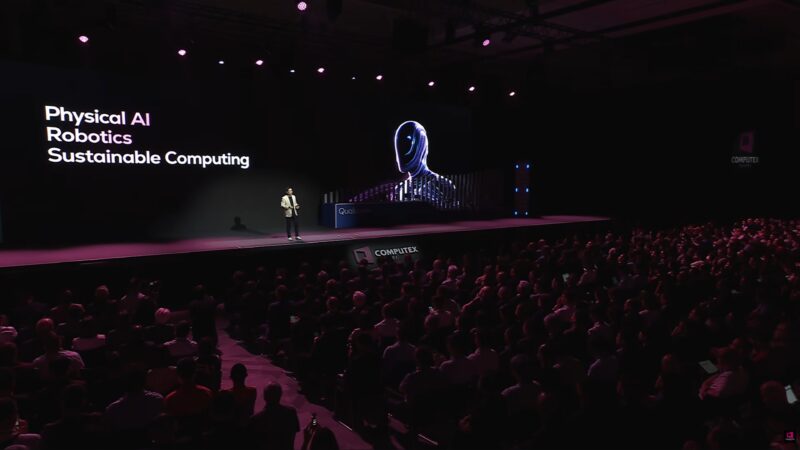
“Computex has turned Taiwan into the AI hub of the world.”
And that’s it for James Huang.
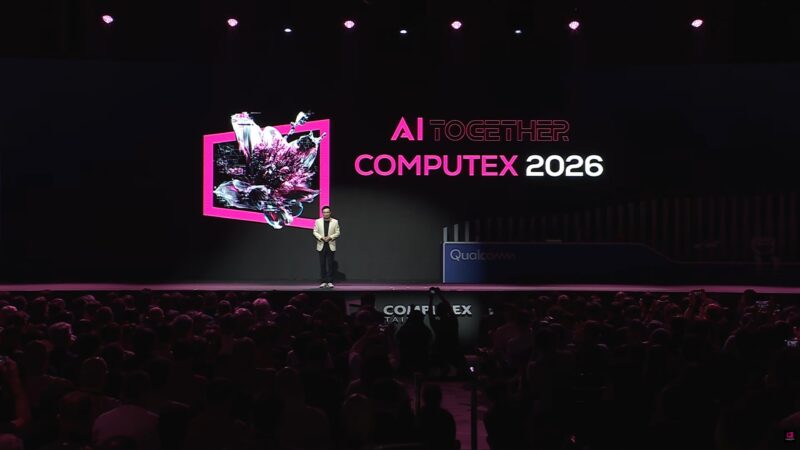
Next up is Jason Chen, the Chairman of the Taipei Computer Association (TCA).
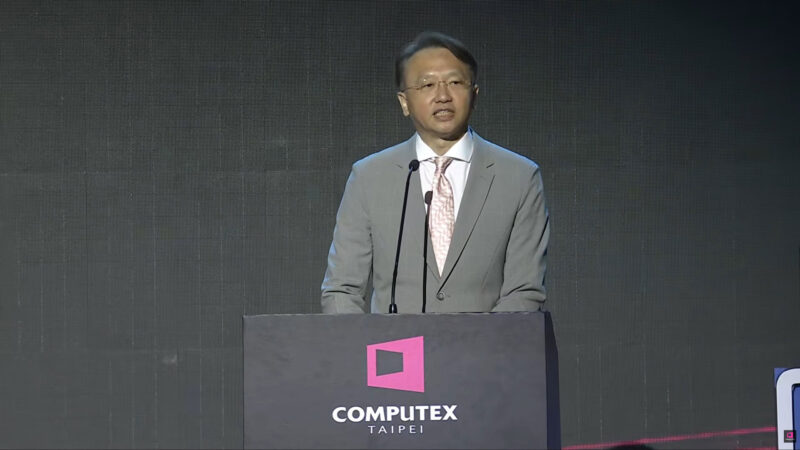
Starting with a thank you to the media for covering the show.
“AI is rapidly moving from an innovation showcase to real-world deployment.”
This year’s show has more than 1,500 exhibitors across 6,000 boths.
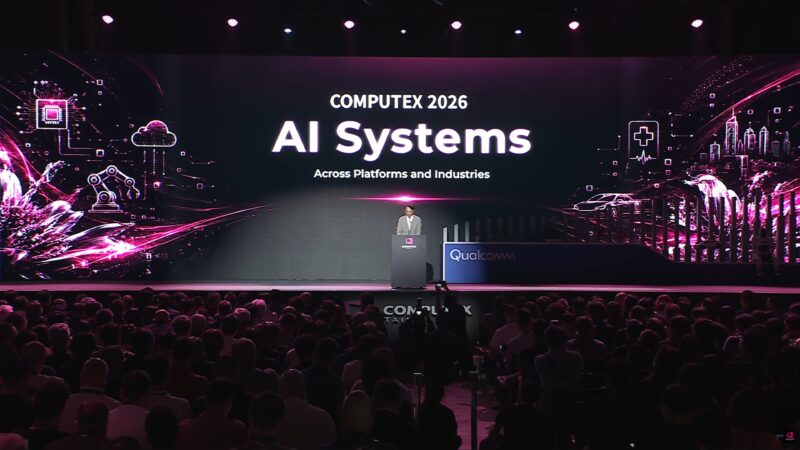
Jason is rattling off the many (many) industries in which AI is expected to be applicable. Government, healthcare, and more.
Computing, Connectivity, Storage, Efficiency, and Application.
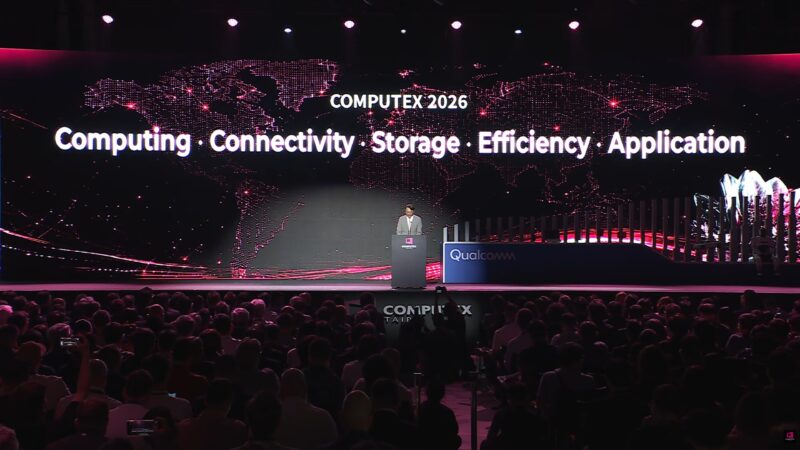
AI together isn’t just a theme, it is a shared direction for the global industry.
And that is a wrap for Jason Chen. Now it’s time to kick off the Qualcomm keynote proper (with TAITRA making the introduction)
This is the third consecutive year that Qualcomm has keynoted at Computex. Which goes to show how their direction has expanded; this PC-centric show was not something that was particularly relevant to Qualcomm even 5 years ago.
Now rolling an intro video about personal AI assistance.
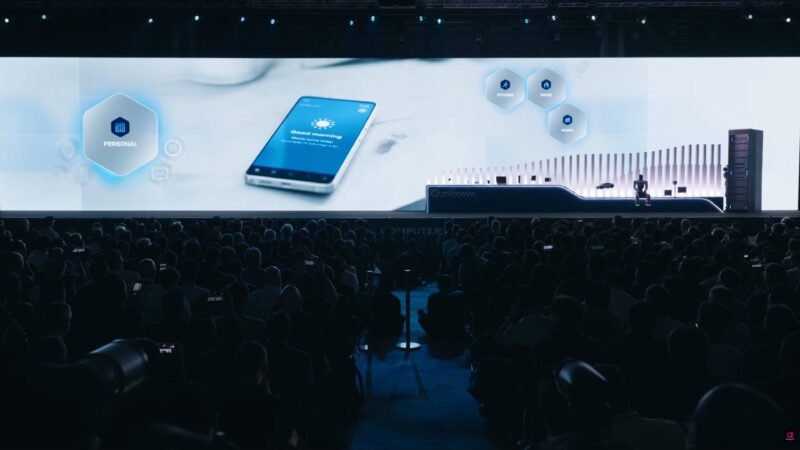
The video showcases various activities such as exercising, grocery shopping, and workplace productivity. All assisted by AI agents.
And here is Cristiano.
Amon is thanking the crowd before he begins.
“This presentation is not really about Qualcomm.” It is about all the companies responsible for technological development. All of Qualcomm’s suppliers and development partners, as well as TSMC.
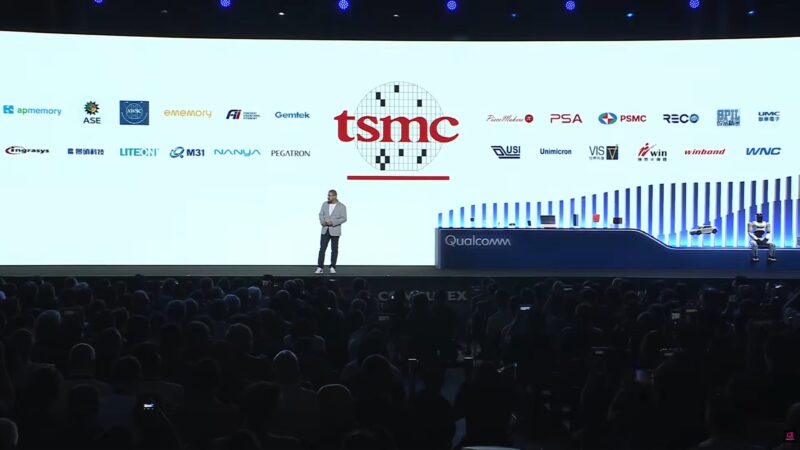
“I have one job today […] I want you to understand how AI will evolve for all of the devices”
And Amon has clarified that he will not be talking about the data center in any significant capacity in this keynote.
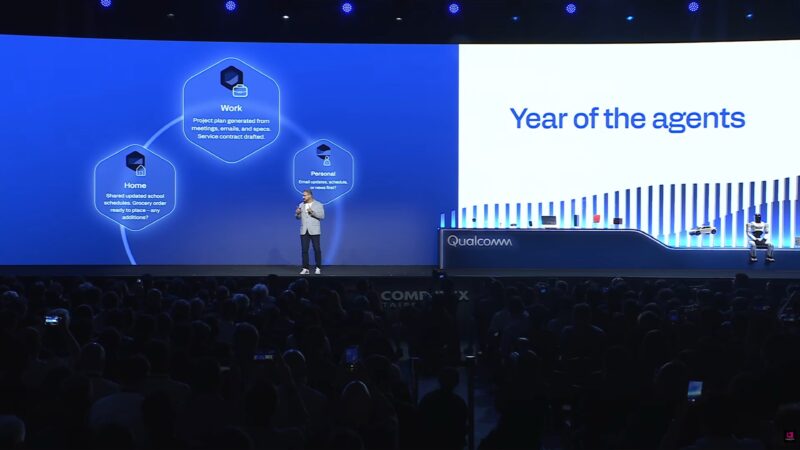
2026 is the year of agents thanks to the rapid progress of agentic AI.
Consumers will have agents at home and work to help them with their tasks. Filtering through information, helping to plan activities and projects.
AI that is “going to feel like a companion.”
“The phone today is at the center of your digital life.”
But in the future agents will become the center of the digital experience.
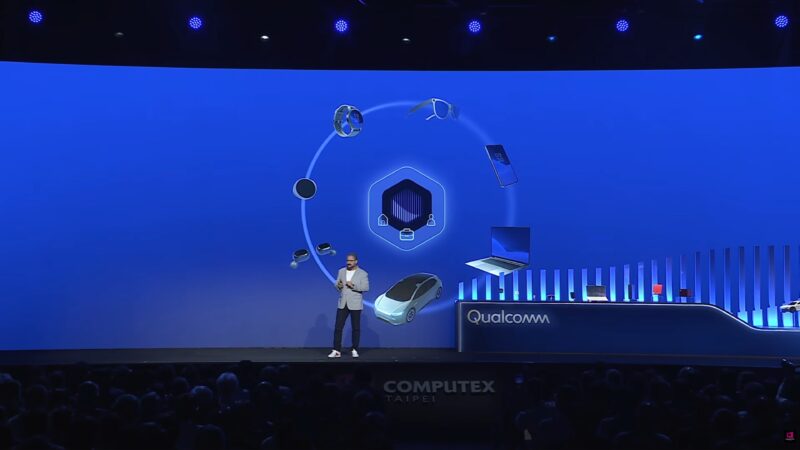
Meanwhile devices like phones and PCs become endpoints for agents. Anything that connects you to an agent becomes an endpoint for AI.
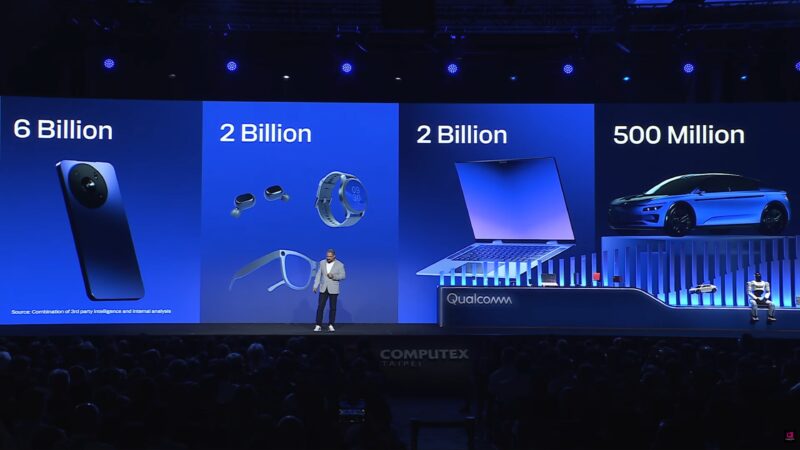
6 billion phones, 2 billion PCs, 500 million connected cars in the world.
Today’s devices were not designed for the agentic AI experience. New devices, new designs will be required.
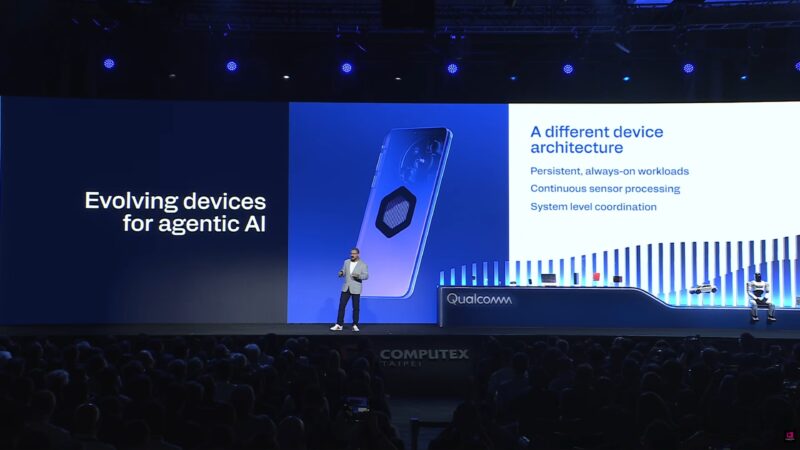
Agent-driven computing rather than user-driven computing. This means agents running on their own.
This is going to require integration across all of the compute domains. Meanwhile if agents are running on their own, then power efficiency becomes even more critical so that agents don’t drain the battery inside a single day.
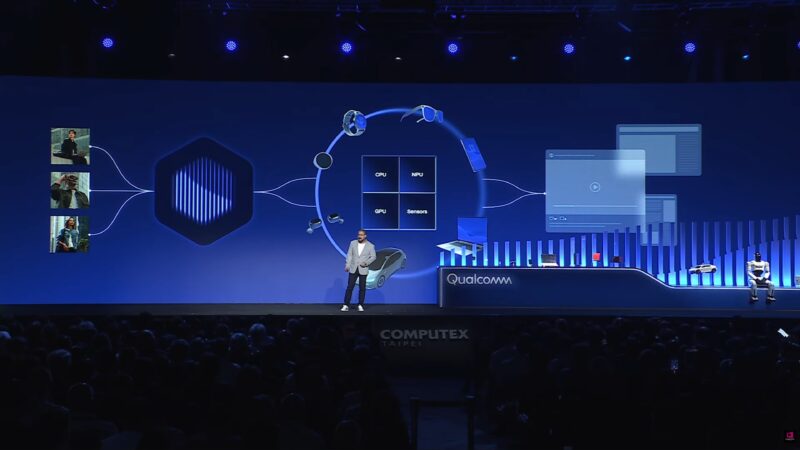
A powerful CPU will be needed to orchestrate this, and a dense GPU/NPU to handle high performance computing.
And we’ll stop talking about the cloud and edge as separate concepts, as everything will be one ecosystem/environment.
This is where Amon thinks Qualcomm’s experience will come in handy. Sensors, fast processors, high-speed connectivity; they already do all of that.
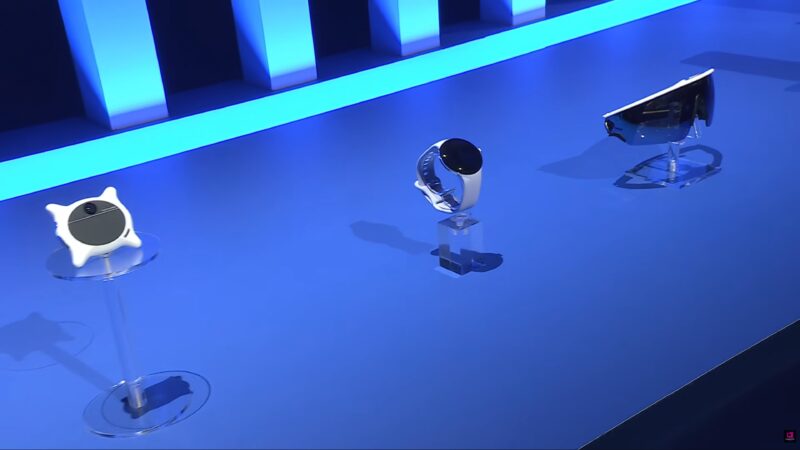
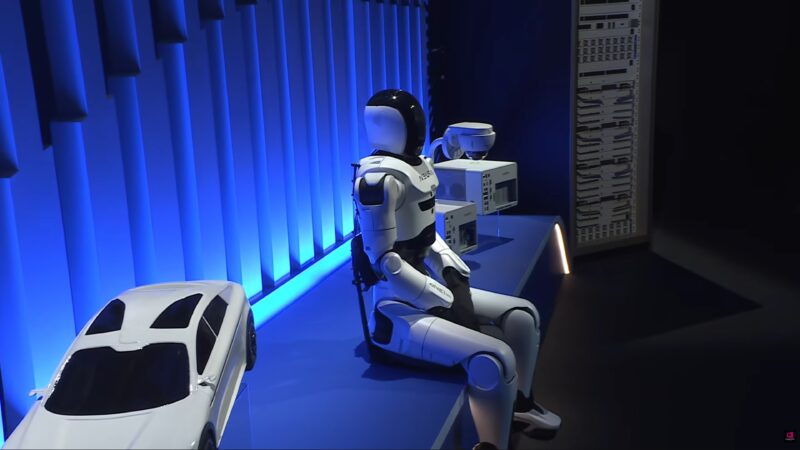
All of this will require dedicated computing solutions that can scale down to milliwatts in power needs.
Amon believes that what is going to happen on the phone will be a good proxy for what will happen on PCs and other devices.
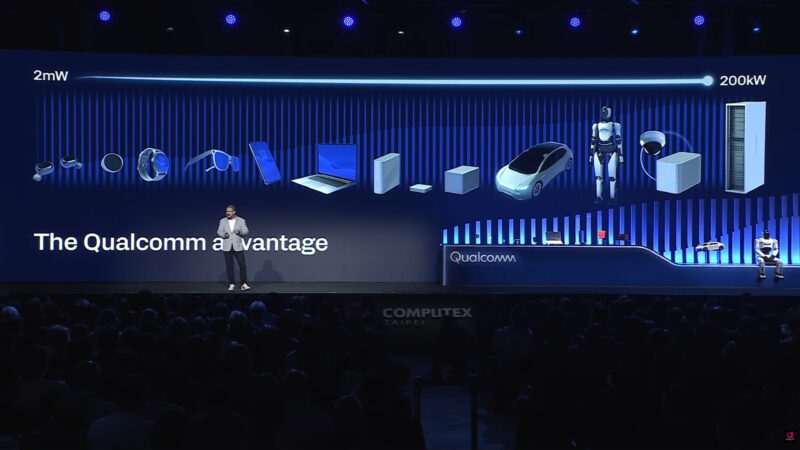
Now rolling a Qualcomm lifestyle video on the devices powered by their chips.
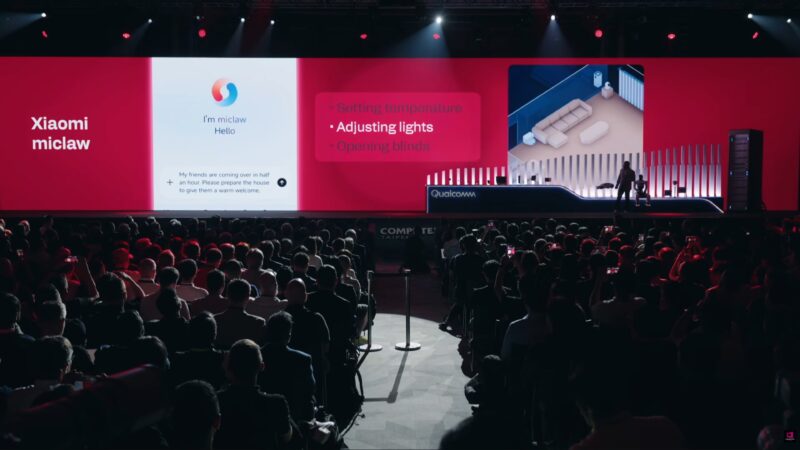
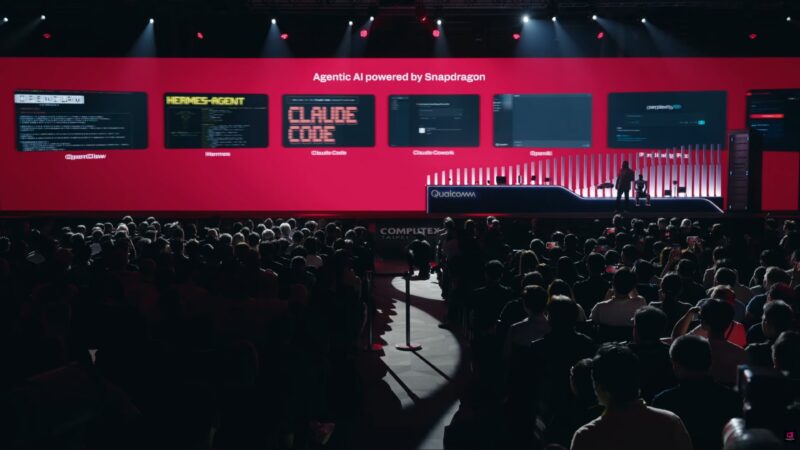
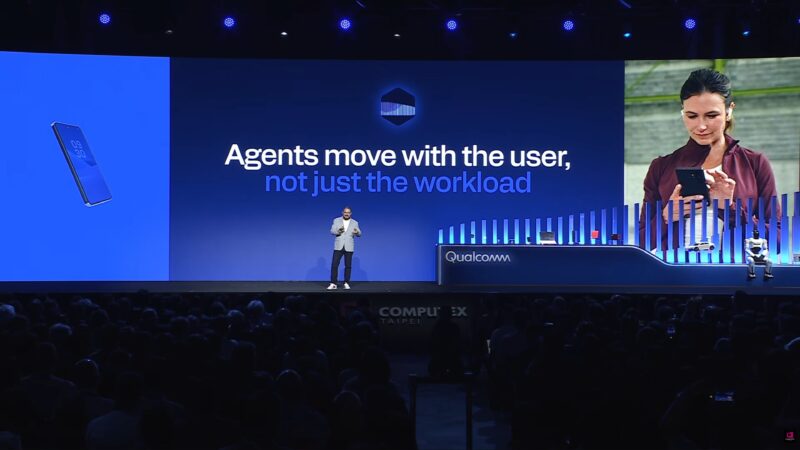
The agent isn’t tied to the device. It moves with the user.
Meanwhile the adoption of agentic AI is accelerating.
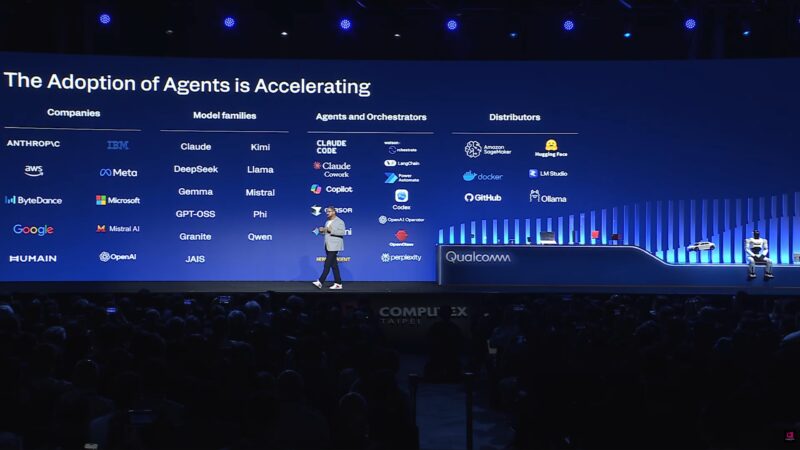
Amon is talking about the latest AI integration projects from Google, Microsoft, Humain, and more.
Consumers will continue to carry just a single device. And that will be a phone, as this is a natural place for people to interface with agents. So devices will need to evolve to handle this.
Now we’re on to a demo/use-case of a connected car.
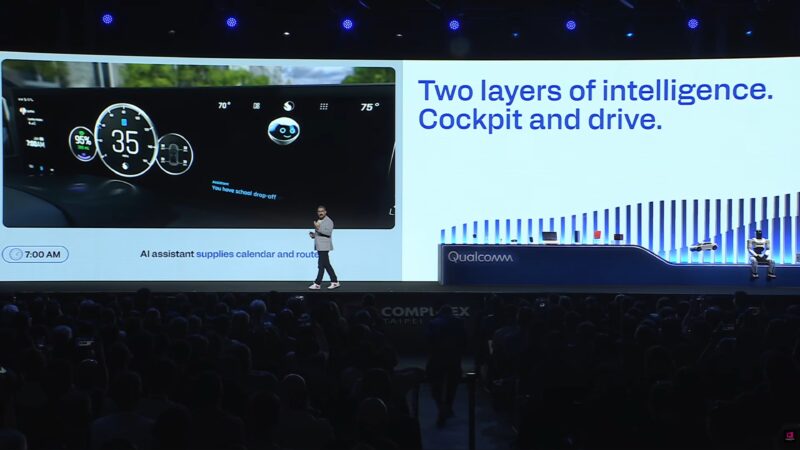
The agent is at the center of all the nearby devices, including the car.
Meanwhile physical AI is handling the driving. Two different layers of intelligence. All of which needs to be designed to operate as a single integrated system.
Now rolling a concept video with the user asking about a business listed on the back of the vehicle in front of them.
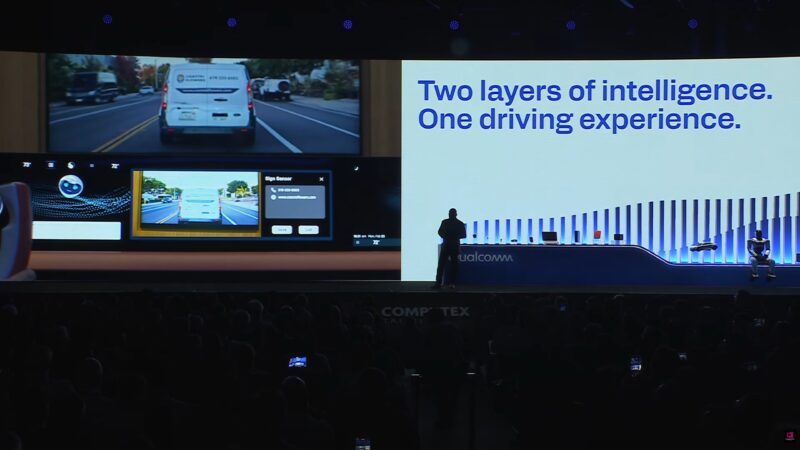
We are now reaching the era of the AI-defined vehicle.
Shifting gears a bit, Amon is now pivoting to robotics.
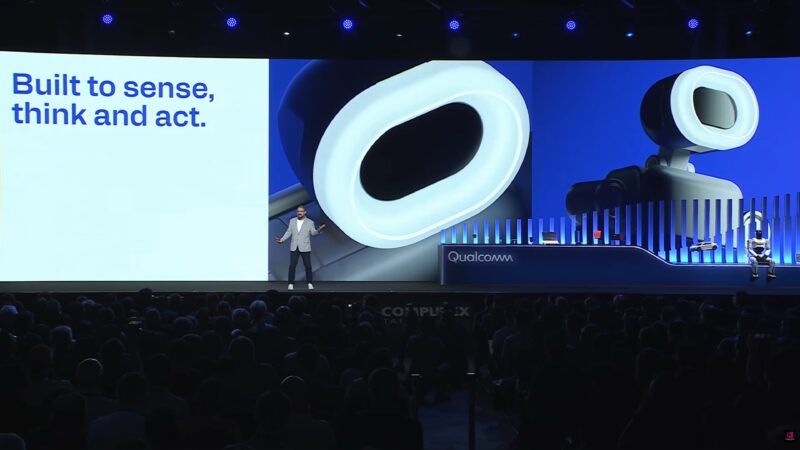
There is a lot of overlap with the auto industry here since the latter has a great deal of experience with safety, precision engineering, etc.
A robot has 3 layers of computing: instant execution, action, and reasoning.
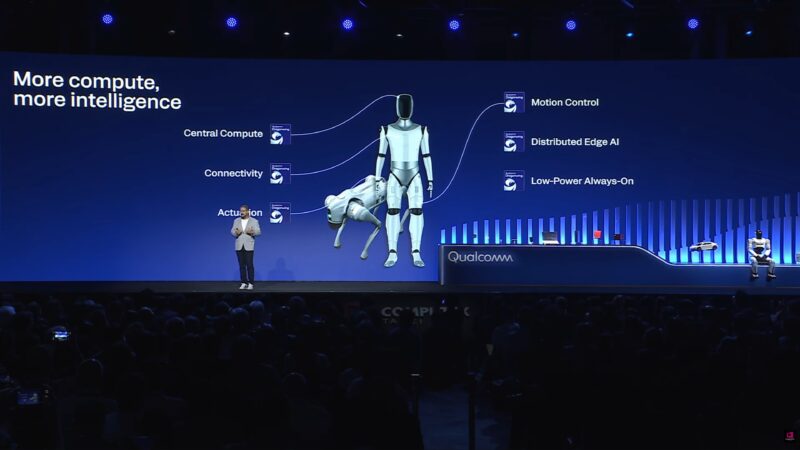
A reliable robotics system, in turn, will require everything from hardware and software to development tools.
Consumer electronics-style high-level integration will be necessary.
Amon believes that beyond robotics, physical AI has an incredible opportunity in industrial uses.
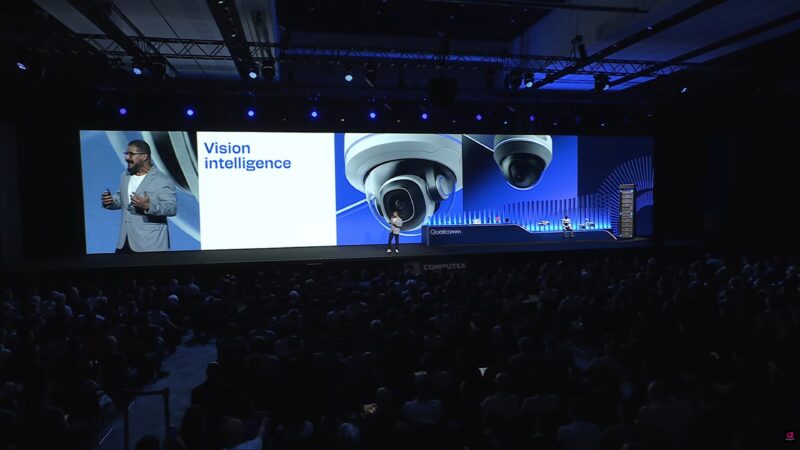
Agentic AI will change everything about computer vision.
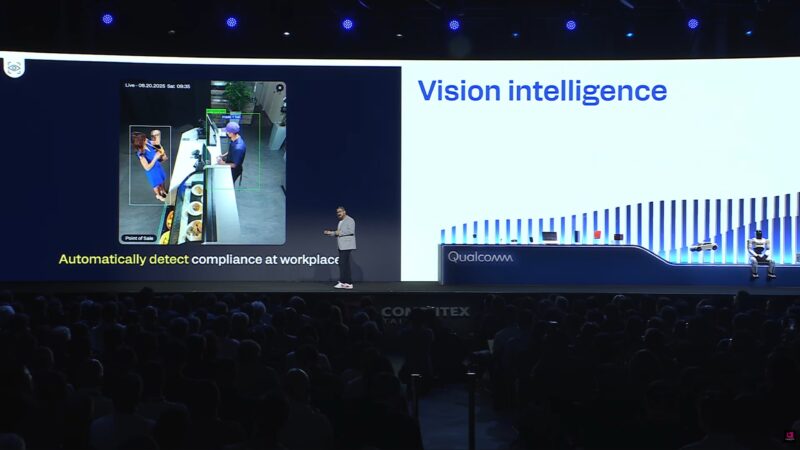
The future will be agents reacting to video feeds in real time.
“This is an incredible opportunity for agentic AI.”
Shifting gears again, next up is the next generation of wireless: 6G.
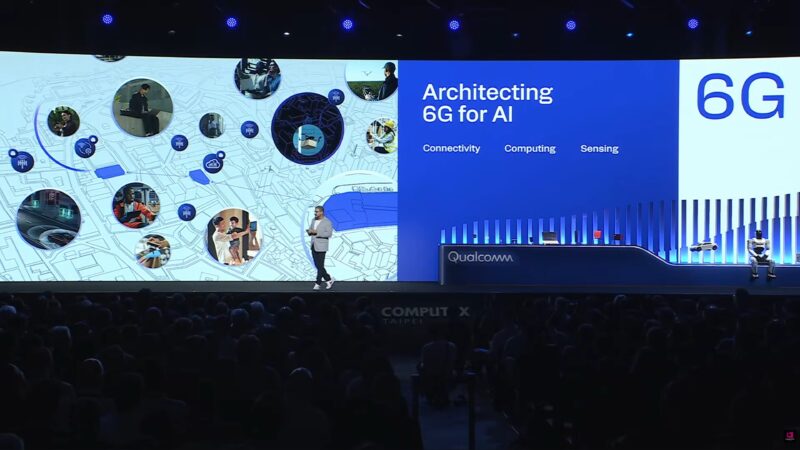
6G has three pillars: connectivity, computing, and sensing.
Connectivity will entail a very fast uplink.
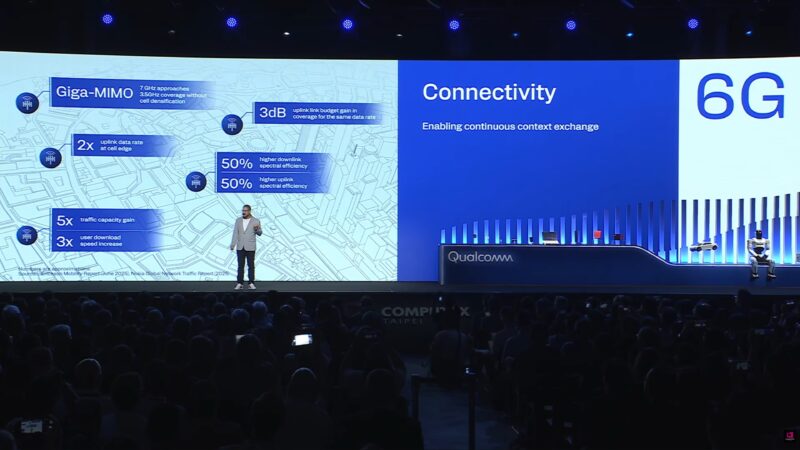
“6G is going to make all of us walking cameras.”
An even faster cellular network that can handle constant video upload streaming.
Meanwhile 6G computing will mean that with so many devices connected, everything behaves closer to one large data center.
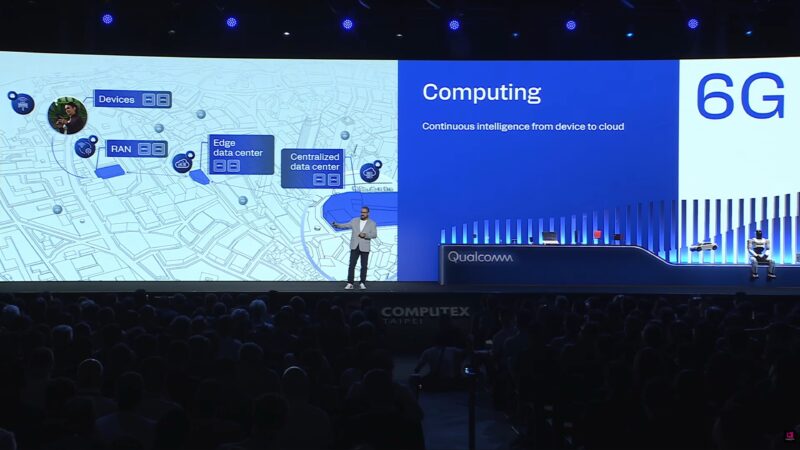
Finally, sensing will be the biggest change in this sector. The radio connections themselves will be a type of radar, which is used to sense the wider world.
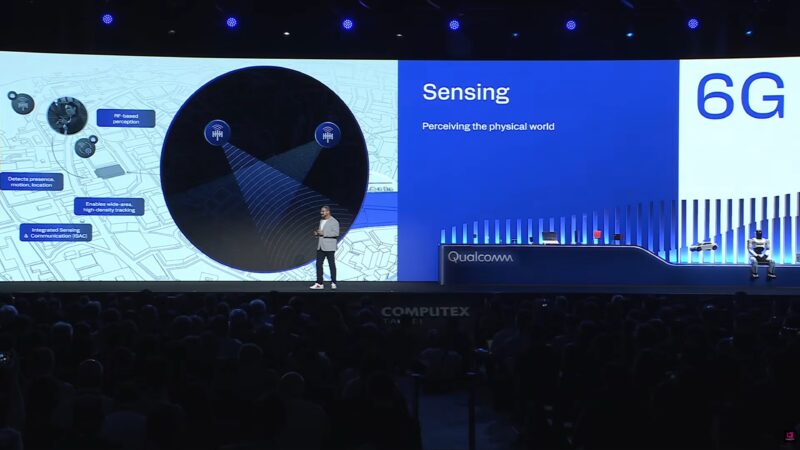
Detecting everything that move and fly.
And using all of this information to make a large digital twin. All parsed by agentic AI.
“AI is the new form of computing.”
Moving on, Amon wants to talk about how the cloud and edge are going to work together in the future.
Agents create a demand for token. And by extension, defining the architecture and scale of AI.
Current software paradigms are all about human operation.
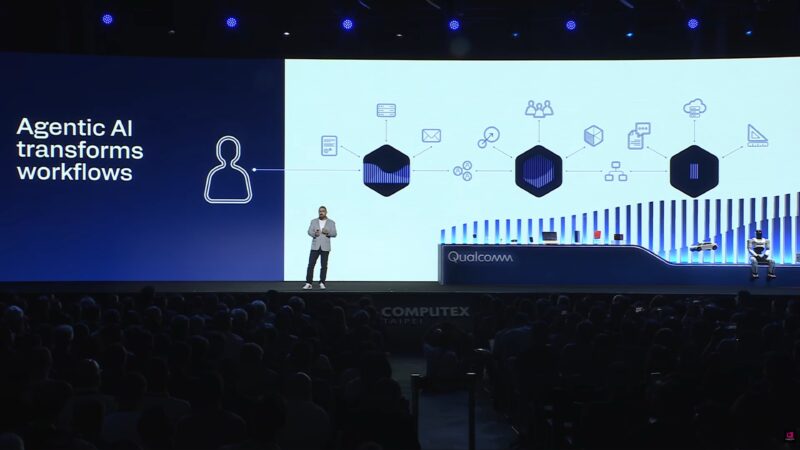
But with agents, they will create workloads at machine speeds, not human speeds.
This faster interaction is going to fundamentally change the demand for tokens.
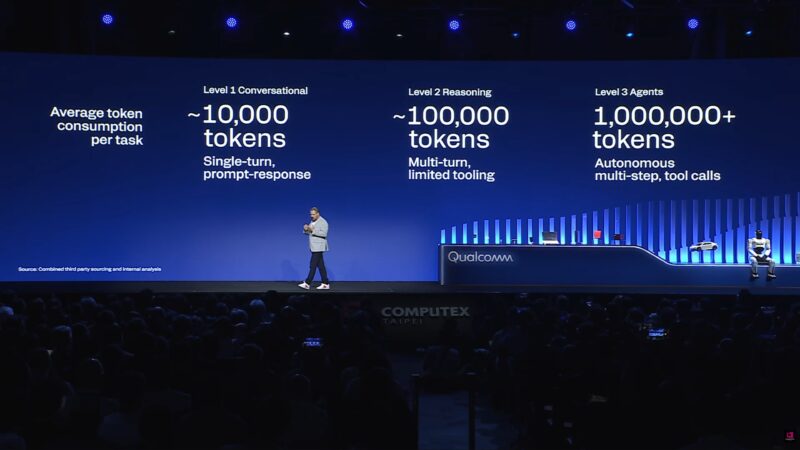
Agents can be grouped into levels, starting with conversational agents and moving to multi-step tools. 10K tokens per task to over a million tokens per task.
This will result in over a 100x increase in tokens needed within two generations.
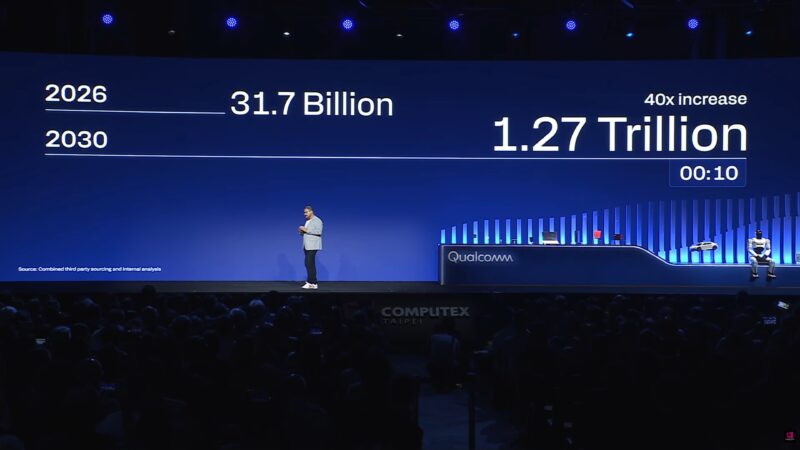
Qualcomm’s current estimate is that 10 seconds currently needs 31.7b tokens. In 2030 that will be 1.27 trillion tokens, a 40x increase.
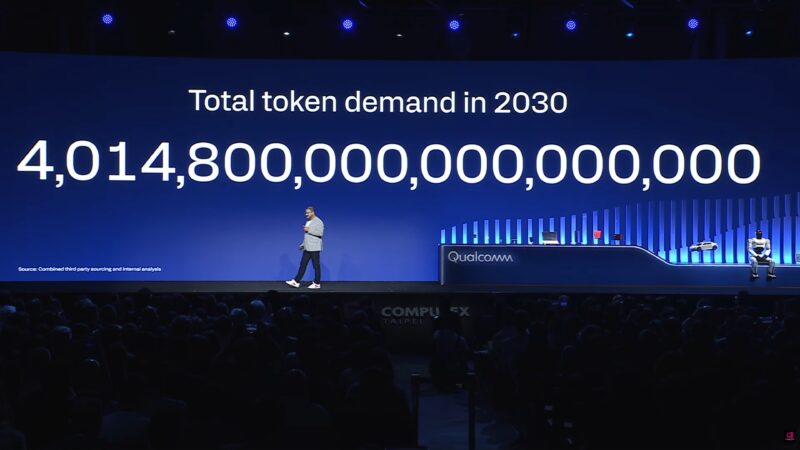
Total token demand in 2030 will be over 4,000,000,000,000,000,000 per year.
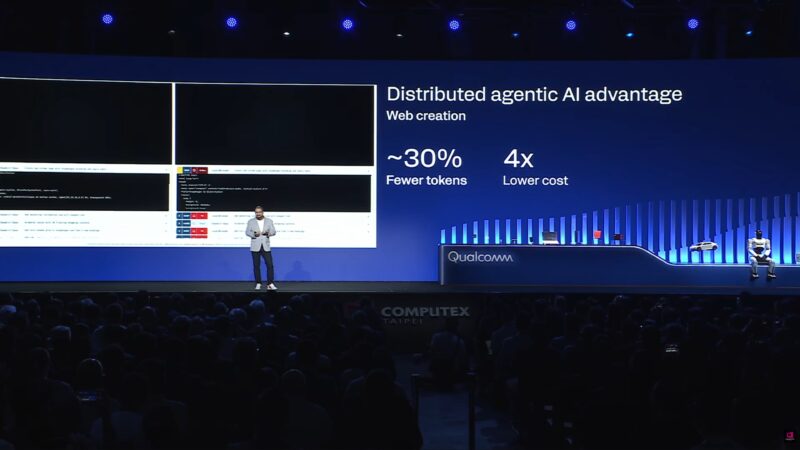
Amon is now showing a couple of demos of agentic tasks. Comparing performance to running those tasks entirely on the cloud versus what he terms intelligent distribution between on-device compute and cloud compute. You can get the same result with 30% fewer tokens, and 4x lower cost.
Agentic AI means agents running the computer for you. Everything will be running AI and it will be happening across the compute continuum.
This will create demand for AI computing everywhere.
Qualcomm in turn is uniquely positioned to deliver these solutions because of their broad experience.
Now rolling another video, this time announcing Qualcomm Dragonfly.
This is Qualcomm’s brand for data center products.
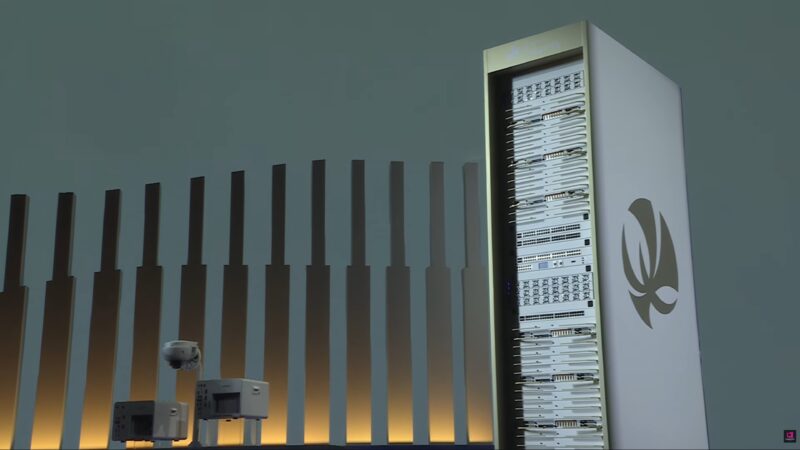
Qualcomm will share a lot more on their investor day, coming up on June 24th.
And now it’s time to wrap things up.
Qualcomm and Amon are very excited about the future of technology.
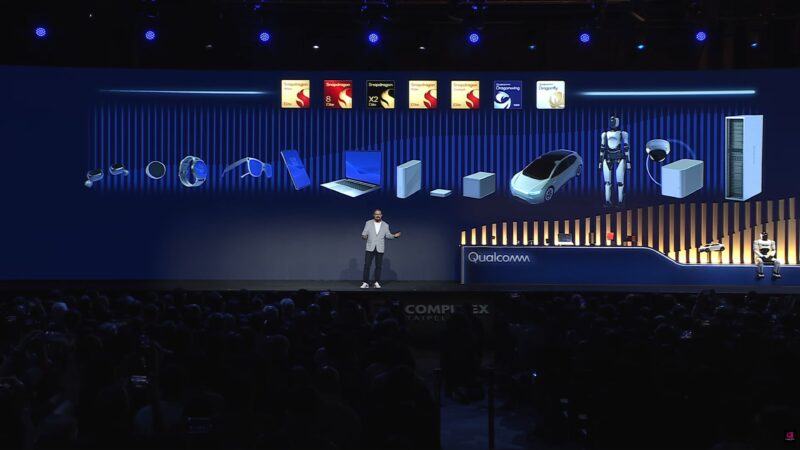
“Together we are building the products and technology that define this new era.”
And that’s a wrap. Thank you for joining us for our final keynote of the day. Be sure to check back in tomorrow evening (US time) for Marvell and Intel.



I know, liveblog and have to be lenient with the typos. But this one made me lol:
““The Year of Agents,” marking a shirt from a PC-centric 2025 keynote…”
I would love if they made a shirt of their previous keynote as part of the new keynote.