

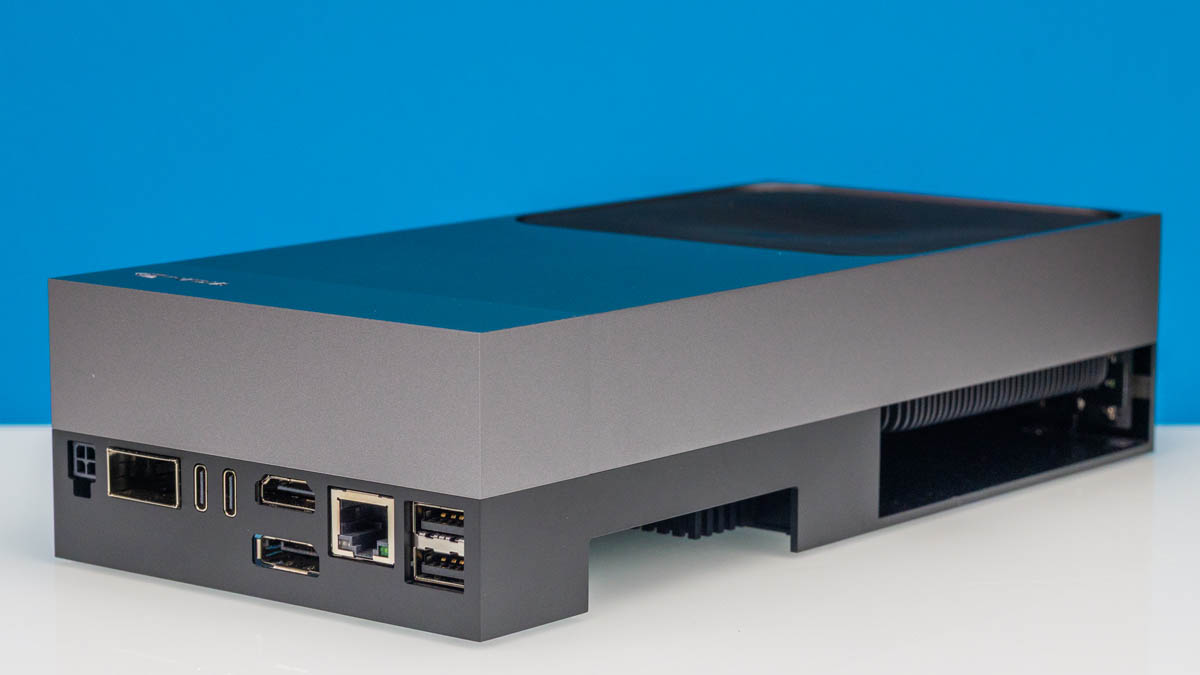
NVIDIA Jetson AGX Thor Developer Kit is going to sell like hotcakes to robotics developers, even with its $3,499 price tag. To understand why, this is an update to the NVIDIA Jetson Orin platform, but NVIDIA is doing something fundamentally different. Instead of following the previous path of the NVDLA in the Orin kit, NVIDIA is now pushing the Blackwell generation AI compute, which powers LLMs and many other AI domains today. Aligning its approach to AI compute, then layering on the I/O, video, and vision acceleration, and more means that NVIDIA has a new platform for applications such as robotics. As such, it is time to look at the kit.
We forgot to add it with the original piece, but we had a short video on the STH Labs channel on this as well if you want to see additional angles.
NVIDIA Jetson AGX Thor Developer Kit Hardware
To keep everyone on the same page, the NVIDIA Jetson AGX Thor Developer kit is what you buy when you need a low number of these platforms. If you build a humanoid robot and want to deploy the NVIDIA Jetson T5000 module, you would buy those and likely use a custom carrier board. NVIDIA has been making these developer kits available for years as a way to quickly get running with its modules.
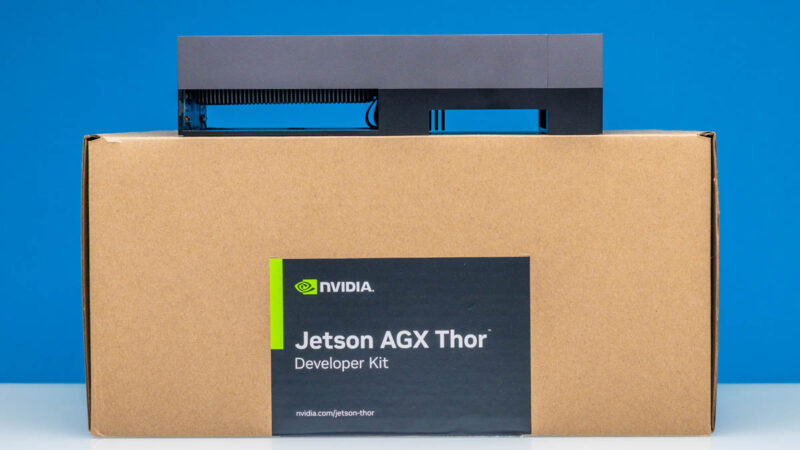
Perhaps the first question folks will have that have seen previous versions is about the size. It is physically much larger than the AGX Orin development box.
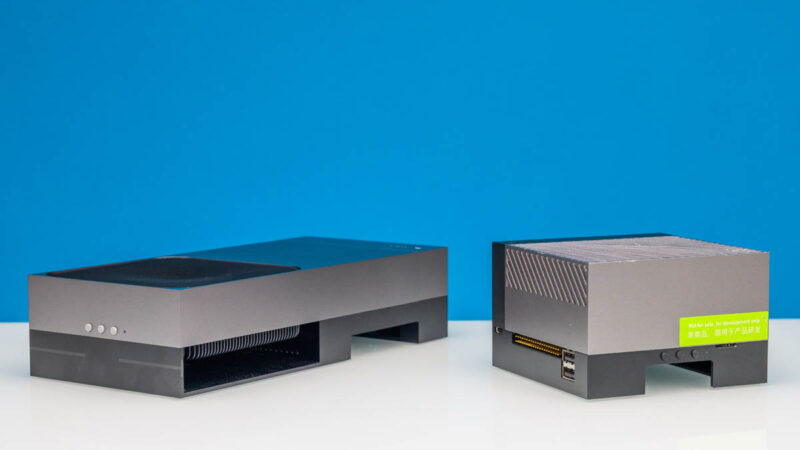
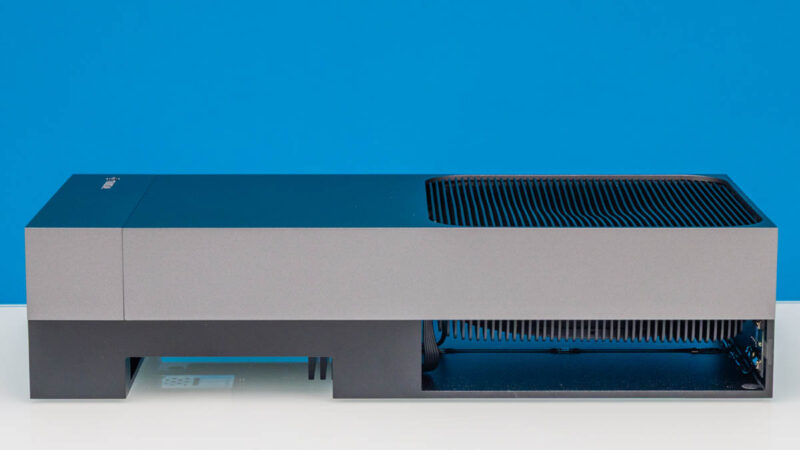
Here is the unit’s side view.
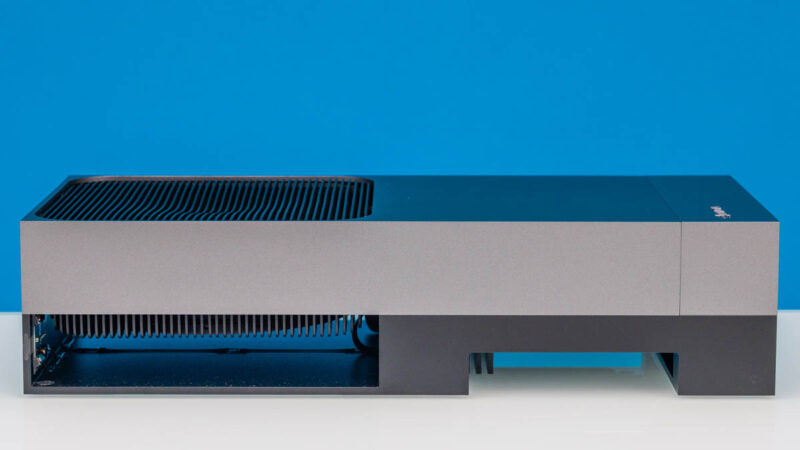
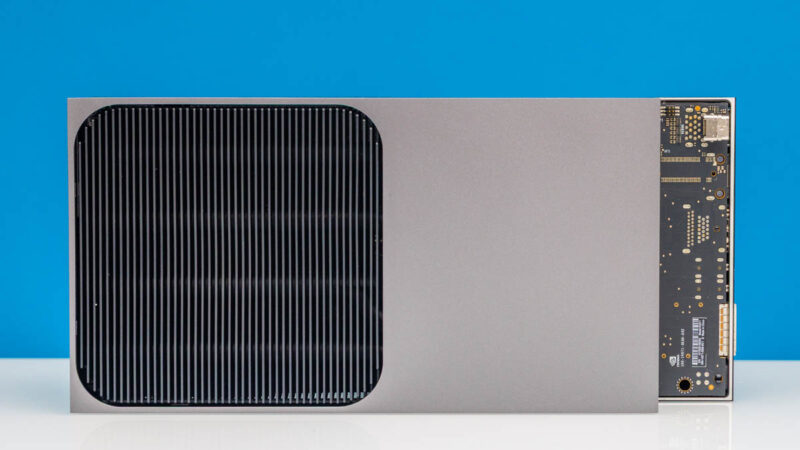
The heatsink side is just that. Here, the cooling solution is so large that it has its own side of the chassis. As an aside, this is a really neat design. Engineers had to design then get into production something that is very different from most PCs we see in this general size category. You can also see the contour of the heatsink which is not just uniform fins across.
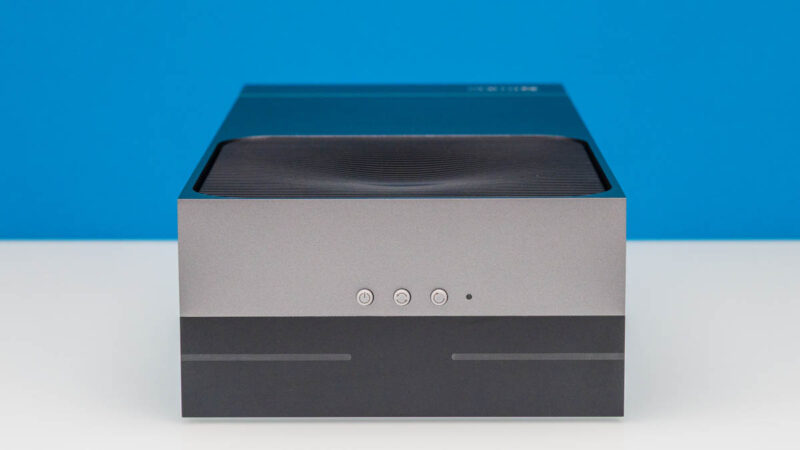
Just past the heatsink we have the buttons and status LEDs.
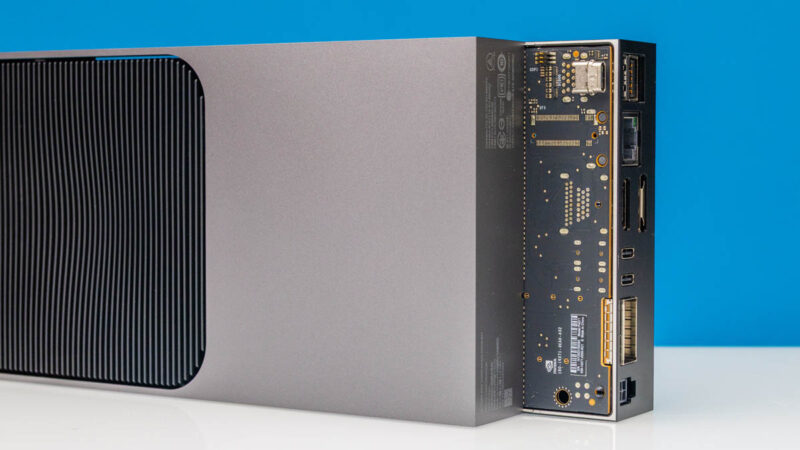
On the other side, we have the business end with a lot of I/O.
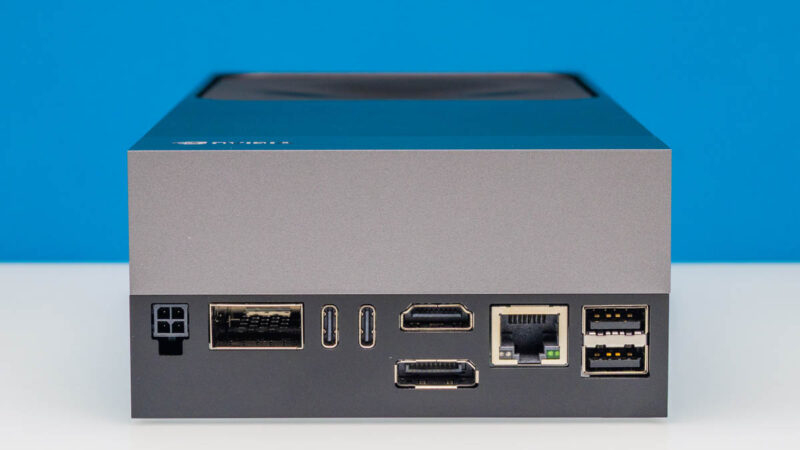
In what could almost be mini-PC I/o, we have two USB Type-A ports (Gen 3.2), a 5GbE port, a HDMI and DisplayPort, and then two USB Type-C (Gen 3.1) ports.
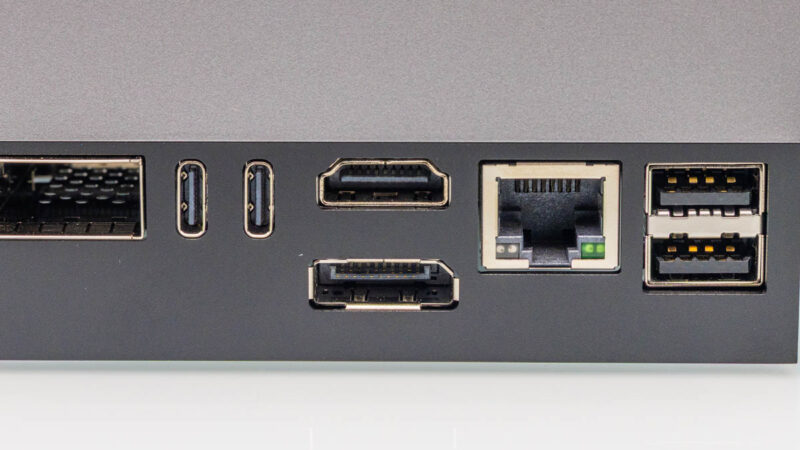
One of those Type-C ports you will likely use for powering the device.
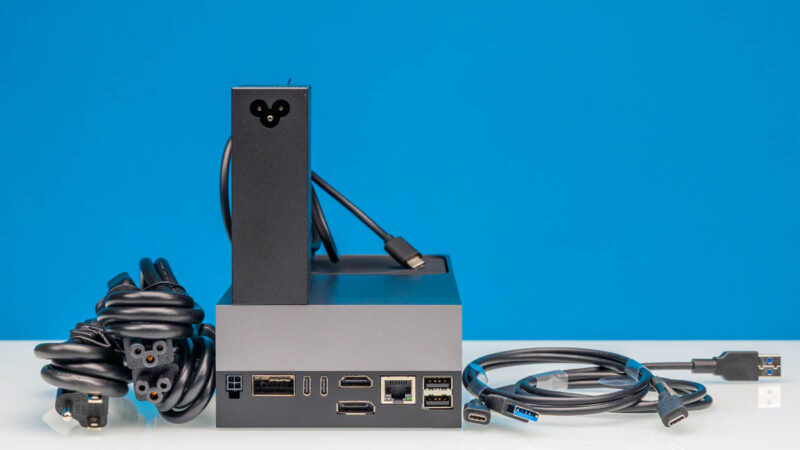
Perhaps the most interesing is a QSFP28 port that provides 4x 25GbE ports. This is similar to the HPE 620QSFP28 4x 25GbE Single QSFP28 Port Ethernet Adapter where there is a single QSFP28 cage providing four ports of 25GbE.
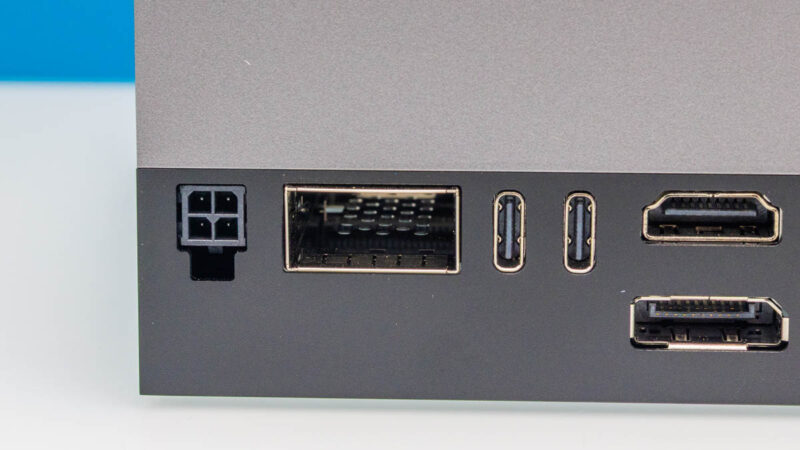
There is also a micro fit power input.
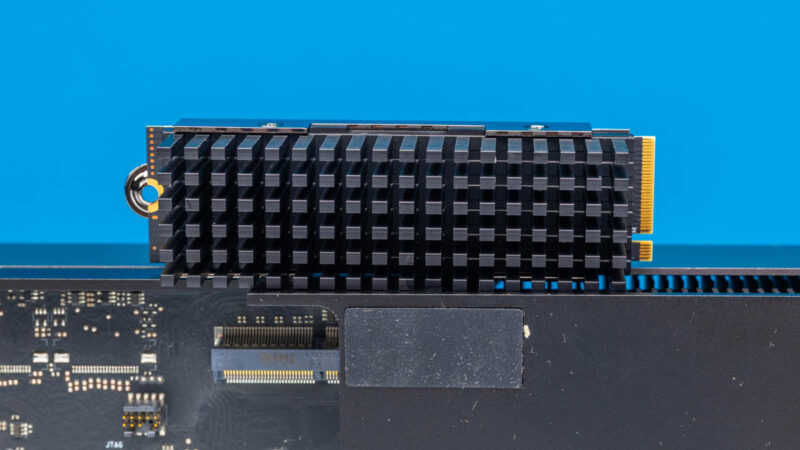
On the bottom, we have feet on the chassis, but then an open view of the 1TB M.2 SSD and a WiFi and Bluetooth module.
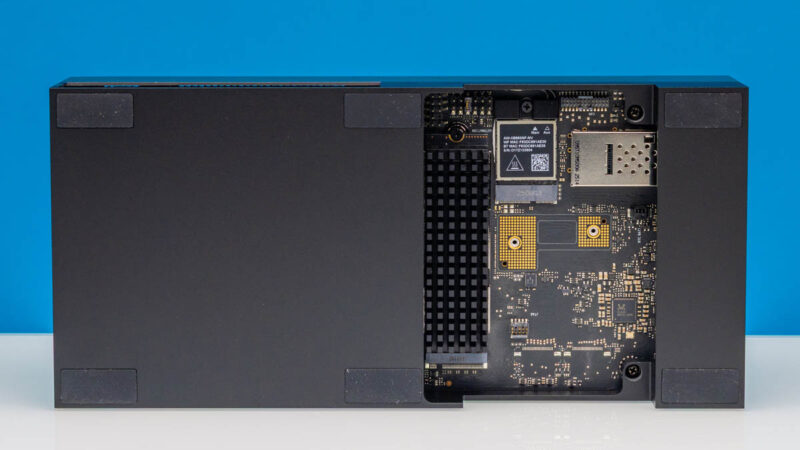
Having a WiFi and Bluetooth module is great. NVIDIA has left this functionality out of some of its old low-cost Jetson developer kits to save on BOM costs. Here we get a Realtek RTL8852CE module.
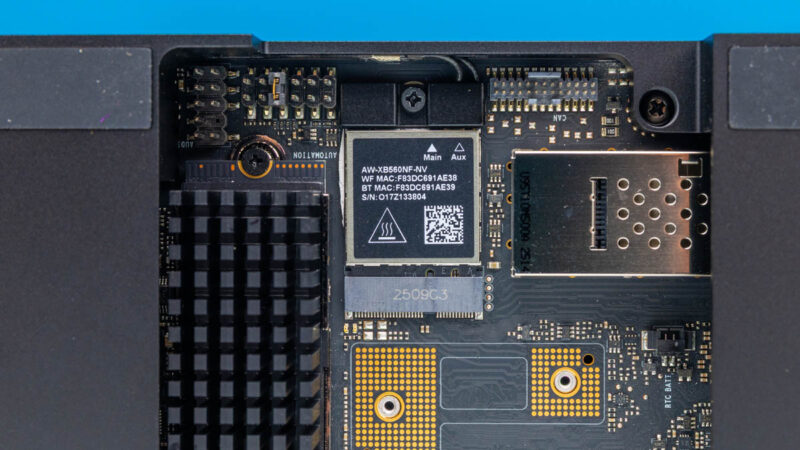
The 1TB SSD came with a massive heatsink and a carrier for it. This is not just a bare SSD that you pop into place.
If you used the AGX Orin Developer Kit, and you opened the magnetic cover, you probably saw one of our favorite features: a PCIe slot. With the AGX Thor kit, we have a magnetic cover, but we do not get a PCIe slot.
Here is the top view with that magnetic cover off.
Next, let us deep-dive a bit into the specs.



Can it run larger LLMs (70B+ params) and if yes – how fast?
Yes – I think the number we are not publishing for llama 3.3 70b is in the low 10s of tokens/ second. We did not get to run this through a standard process to average out runs.
I’d love to see this compared to DGX Spark. On paper, this should have more GPU compute at around the same price.
Agreed jtl. I thought we were going to do GB10 earlier this month. We will get that to you when we can.
@jtl The DGX Spark seems to go for about double the Thor’s price. The only offering I found was >$6000. $5800 on alibaba.
What is the fan noise like? That huge cooling system looks like it might be pretty quiet. More of a pleasant swishing sound like Rosie from the Jetsons rather than the roar of my Dyson?
People, this is a robotics supercomputer not an Ollama computer. This is meant for robotics. If you’re interested in LLM inference instead not VLAs or robotics, check out the DGX Spark, they use the same architecture. But the AGX Thor is a lit slower at running LLMs since it’s not designed for it. On the other hand it has 2x the FP4 AI performance than the DGX Spark due to its integrated NVIDIA Deep Learning Accelerators so AI models and systems for robots will be way faster on this.