

NICGIGA S50-0800-5G Management
This is an unmanaged switch, so there is no management interface to show. Some might feel better without a managed switch in this segment. Still, we have seen switches with this switch chip that are managed.
NICGIGA S50-0800-5G Performance
As an interesting aside. While we have transitioned most of our network testing to Keysight CyPerf and IxNetwork using two sets of dedicated hardware platforms, 5GbE is a bit hard for us to test. We have three NOVUS cards for our two XGS2 chassis, but we do not have a multi-gig capable card. On the CyPerf side, we now have more 400GbE ports than multi-gig capable ports, so an unmanaged switch is challenging to physically test. So, we are just using our old iperf3 setup.
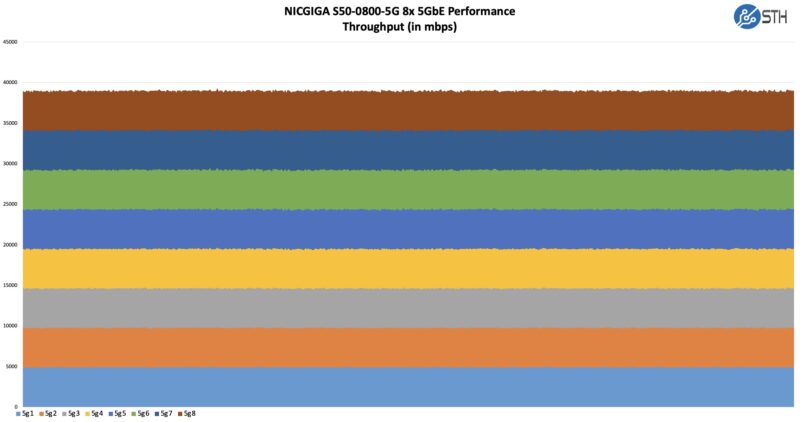
The performance of this one is fine, and what we would expect out of our iperf3 setup.
NICGIGA S50-0800-5G Power Consumption and Noise
Perhaps the next question we wanted to answer is around the power consumption of the switch.
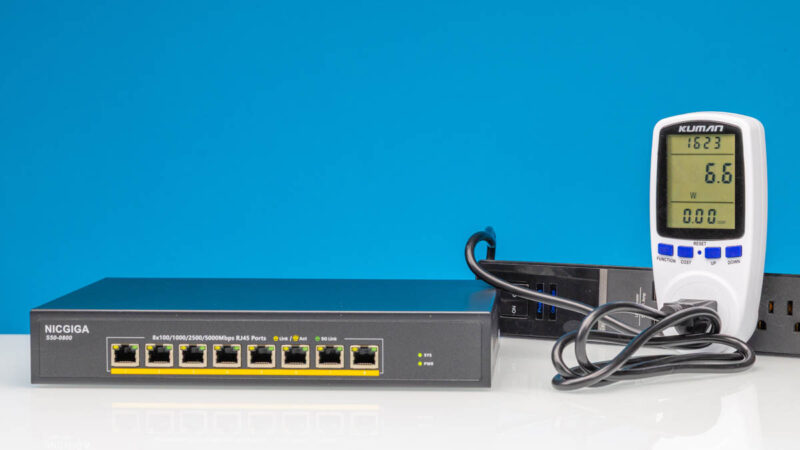
At idle, we got 6.6W, which is not bad.
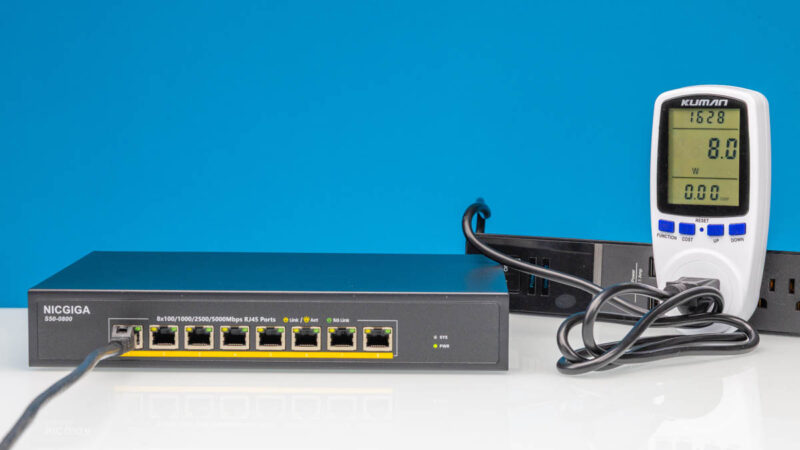
When we connected one port, we added 1.4W for 8.0W. That is about what we would expect from connecting a 10Gbase-T port, not just a 5Gbps port.
Since this is a fanless switch, it is also silent.
Key Lessons Learned
Many people are passionate about having a 5GbE switch. One of the biggest challenges is that there are not as many switch chips that cater to this market. So it seems like Nicgiga (and others) are taking the Realtek RTL9303, and instead of providing 8x 10GbE ports, we get 8x 5GbE.
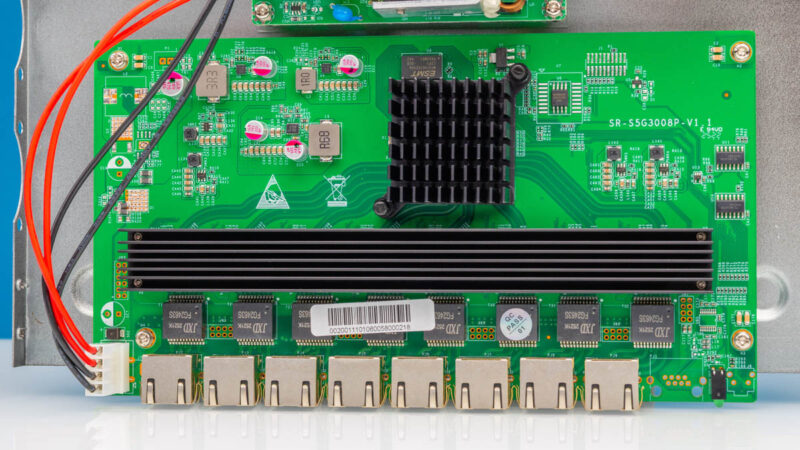
At this point, you are probably wondering what we were wondering. “Might this switch support 10Gbase-T as well, and is it just branded as a 5Gbase-T switch?” We brought out the Fluke LinkIQ-Duo (Amazon Affiliate) just to check. This switch appears to only support up to 5GbE speeds.
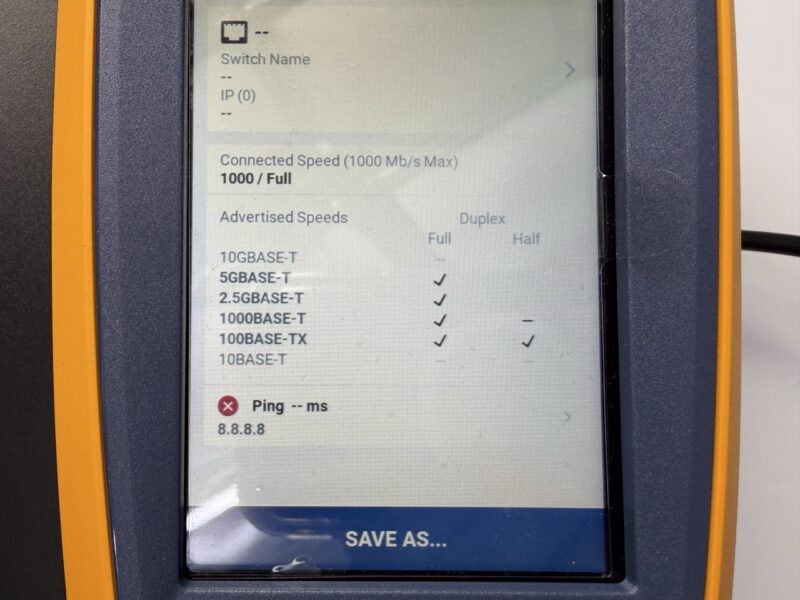
Perhaps my biggest challenge with this is whether 5GbE at the switch level is worth it. For the NIC level, one could argue that if you only have Cat5e cabling in walls, perhaps repurposing common telephone wiring, and maybe a certain set of clients, then 5GbE can make sense. At the switch level, it feels more like a stretch. Here is the challenge. If you want to connect a few devices on 10Gbase-T, then you need a different switch. Realtek RTL8127 10Gbase-T NICs are only about $12-16 more than the RTL8126 5GbE NICs.
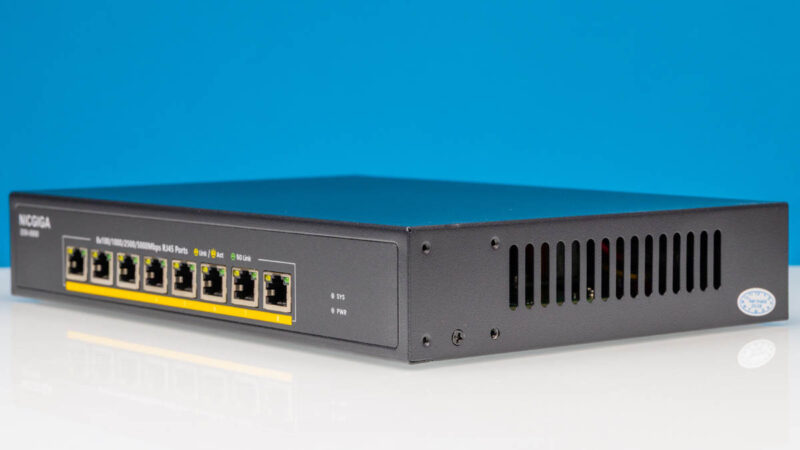
Another thought we had was that if two of the 5GbE ports were SFP+ 10Gbps ports instead, it might be less expensive to build this switch. You wouldn’t need the 5GbE PHYs. You also would then have two higher-speed ports, and the switch chip supports it.
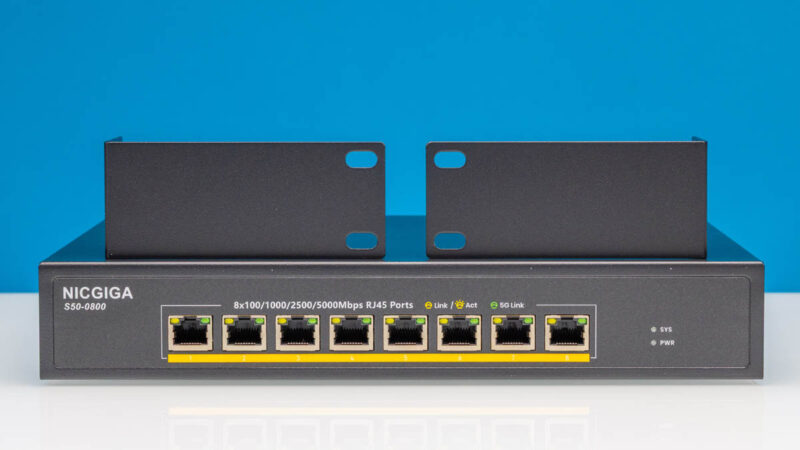
There are clearly going to be some of our readers who will look at this review and simply think “this is perfect” and others will think “why bother?” Both views are very fair. We probably would just buy a 10Gbase-T switch for our needs, but everyone is different. At the same time, we are trying to bring you as much as possible.
Final Words
For $169 or so, if you really just want 5GbE, then this is a decent option. It is good to know the switch chip being used is capable of more than what this switch is asking of it. Also, the switch worked, so that is always a good sign.
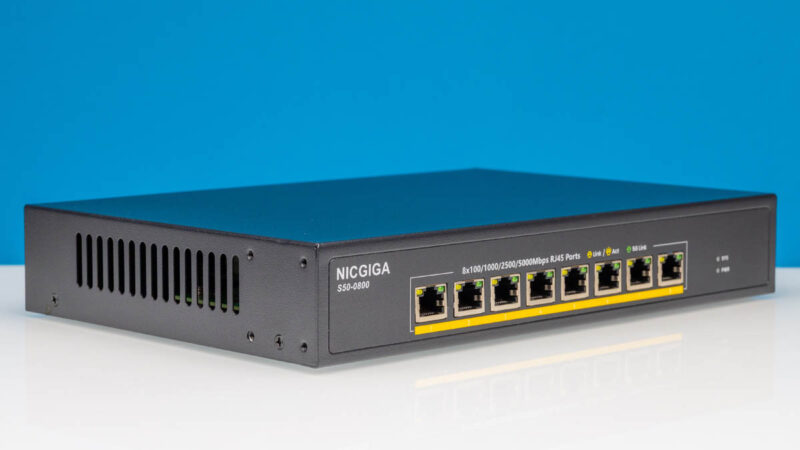
A cheap and fanless 5GbE switch is a neat idea. We have had folks ask about 5GbE switches, and it is great that we are finally seeing some switches available in the market like this one.
Where to Buy
Here is an Amazon Affiliate link to what we purchased.

Thank you for this review! I wonder if these switches are using “rejected” RTL9303 chips that can’t quite run fast enough (or cool enough) to support 8 ports at 10gbps.
Alternatively it would be interesting if there was a firmware hack that could re-enable 10g..
Does it fit in a 10” minirack?
Nice review as always, Rohit! Definitely a nice development to see so many sub-$200 switches and sub $100 NICs being reviewed on this site. Keep up the good work! Two years ago or so I was wondering where the original “home” focus in the site name had gone, but you’ve really made a great comeback to cover this part of the market again, in particular with the excellent 2.5G switch roundup. Don’t get me wrong, I do enjoy reading about the super fancy 200+ Gbps stuff too, and I love that you can keep a good overview of that too. And thanks Patrick for also being so available reading and replying in the comment section! Definitely makes us readers feel more valued!
On topic regarding this specific switch, it’s a bit confusing that they use yellow color under the ports, as many other brands use that to indicate PoE, which this switch of course doesn’t have.
And another thing. Do most of you guys prefer having an internal PSU or external AC-DC power adapter? I would normally vote for internal to avoid clutter with power adapters lying around next to the switch, and also an internal PSU tends to have the cable better fixed and less likely to come loose. On the other hand an external plug can be more easily replaced, in case you don’t trust the no-name included AC-DC power adapter.
The YuanLey 8 port NBASE switch is only $249 @ Amazon. 10/5/2.5/1GbE support.
Total flexibility.
John – That was one of the reasons we brought out the Fluke tester, just to see. If it lit up at 10Gbase-T it would have been neat, but I would not have been surprised. The other question then, is what is the difference in BOM costs if the switch chip, most likely the chassis, switch PCB, and so forth, are the same. PHYs and transformers?
Jeff – I do not think this one fits.
AdditionalPylons – We will continue to do a big mix of gear. Sometimes very high-end. Sometimes very low-end. Then everything in between.
spuwho – I believe we have that one as well as a bunch of other low-cost 10G and 5G switches.
I suspect that there area reasons; but 5Gb seems to be landing so close to 10Gb that it’s hard to understand exactly what the niche is supposed to be.
It’s still comparatively expensive if you just don’t care(1GbE); or don’t really care but have modern WAPs to deal with(2.5GbE); but it’s only barely cheaper than 10GbE if you are actually in the market for speed; and there’s enough 10Gb gear that doesn’t necessarily play nice with multi-gig floating around that the downsides are worse than merely being half the speed would suggest(since interactions with older 10Gbase-T will have to fall all the way back to 1Gb).
I presume that there are still some savings to be had on PHYs and/or magnetics if 10Gb switch chips are being sent out as 5Gb switches; but 5Gb is, if anything, the laggard in terms of availability; and the savings are very modest for cutting performance in half.
Thank you I’ve been waiting a review on a 5gb switch for some time as I just finished pulling cat6 not cat6a through the house. And I don’t want the same issue I had with 1gb on cat5e.( Basically no matter the length or short. I was getting more and more latency, packet loss, and noice. And since I game a lot latency matters more then capacity.) And sense I space cased and didn’t pull cat6a( not do I want to repull). I don’t want to possible run in to the same issues. Or pay more for managed switch just to turn down 1/2 the switch to 5gb.
with PCIex 3, one lane slot : 5Gbps at the most
it looks to be the only reason