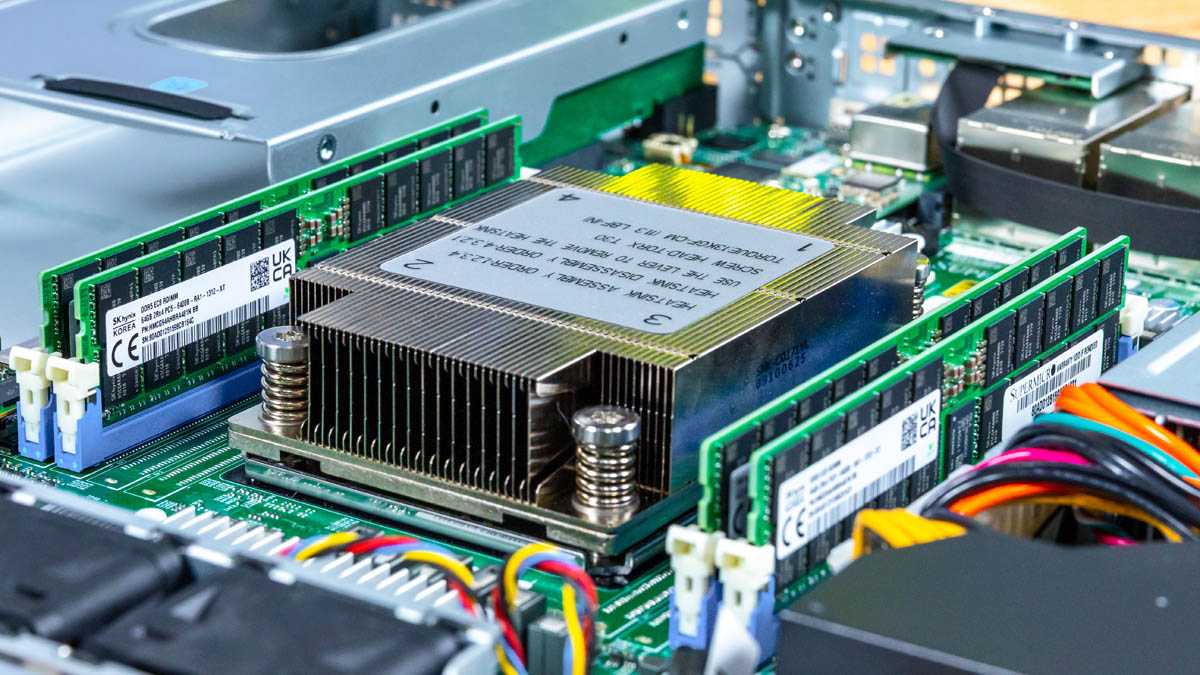
In 2025, we covered the Intel Xeon 6 SoC launch. For STH’ers, since we were the first site to review the first Xeon D (Broadwell-DE) many years ago, you might better know this as Granite Rapids-D or the new generation of Intel Xeon D. The family was broadened late in 2025, and it now encompasses SKUs with 8-channel memory and with 72 cores. It was time to do a refresh of our overview.
Intel Xeon 6 SoC Overview
For those who were keeping track, here is the original SKU list from Q1 2025:
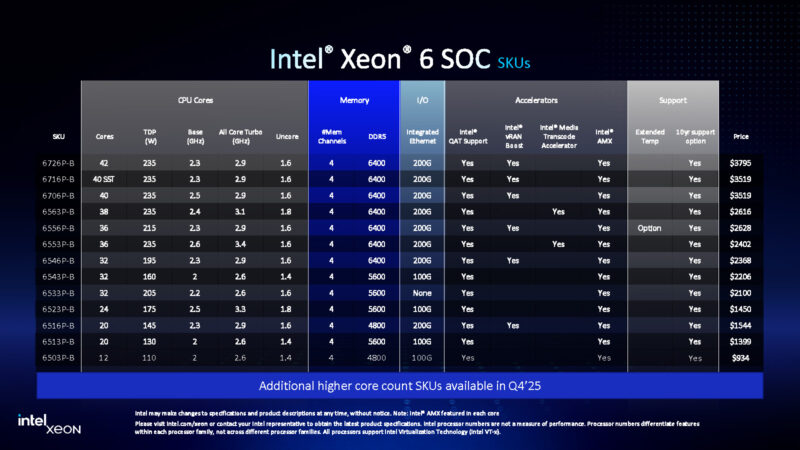
As you can see, the LAN speeds are up to 200GbE. We updated the chart with the newer, higher core count releases:
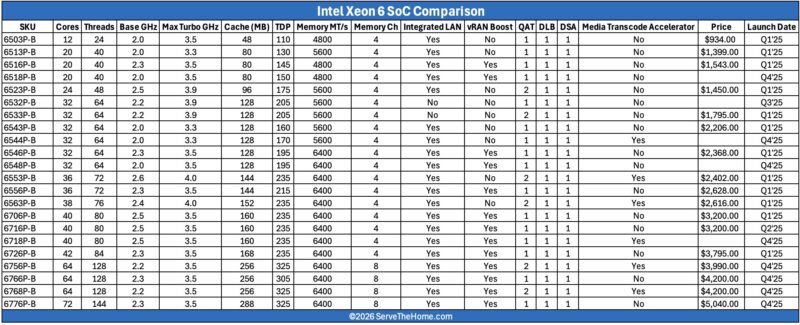
The Intel vRAN Boost is really interesting since we now understand more about what it is. If you saw our recent This Silicom P3IMB-M-P2 is a Neat Intel ACC100 Card We Take a Quick Look piece, that was really neat since we saw the precursor accelerator to this. The functionality is really for 5G operators, but it moves something that had been an eASIC accelerator to the Intel Xeon 6 SoC itself.
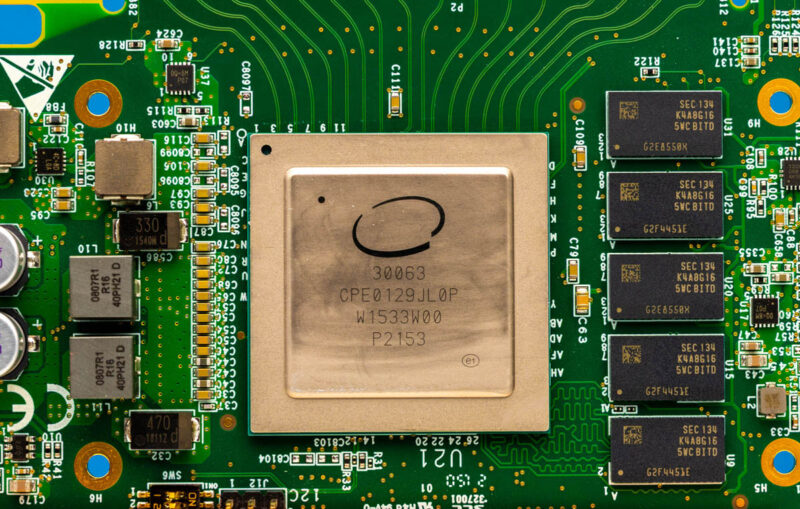
Another big differentiator is the built-in Media Transcode Accelerator.
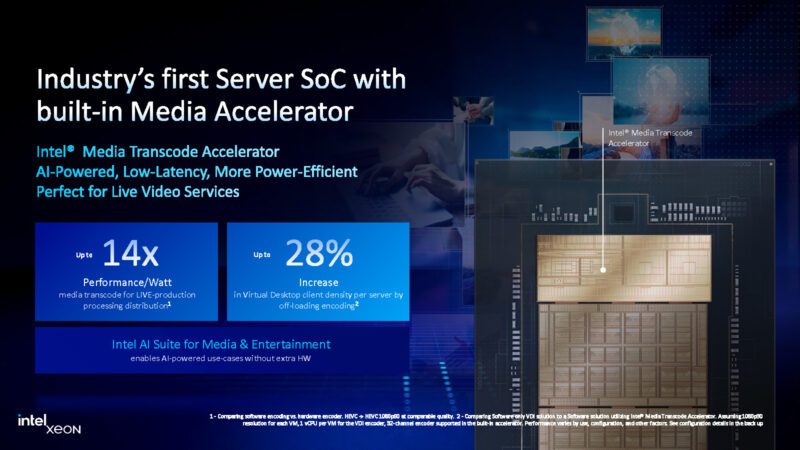
This was one we were initially excited about on the STH team, since in the embedded space, video analytics, storage, and more are big applications. Still, not every SKU has this accelerator active.
One other neat one comes down to the built-in accelerators. Intel enables at least one QAT accelerator on all of the SKUs, some get two. All SKUs seem to get a DLB and DSA. We have covered these accelerators a few times when looking at onboard Xeon acceleration.
Final Words
The Intel Xeon D series has certainly become more capable by adding more acceleration, faster networking, and way more cores. A decade ago, Xeon D-1500 series SKUs were sub-45-65W. Now, all of the SKUs have TDPs in excess of 100W. It is crazy how far the Xeon D line has come. On the other hand, pricing has also crept up over the generations, which has really changed the market these chips are focused on. For those wondering, we will have more on the Intel Xeon 6 SoC series soon if the cover image gives it away. We just needed a resource that was updated to refer back to.