

Performance Claims
So architectural advancements and SKU stacks aside, what is the real-world performance impact that the Core Ultra Series 3 will bring? Here is a quick rundown of Intel’s major performance claims
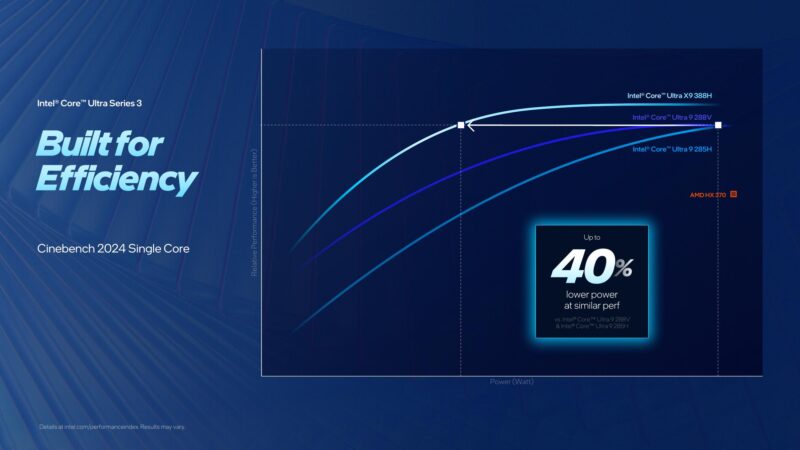
Depending on the workload, Intel is touting as much as a 40% reduction in power consumption at iso-performance in single-threaded workloads versus Lunar Lake and Arrow Lake.
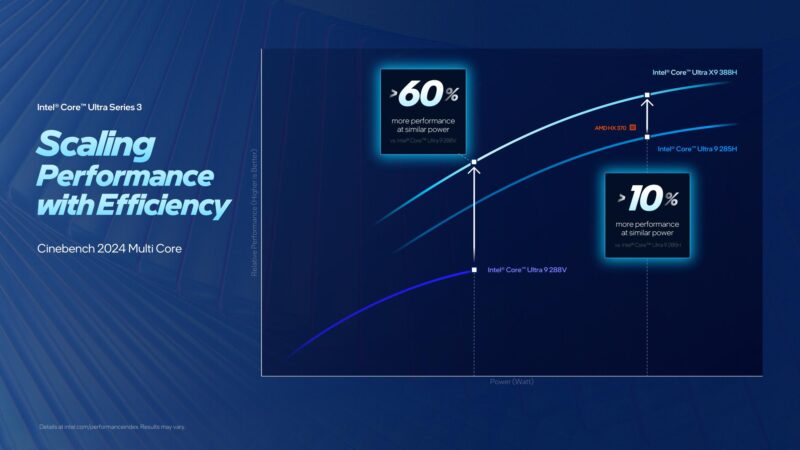
And anywhere between a 10% and 60% increase in multi-threaded performance at iso-power.
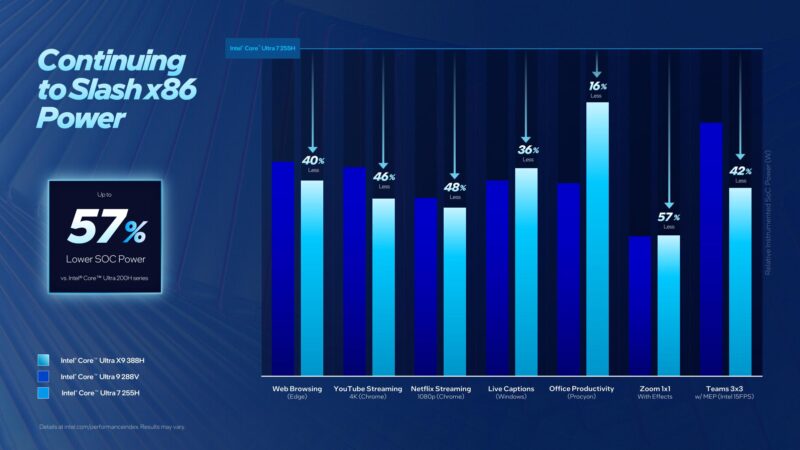
With the modest IPC improvements in both the P and E cores, this is definitely a generation more focused on efficiency gains than CPU performance gains.
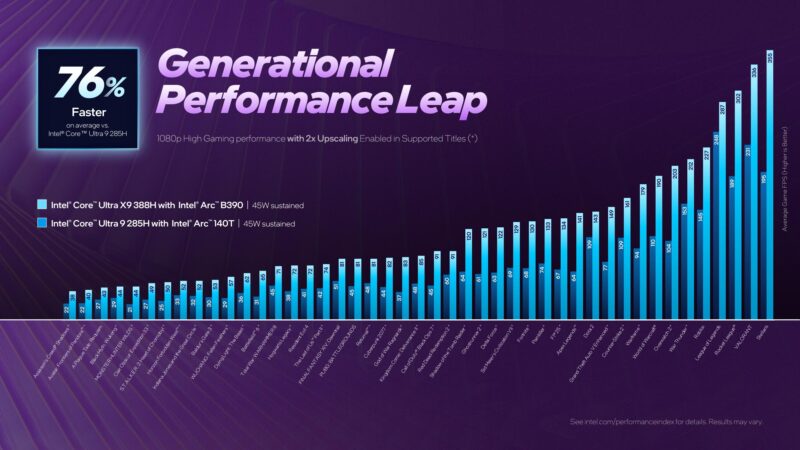
Meanwhile, GPU performance is through the roof on a generational basis. Intel claims that Panther Lake delivers 76% higher gaming performance at iso-power versus Arrow Lake. Though this needs to be taken with a grain of salt at this time, as it is obfuscated by the use of upscaling – a feature that Arrow Lake did not support to the same degree.
Core Ultra Series 3: Available January 27th
Wrapping things up, it is fair to say that Intel has set about with some lofty ambitions for the Core Ultra Series 3. With the underlying Panther Lake platform providing major architectural updates for almost every functional block, Intel’s chip development teams have invested a significant amount of work into providing architectural improvements for Intel’s latest generation of mobile processors. That effort is perhaps second only to what Intel’s fab teams have been doing with the 18A process, which after 5 nodes in 4 years is finally up and running, and giving Intel’s fab technology a major boost in performance competitiveness.
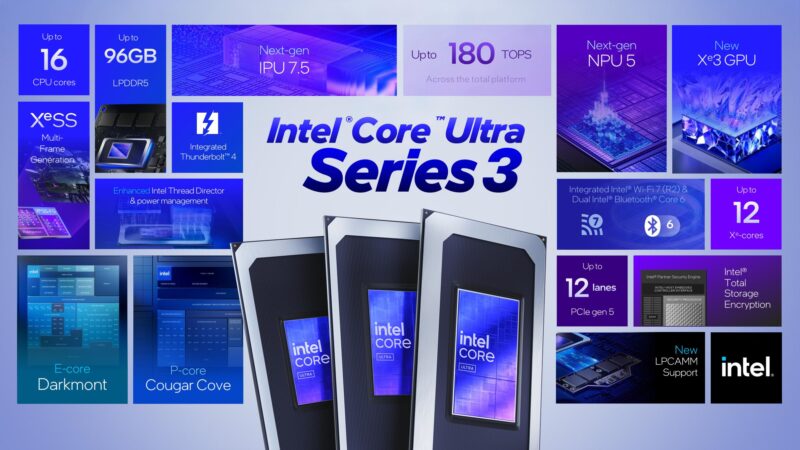
It is Intel’s hope that the combination of an improved architecture and a one-in-a-generation deployment new fab technologies will allow Intel to set new records for performance and energy efficiency in the mobile market. Some aspects of this will be harder to do than others – Series 2 (Lunar Lake) is not an easy act to follow when it comes to power efficiency – but Intel has clearly put in a significant effort into making this happen. And with rival AMD essentially holding pat for now with their existing Zen 5 silicon, Intel will get to enjoy a bit of a breather as well, as if they can raise the bar, then AMD wo not be able to follow right away.
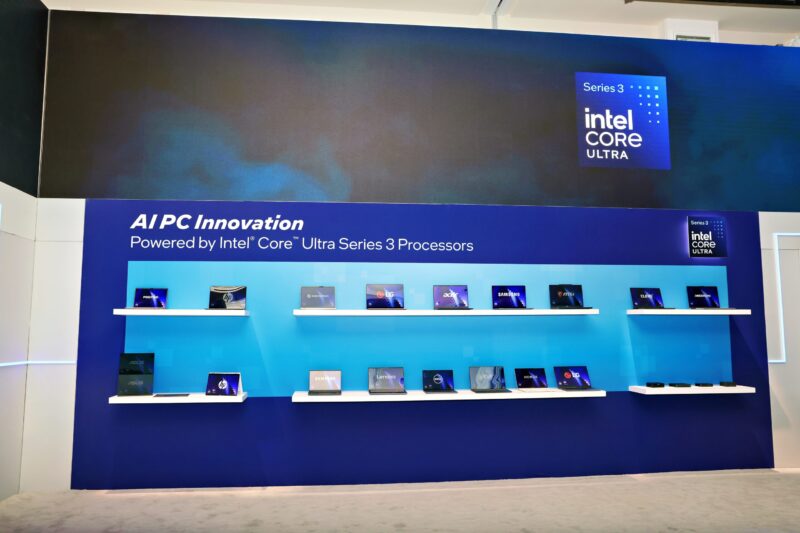
We will find out just how well the Core Ultra Series 3 lives up to Intel’s claims in the coming weeks as Intel’s OEM partners begin shipping laptops to reviewers and consumers alike. OEMs are taking pre-orders now, and Core Ultra 3 devices will be available later this month on January 27th.



While using Intel 18A is a step in right direction, Panther Lake is still wholly dependent on TSMC since the I/O tile is made by them. The 12-core GPU tile is also TSMC, while the basic one is Intel 3.
Intel is the almost only company running right way in the US’s semiconductor industry…
Losing manufacture simply means losing nation.
We can remember the fall of the UK, very easy.
Thanks for the insight Ryan, it’s been sorely missed! Not to say that Servethehome hasn’t been trying in their own way but there has been a gap since the closing of Anandtech. I am excited for this team up, keep up the great work everyone!
This might be the most exciting Intel release to me in a long time and might finally push me to upgrade my 11th Gen I series if there are some decent ultrabook models.
In my opinion having three different kinds of cores on package is not useful even from a marketing and market segmentation point of view.
The popularity of the 8-core Ryzen 9800X3D tells me people have caught on to the type of shrink-flation that increases the core count by minimising the core size.
“In my opinion having three different kinds of cores on package is not useful even from a marketing and market segmentation point of view.”
It should be largely invisible to the users. AMD has handled it well by putting lower clocking cores with identical instruction sets/IPC in Strix/Krackan Point, although the division of L3 cache is questionable.
In the future, AMD may adopt 2c/4t of Zen 6 “LP” cores in the desktop I/O die. This type of core would clearly be for improving idle power consumption, rather than increasing performance per area.
Very nicely written article!
CWF will also bring their hybrid compression bonding and, reportedly, 576MB of SRAM on the base tiles. Then NVL will, reportedly, also add SRAM on the base tiles. If they can pull off all these updates within one year, it will be long remembered.
Great Work. I’m curious why isn’t Intel; also making some of the IO dies on one of there own foundry nodes? Since the IO die doesn’t need the most advanced node and intel has experience making IO dies on both its intel 7 and intel 4/3 nodes would it not make sense to do that especially since the intel 7 fabs are not EUV fabs and thus can’t produce any of the newer nodes without major capital investments?
intel has longer term deals with TSMC and it more complicated than just we can do it, I believe that Intel has been making their IO dies with TSMC for their recent laptop chips for a while and when they have had such a crazy focus on the 18a die, going with what works probably isn’t a bad idea.
Please write about Wildcat Lake after more details become available.
“This is not the first time that Intel has labeled parts of their mobile chips with their most powerful iGPU (see: Iris Pro branding), but this is the first time that Intel has put that information in the name of the chip itself.”
Tiger Lake chips had the GPU in the name, i.e. i5-1135G7, with G7 meaning the highest GPU tier.