

GigaPlus GP-S50-0800 Management
As you would expect from such a basic and cheap switch, this is an unmanaged switch. So there is not a management interface or other frills to showcase. It is strictly a plug-and-play affair.
GigaPlus GP-S50-0800 Performance
While we have transitioned most of our network testing to Keysight CyPerf and IxNetwork using two sets of dedicated hardware platforms, 5GbE is a bit hard for us to test. We have three NOVUS cards for our two XGS2 chassis, but we do not have a multi-gig capable card. On the CyPerf side, we now have more 400GbE ports than multi-gig capable ports, so an unmanaged switch is challenging to physically test. So, we are just using our old iPerf3 setup.
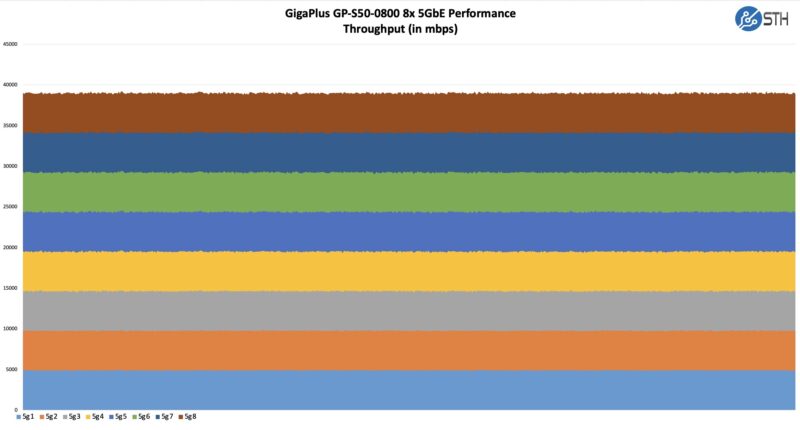
Our iPerf 3 results are about as clean as it can get. GigaPlus’s 5GbE switch has no trouble pushing nearly 40Gb in aggregate switching throughput.
GigaPlus GP-S50-0800 Power Consumption and Noise
Recent switches based around Realtek’s RTL9303 controller have proven to be quite power efficient. As a result, the GP-S50-0800 is able to idle at just 7 Watts as measured from the wall.
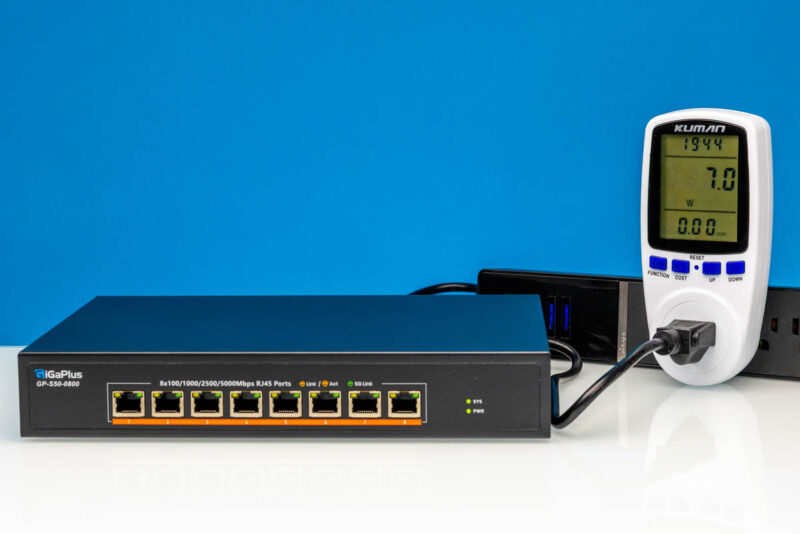
And lighting up one of the 5GbE ports costs just a single Watt, bringing the total power consumption under load to 8 Watts.
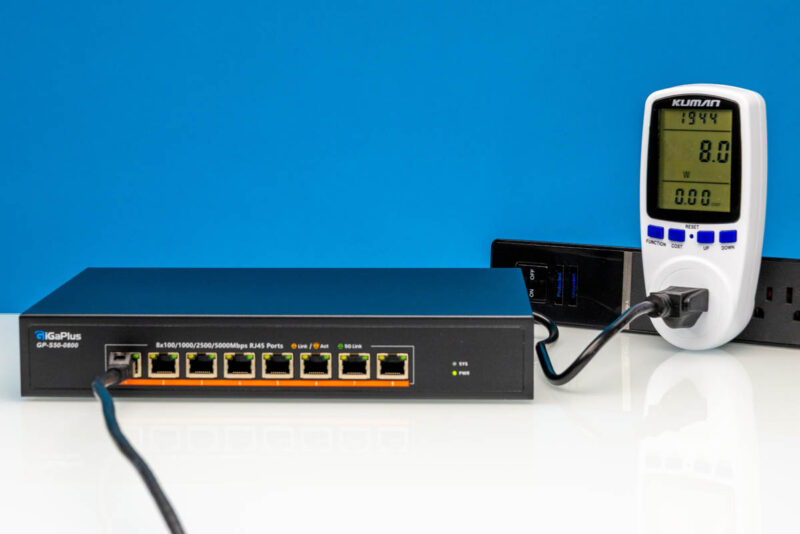
Otherwise, as noted earlier, this is a purely passively cooled switch. This means there are no fans or other moving components to generate noise: it is as silent as a switch can get.
Key Lessons Learned
GigaPlus’s GP-S50-0800 switch marks the third budget 5GbE switch we have looked at thus far. And we are now three-for-three on all of these switches using the same white label ODM design and SR-S5G3008P board.
And while the third switch based on this hardware has not revealed anything new about the platform, one thing that is becoming increasingly validated from our testing is how well the platform runs. In short: it just works.
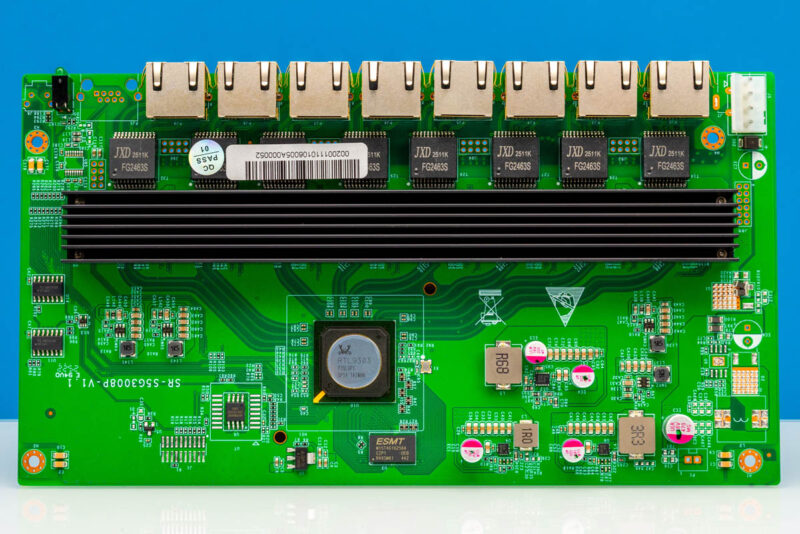
Past that, the use of a 10GbE switch chip in a 5GbE switch remains a minor mystery. But the otherwise overpowered controller means that the switch has no trouble hitting its performance goals.
Ultimately, this leaves GigaPlus’s switch to serve the niche that is the 5GbE market. At $200 it is cheaper than an equivalent 8 port 10GbE switch ($250), though not massively so. As a result, the switch is best suited for setups that either truly do not need/benefit from 10GbE speeds, or do not have the wiring to support it.
Final Words
At $200, GigaPlus’s GP-S50-0800 is an unremarkable 5GbE switch – and that is exactly what it needs to be. The barebones, unmanaged nature of the switch means that it does not get to excel at anything, but it is not left lacking either. In other words, it is exactly what it says on the tin: an 8 port, 5GbE unmanaged and fully passive switch. And it works very well for that task.
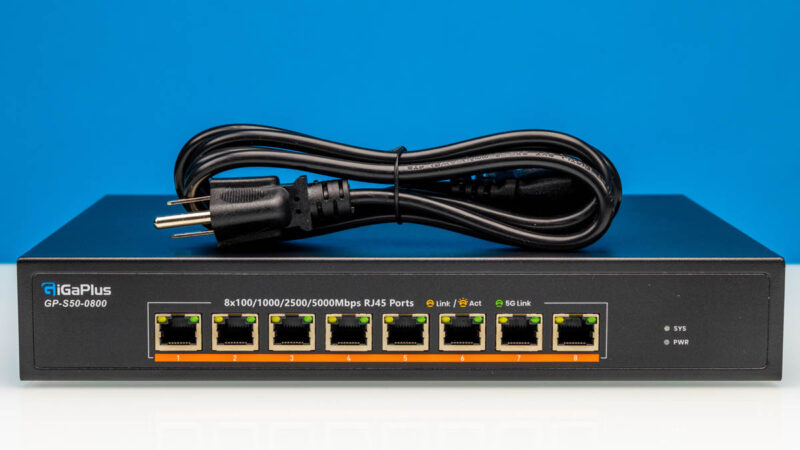
The one bit that GigaPlus has to watch out for is that because they are using a white label design for this switch, they do not have anything else hardware-wise to give them a competitive edge. Which means that for many buyers it will come down to whoever is offering the same (or similar) switch at the lowest price – and as we have seen now through our reviews of these 5GbE switches, that is a growing field of equally budget-focused vendors.
Where To Buy
Here is an Amazon Affiliate link to what we purchased.

for $180 i want at least one 10gbe uplink, either SFP+ or 10Gbase-t
ughhhhhhhhh why are there so many multi-port 2.5GbE switches with SFP+ ports but none of the 5gig gen have them? Hopefully in the next wave.
Trying to avoid older decommissioned enterprise gear with 40mm fans.