
ASRock Rack W890D8-2L2T Performance
On the performance side, we could just mount the generic AgentSTH Installer, key in a hostname, and we were set. We are using the Intel Xeon 658X we reviewed since that is what we had handy. Also, we used a more workstation-focused motherboard for that review, so it lets us look at what the difference is between the two with the same CPU and memory.

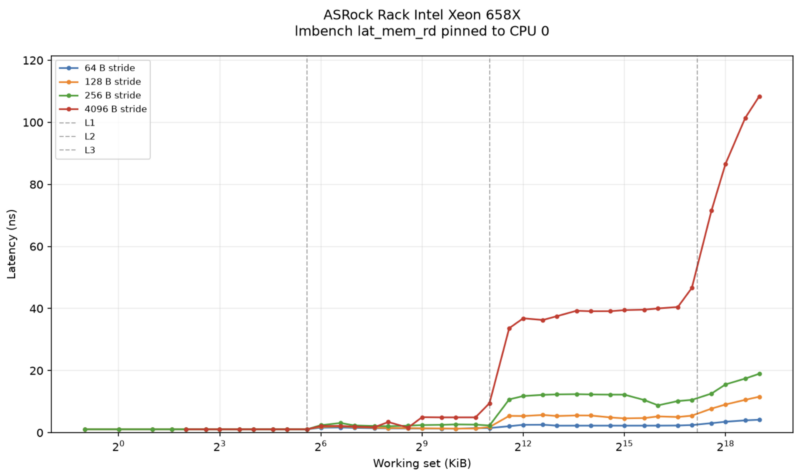
Starting off, here is an lmbench run:
Here is the core-to-core latency result.
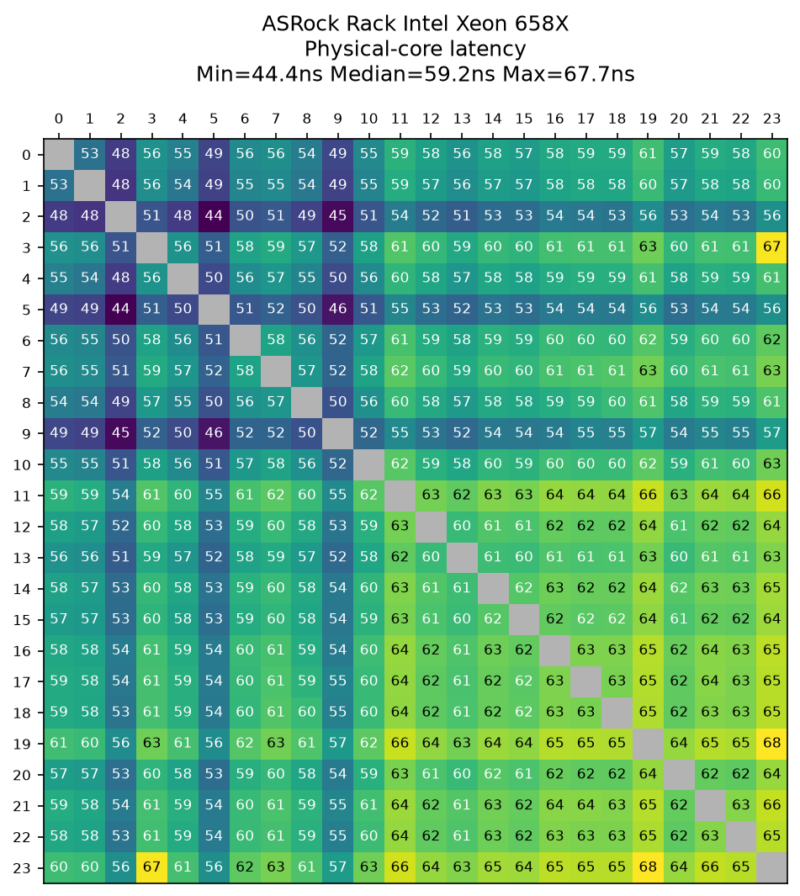
For what it is worth, that is an excellent result for a CPU like this. Part of that, however, is also because it is a lower core count CPU, so we are not hopping across 64+ cores or through multiple sockets for this.
Geekbench 5
Starting with Geekbench 5 since that is a better test for a high-core count CPU like this than Geekbench 6 or 7 which are less throughput focused:
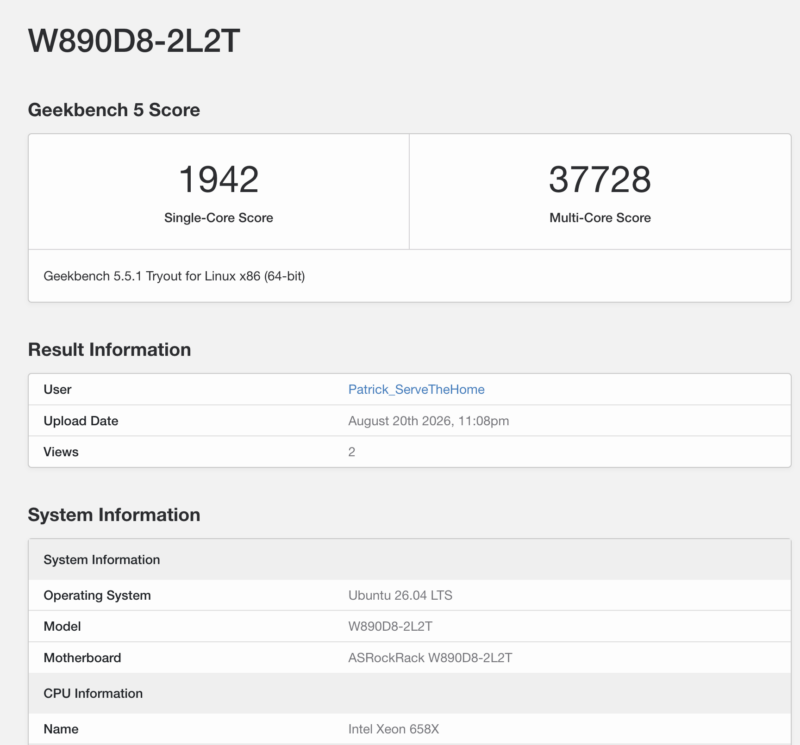
You can use that result to compare, but it is pretty good.
AgentSTH V7
We wanted to run the platform through our AgentSTH V7 agentic AI CPU benchmark suite. Starting with a single-core result, you can see that we are a bit ahead of the workstation motherboard on this one.
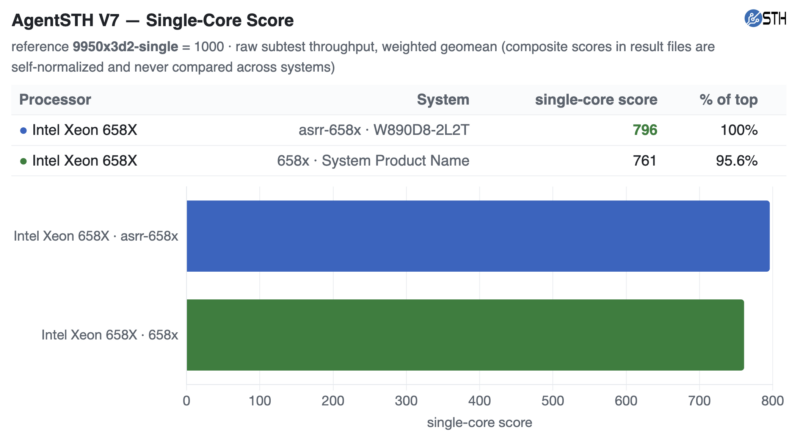
Interestingly, that was mostly in the throughput and coordination segments, not the memory.
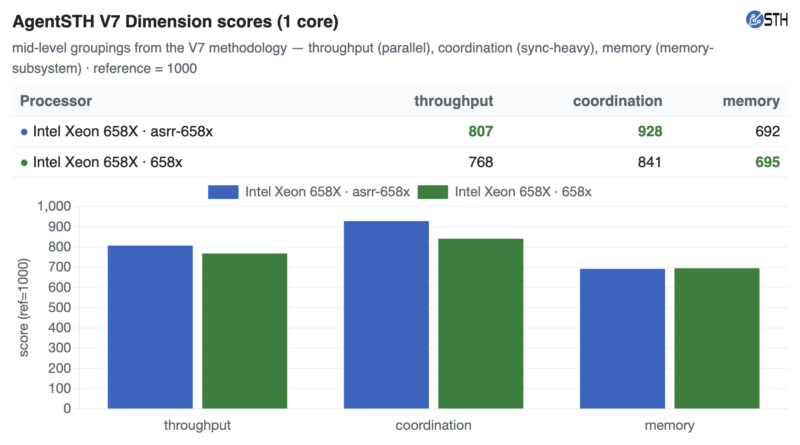
Scaling to 24 cores, we can see that the two platforms effectively converge.
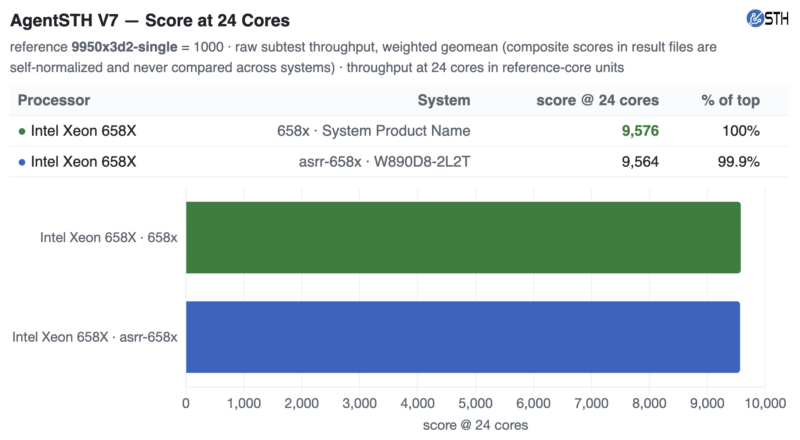
Perhaps most interesting here is that while the numbers overall converged, we still saw the throughput and coordination tests side with the ASRock Rack W890, but the memory test favored the workstation platform.
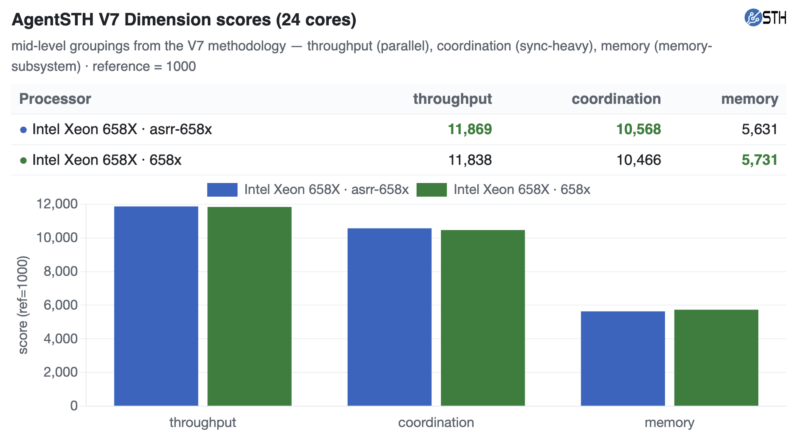
The difference, however, is how close they all are, which makes sense given that we are using the same CPU.
For scaling, we loaded the CPU in both platforms to see how it would fare.
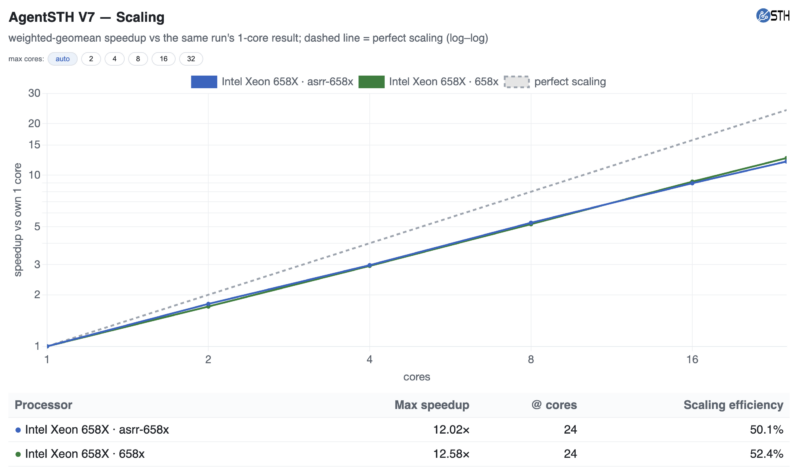
Overall, these are fairly close results, which we would expect.
We also split the CPU into simulated running multiple AI agents with different core counts to see if that would impact the performance.
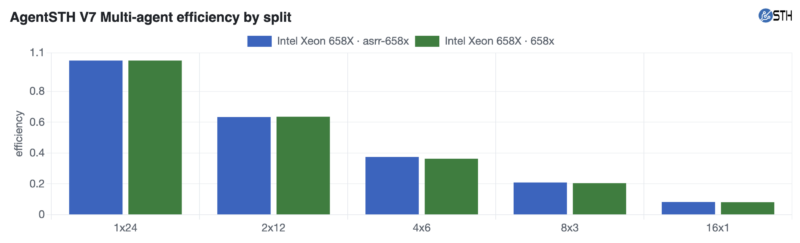
Perhaps the good thing here is that we are so close, with the outlier being the four agents at six cores run.
Estimated SPEC CPU2026
We also ran SPEC CPU2026 using a very low optimization -O3 compiler flag run. Again, unlike vendor runs, these are not highly optimized runs.
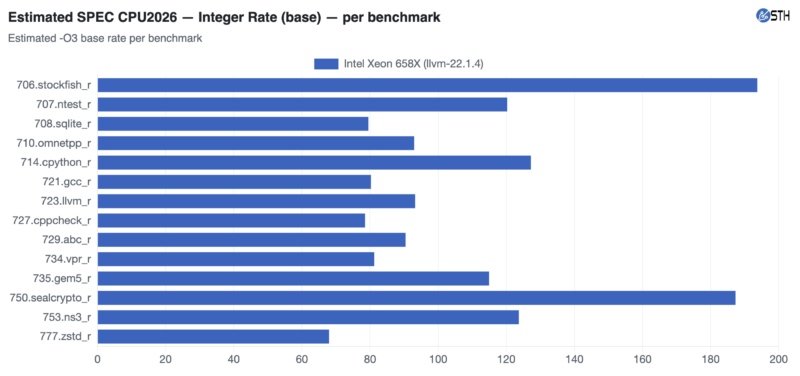
Our estimated integer rate base is in line with what we would expect with this CPU.
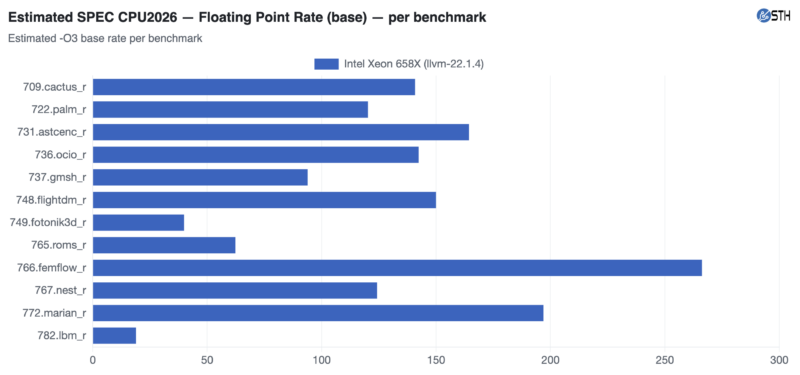
We saw the same on the floating point side.
Next, let us get to the accessories.