

ASRock Rack TURIND8-2L2T Block Diagram
Here is the block diagram for the ASRock Rack TURIND8-2L2T.
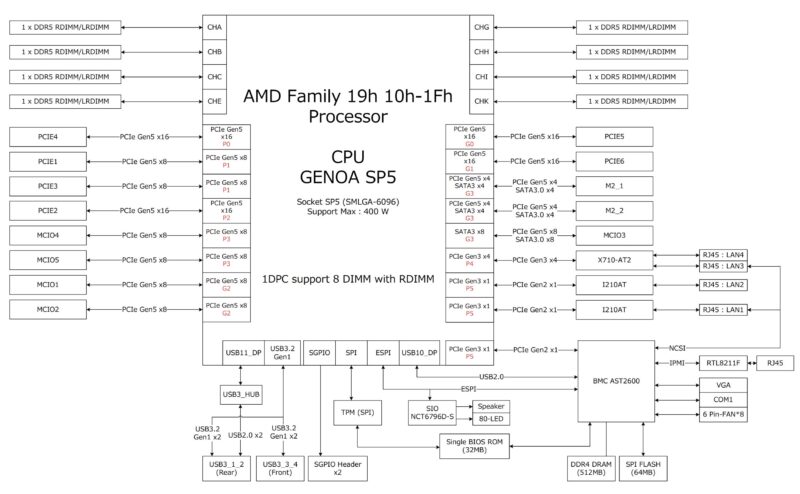
The AMD EPYC SP5 platform provides up to 128 lanes of PCIe Gen5, and those are usually the ones we talk about. Here, the lower-speed platform PCIe lanes are used to connect the 1GbE and 10GbE NICs, as well as the ASPEED AST2600 management BMC. In this platform, all 128 lanes of PCIe Gen5 are exposed, plus there are seven additional lanes used for platform devices. You could say this motherboard uses 135 lanes of PCIe, which is more than most other single socket motherboards we see.
ASRock Rack TURIND8-2L2T Management
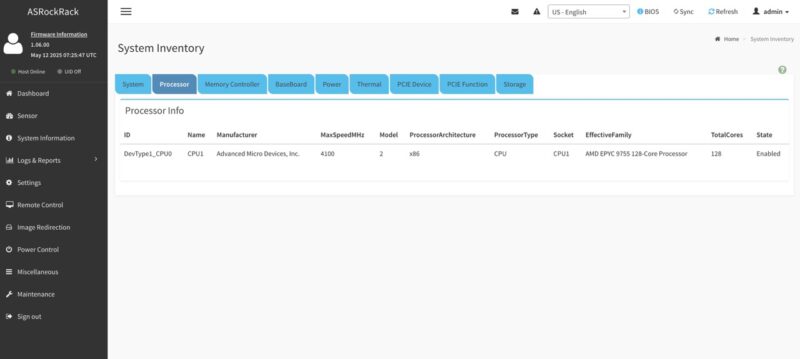
The management interface is an industry-standard MegaRAC SP-X running on an ASPEED AST2600 BMC, so it feels very familiar.
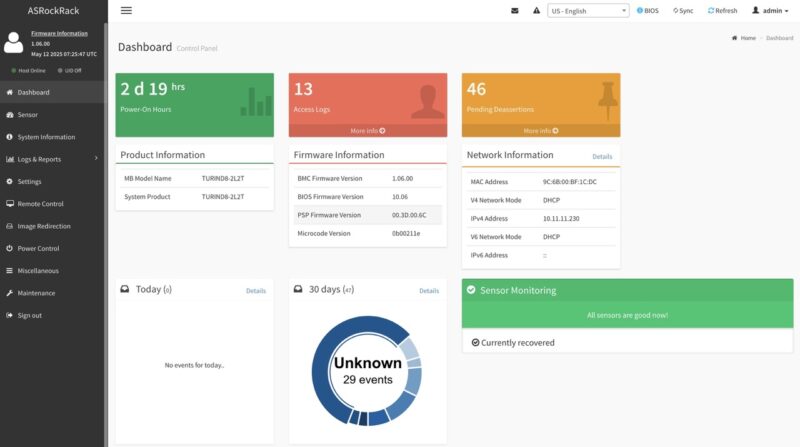
You can do power operations, but one really nice feature is the option to boot to BIOS. That may sound like a small feature, but given how long memory training can take on modern systems, it is very useful if you need to reboot and get to the BIOS. This feature omits sitting and waiting on initialization and spamming a key just to boot into BIOS.
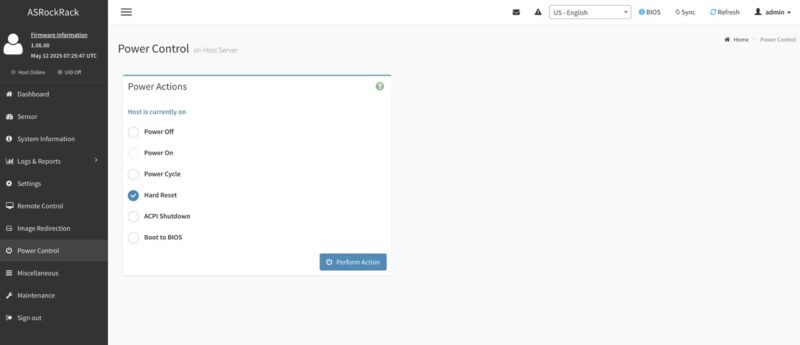
You can do a system inventory. We checked this just because we had the AMD EPYC 9755 installed, a 450-500W TDP processor. We wanted to see what the interface would show by running that configuration.
As with modern systems, you get an HTML5 iKVM feature with the ability to remotely mount ISO images. This is all done with the base license level, unlike some other well-known server vendors that charge for these capabilities.
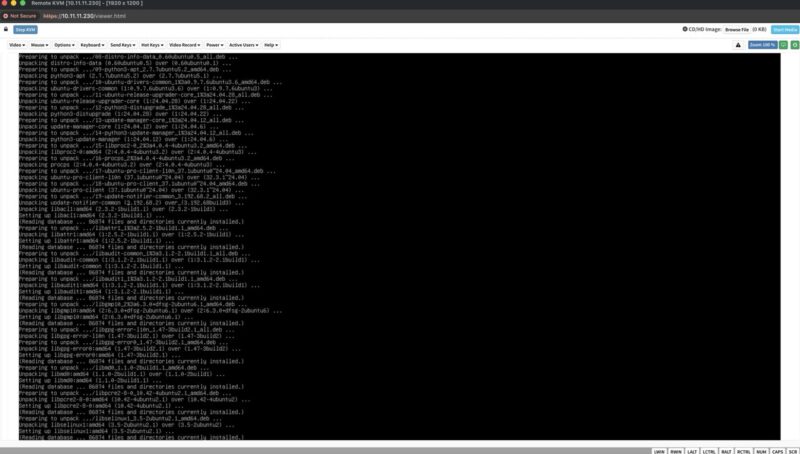
Overall, remote management has become standard on servers, and ASRock Rack is using an industry-standard solution.
ASRock Rack TURIND8-2L2T Performance
Since I know folks will want to see if the AMD EPYC 9755 actually booted, here is the high-end 128-core CPU running stress-ng across all of its cores.
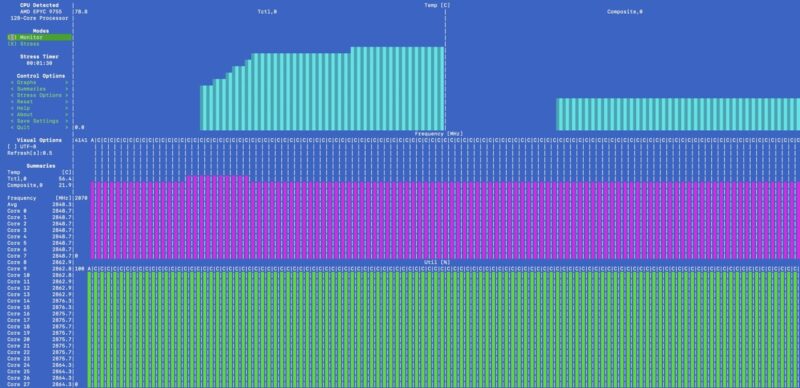
We would, of course, not recommend a CPU that is not on the supported CPU list, especially if it is a higher power CPU. On the other hand, we were surprised it worked this well.
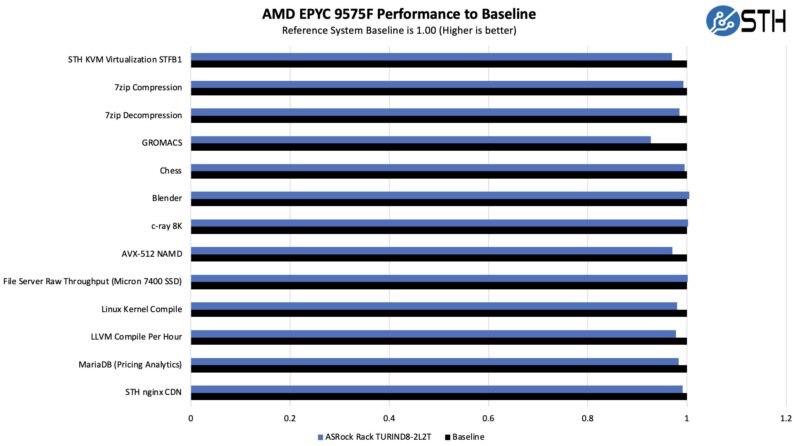
In terms of other processors, we generally found that the performance was off by 1-8% on most of our workloads compared to full 12-channel platforms. An 8-channel motherboard is lower cost to populate, especially given current market conditions. You do give up some performance, but it is not dramatic. It is also similar to what we saw with the ASRock Rack TURIN2D16-2T, which is like a dual socket version of this platform. Of course, if you are highly memory bandwidth bound, then losing 33% of the memory channels will have a bigger impact.
Next, let us discuss cooling.

You’re not actually supposed to max out the saturation slider.