

With the advent of cheaper and lower-power 5Gb Ethernet (5GBASE-T) switches and PHYs, we are seeing an explosion in the number of relatively cheap 8 port switches on the market – finally bringing more choice to networks that need something faster than 2.5GbE without breaking the budget. Especially with solid designs now available from white label ODMs, it has become very easy for the rank-and-file network hardware vendors to quickly get a high-performance switch pushed out to the market. Coupled with the advent of cheap 5GbE NICs, we are finally seeing a complete ecosystem coming together for 5Gb Ethernet.
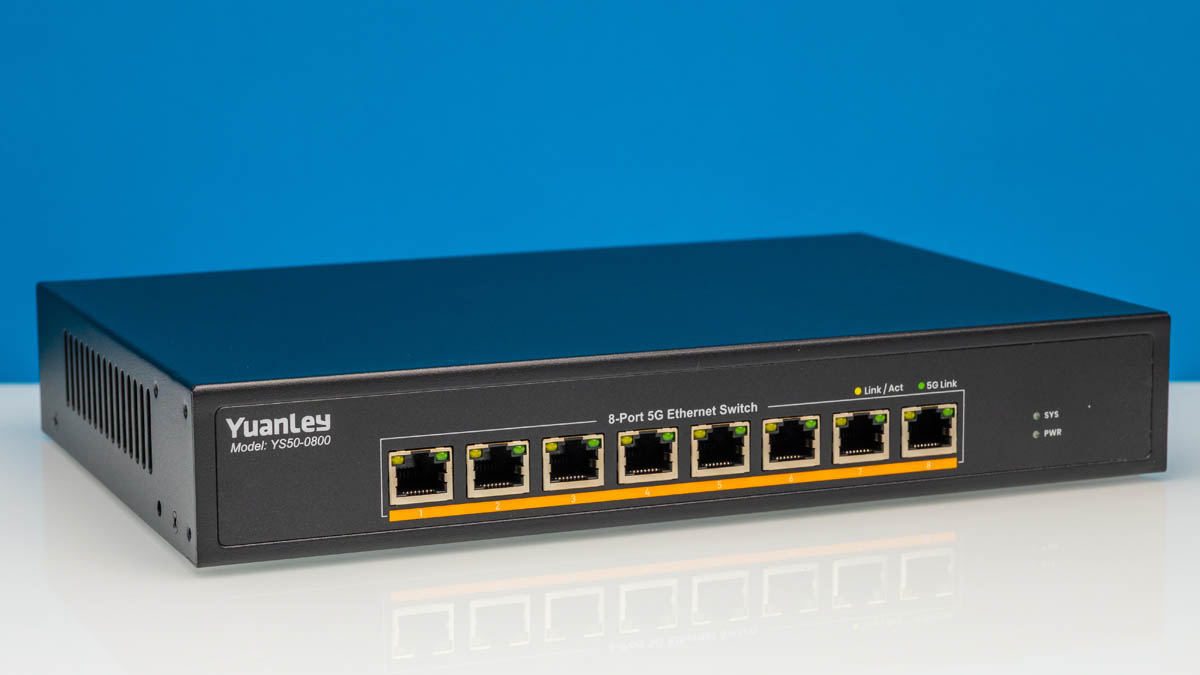
Today we are taking a look at one of those 5Gb switches with the YuanLey YS50-0800, an 8 port 5GbE switch based around Realtek’s RTL9303 switch chip.
Here is an Amazon Affiliate link to what we purchased.
YuanLey YS50-0800 Hardware Overview
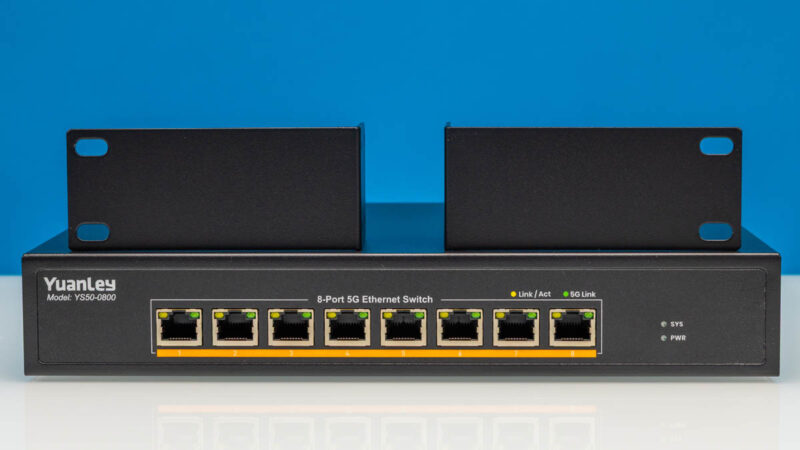
For their 8 port 5GbE switch, it is fair to say that YuanLey is not trying to do anything beyond building a basic switch. As a result, the end product is a rather nondescript 1U box.
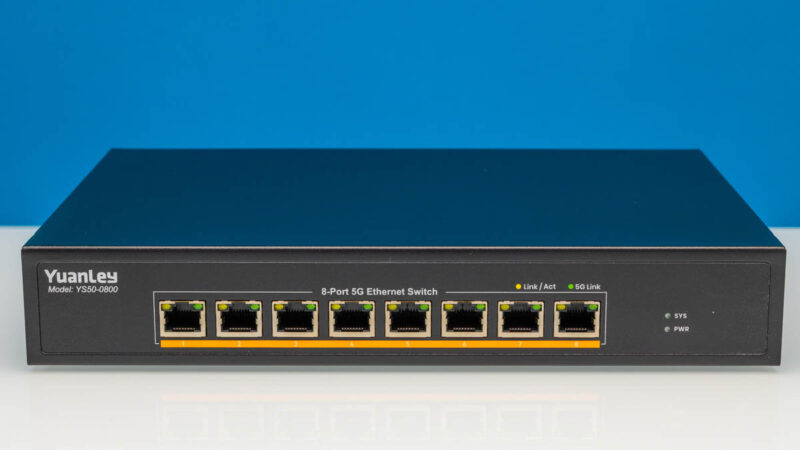
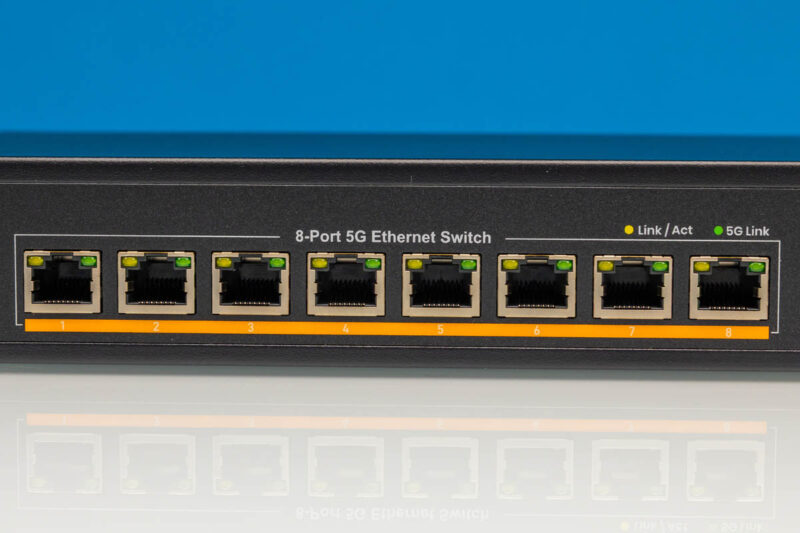
The port labeling here is pretty basic as well, describing the 5GbE switch and what the amber and green LEDs signify.
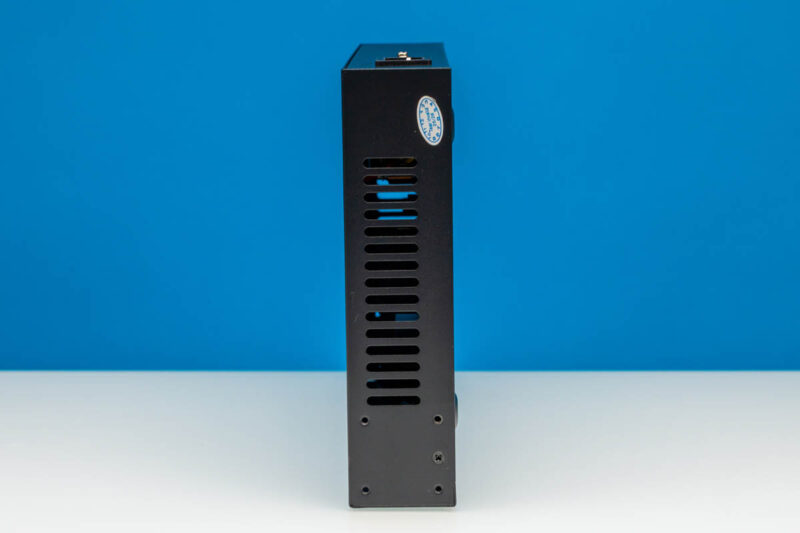
Similar to some other RTL9303 switches we have seen, this is a fully passive switch. So there are no fans to be found throughout the box – on the sides are a pair of vents to allow for the most basic of airflow.
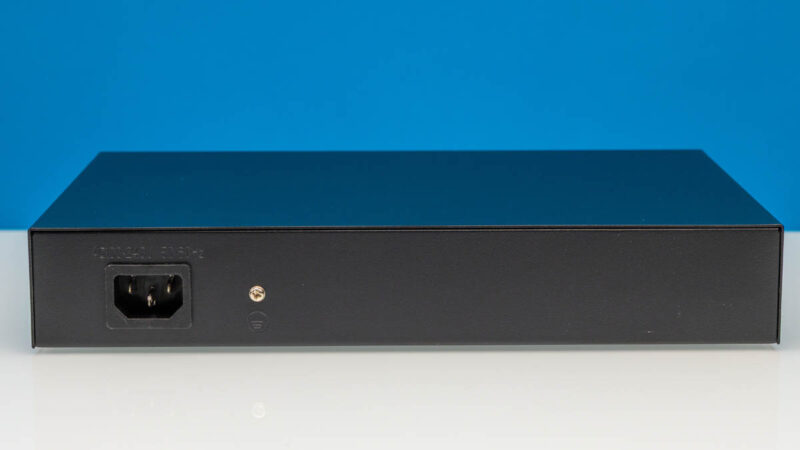
For power, the YS50-0800 relies on its own internal power supply. So on the rear we find a standard C14 AC power connector. Coupled with a grounding point, that is the entirety of the rear of the switch.
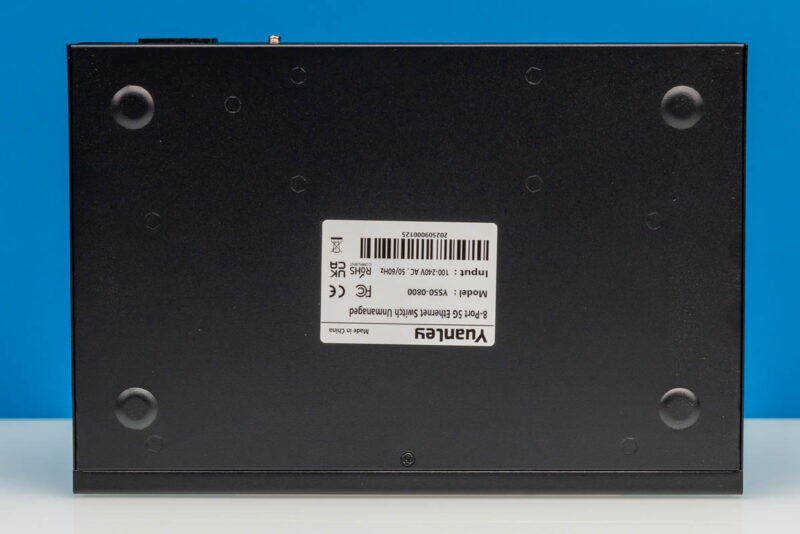
The switch does include feet to keep it slightly elevated for cooling purposes. In this case they are metal feet built right in to the bottom plate of the switch, making the entire setup a single piece of metal.
Though if you are not putting it on top of a desk or other flat surface, YuanLey includes a set of rack ears as well for mounting the switch in to a standard networking rack.
Cracking open the switch, inside we find a similarly basic design for the electronics.
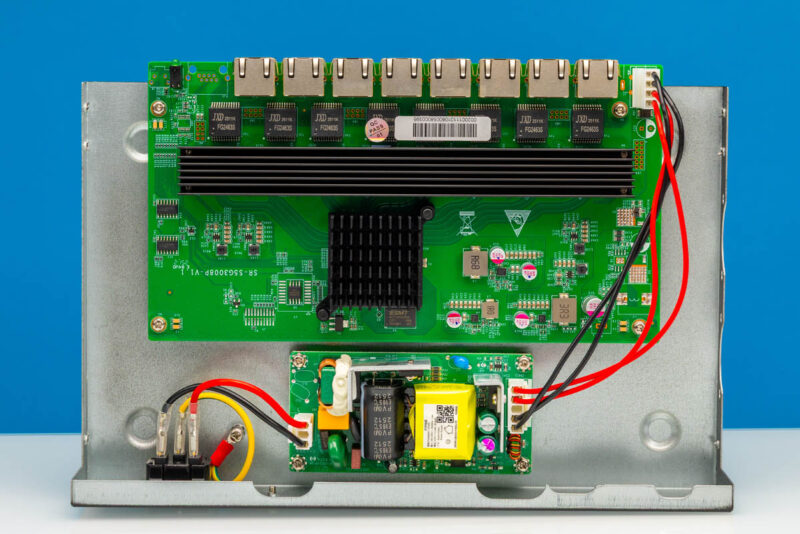
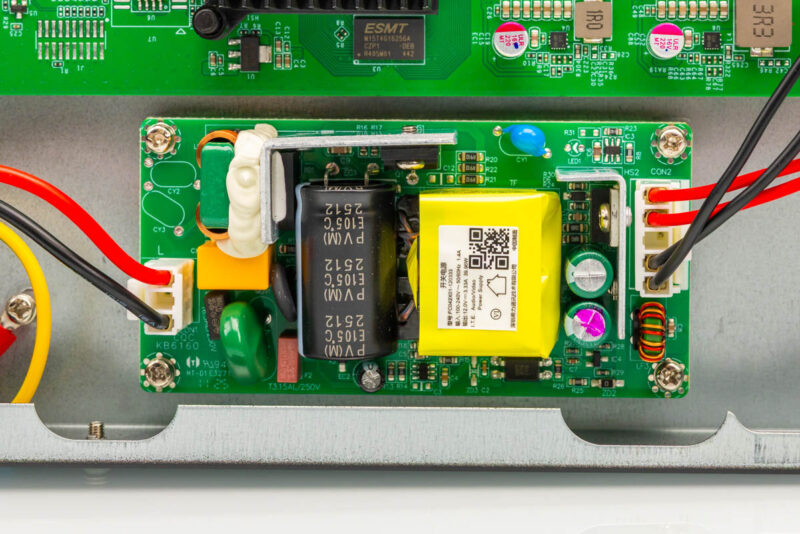
Towards what is normally the rear of the switch is a small power supply that is mounted on its own board, feeding DC power to the separate switch board over a 4-pin cable.
As for the switch board itself, the picture tells the story. 8 ports, 8 magnetic modules, and hiding under the heatsink we’d find 8 PHYs.
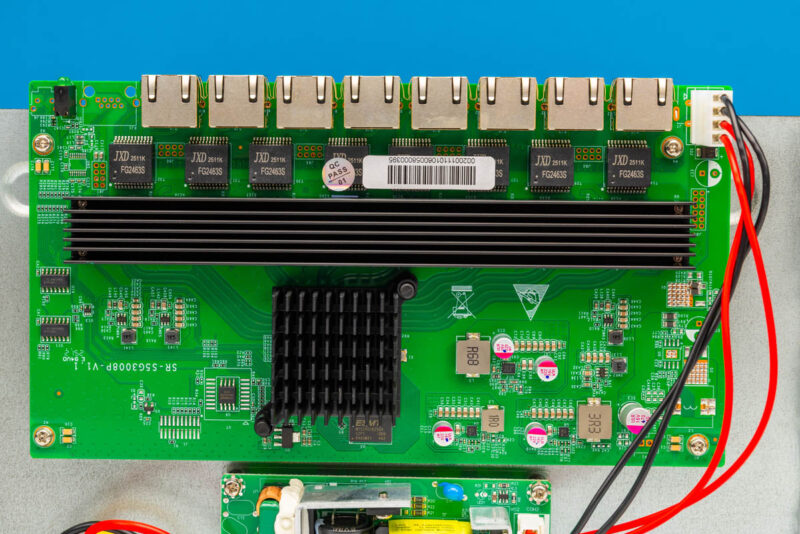
All of which ultimately feeds in to the main switch chip, which is covered by its own heatsink.
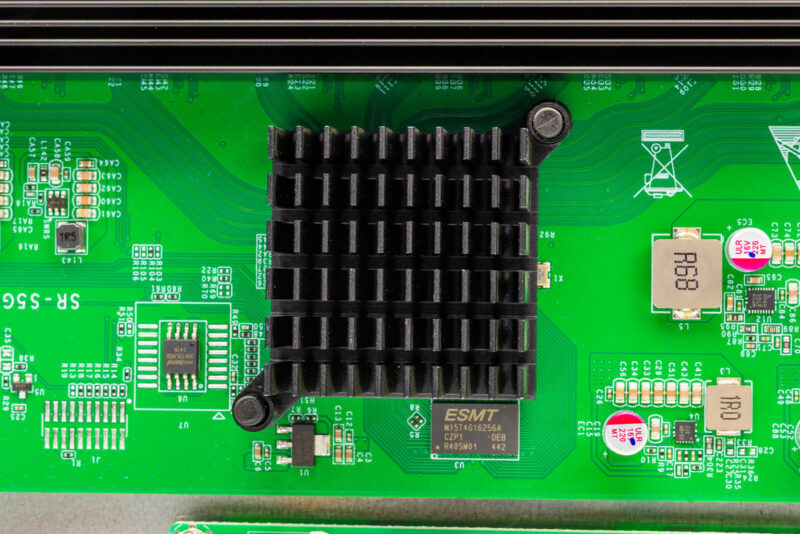
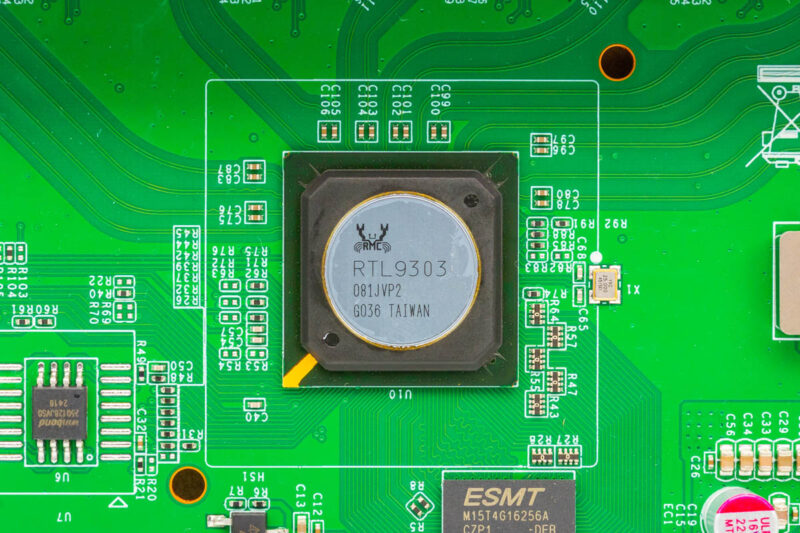
Popping off that heatsink we find the heat of the switch, Realtek’s RTL9303 switch controller. We have seen this pop up a few times now, and as with the NICGIGA FS2463S we looked at earlier this month, its inclusion here is a surprise and a bit of a mystery, as this is technically an 8 port 10GbE switch chip. It is effectively a single-chip switching solution, though it does require external DRAM – in this case a 256MB DDR3 chip from ESMT.
Now let us power up the switch and see what its performance is like.

So far I have 3 YuanLey switches. the 8 port 10GbE, the 8 port 2.5Gbe POE w/10Gb SFP, and finally the 4 port 2.5Gb w/2 10Gb SFP ports.
The first 2 have worked great, but the last one (YS25-0402), the 2 SFP ports overheat big time when populated at 10Gbe and the whole switch chassis to gets to hot too touch and it declines in throughput.
Let’s take a 10 Gbit SoC and make it into a 5 Gbit switch. Pretty sure the cost difference between 5Gbit PHY and 10 is no more then 15 euro.
So it makes little sense to me.
Why, this missed its sale window, we should be on managed multi-gig 10G switches now at near enough unmanaged switch prices.