
Canonical presented the Evolution of Enterprise Open Source RISC-V at Hot Chips 2026. Gordan Markuš, Canonical’s Director of Silicon Alliances, walked through how Ubuntu is built, how ISA support is managed across architectures, and what it will take to make RISC-V enterprise-ready. We did this one live like our other Hot Chips coverage, but are publishing it a bit later around a cluster of RISC-V pieces.
Canonical Evolution of Enterprise Open Source RISC-V at Hot Chips 2026
Canonical’s underlying argument is that an Ubuntu system should behave like an Ubuntu system no matter what processor drives it. Its presentation builds from how Ubuntu packages are assembled and supported, then applies that model to RISC-V.
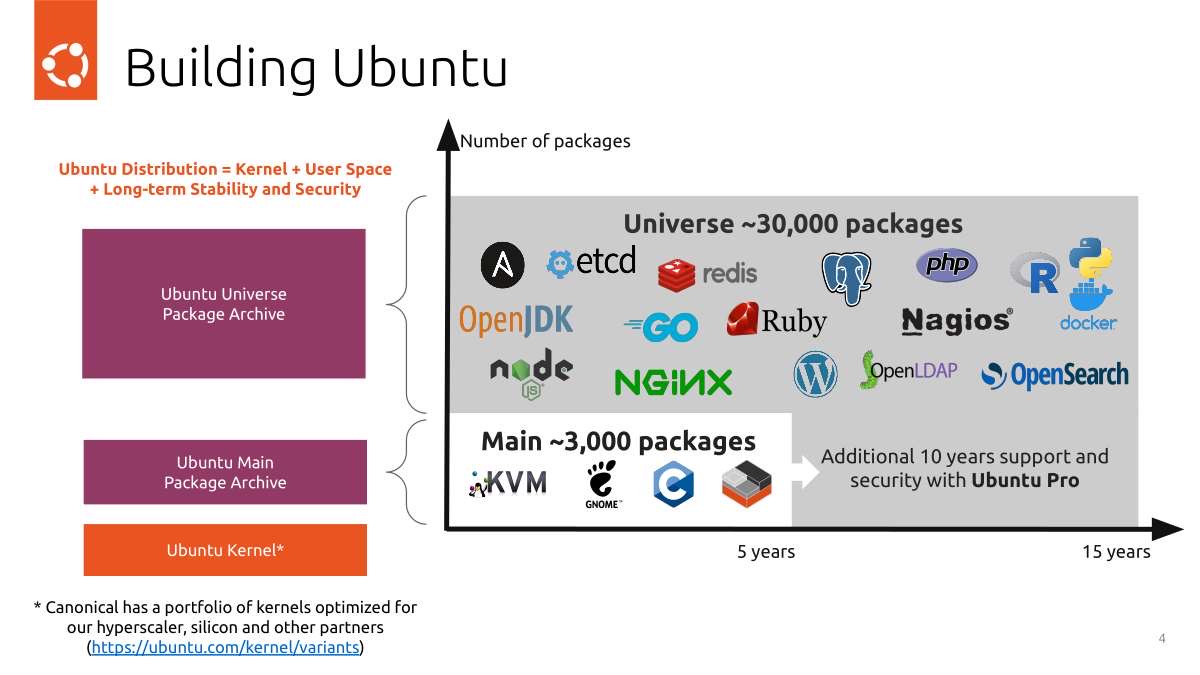
Ubuntu is assembled from a kernel and user space that Canonical commits to supporting for years. This Universe package archive contains roughly 30,000 packages, while the smaller Main archive contains about 3,000 packages and offers a longer support window, up to 15 years with Ubuntu Pro. Canonical also maintains a portfolio of kernels tuned for hyperscaler and silicon partners, which matters for RISC-V because there is no single reference design.
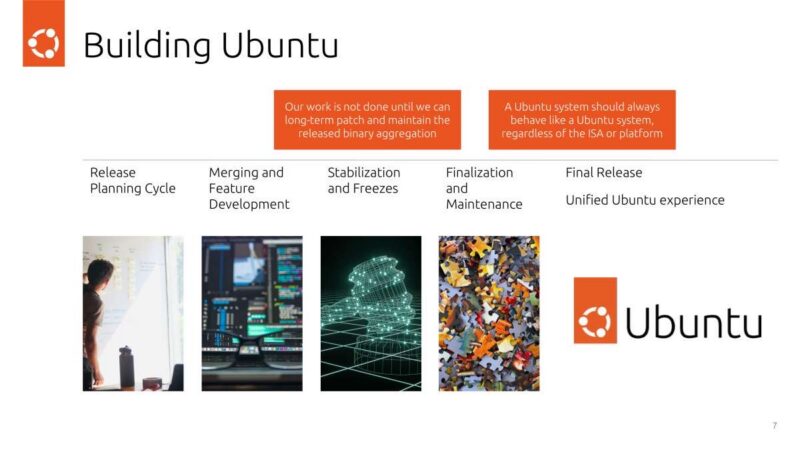
The core aim is for an Ubuntu system to always behave like an Ubuntu system, regardless of the ISA or platform. Canonical says its work is not done until it can long-term patch and maintain the released binary aggregation and deliver a unified Ubuntu experience, meaning every new architecture has to flow through the same release and maintenance cycle.
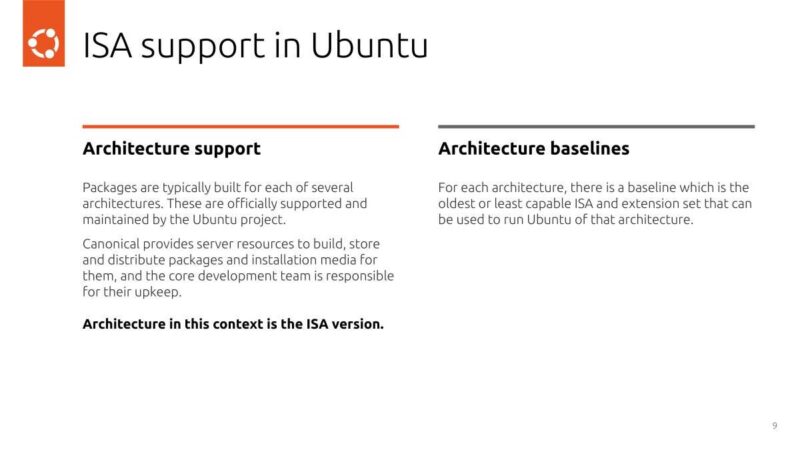
Packages are built for each supported architecture, and each architecture gets a baseline, the oldest or least capable ISA and extension set that can run Ubuntu of that generation. Canonical provides server resources for building and distributing packages and maintains a core development team responsible for their upkeep. RISC-V may sound exotic, but Ubuntu supports not only Arm and x86 CPUs but also IBM POWER and Z mainframes.
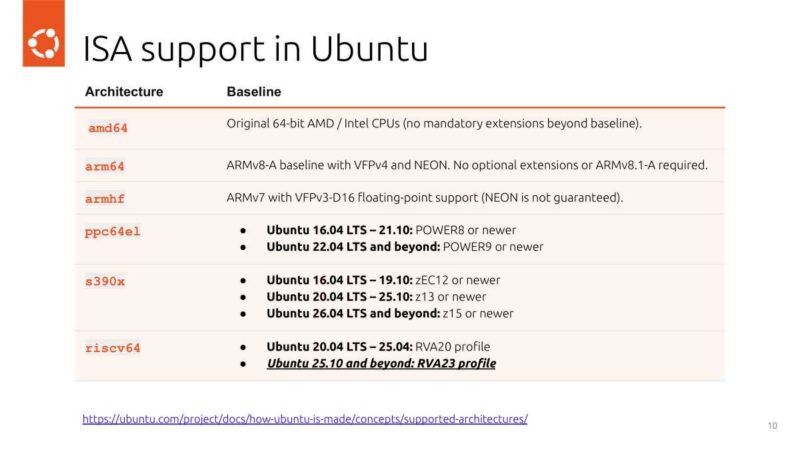
Canonical shows where each architecture baseline sits today. This amd64 target assumes the original 64-bit AMD and Intel CPUs, while arm64 uses an ARMv8-A baseline with VFPv4 and NEON. This RISC-V riscv64 target moved from the RVA20 profile to the RVA23 profile with Ubuntu 25.10.
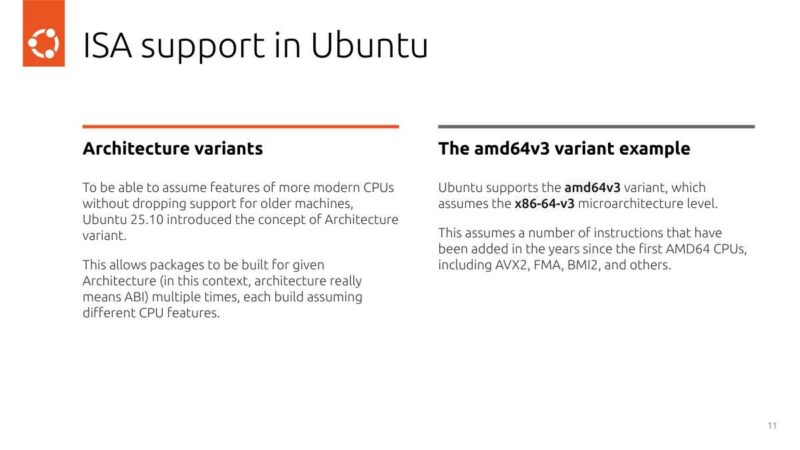
Beyond baselines, Ubuntu 25.10 introduced architecture variants, allowing packages to be built more than once, each targeting different CPU features. This amd64v3 variant targets the x86-64-v3 microarchitecture level, adding instructions such as AVX2, FMA, and BMI2 while retaining support for older machines. This is the same pattern Canonical plans to apply to future RISC-V profiles. If you saw the Update on RISC-V Standards and Adoption at Hot Chips 2026, the motivation will make sense.
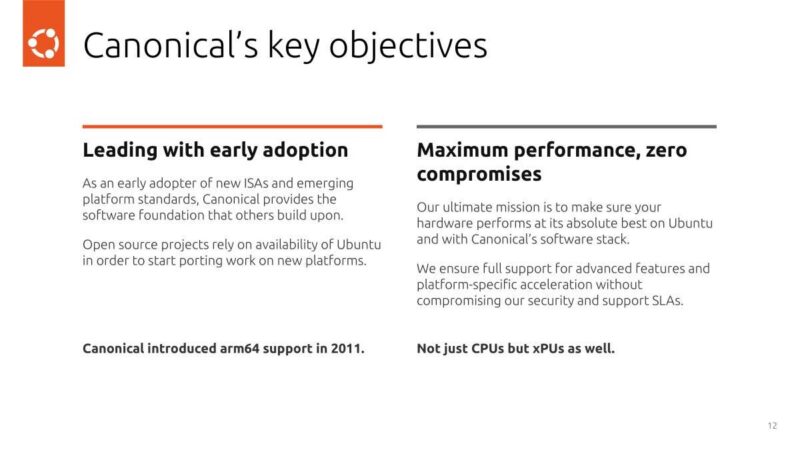
Ubuntu introduced arm64 support back in 2011, but really it was Ubuntu 16.04 LTS that made Arm server CPUs usable without lots of custom patching. It wants to support advanced features and platform-specific acceleration on new ISAs without weakening security and support SLAs.
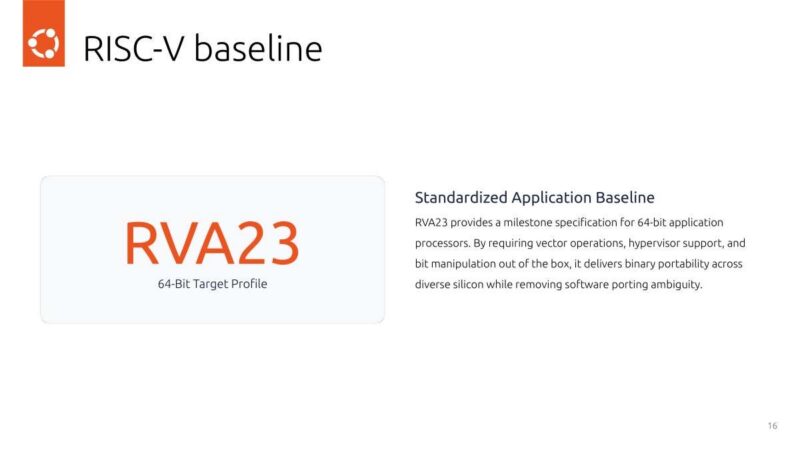
RVA23 is the standardized application baseline Canonical is targeting for 64-bit application processors. Since it requires vector operations, hypervisor support, and bit manipulation out of the box, RVA23 aims to deliver binary portability across diverse silicon and remove software porting ambiguity.
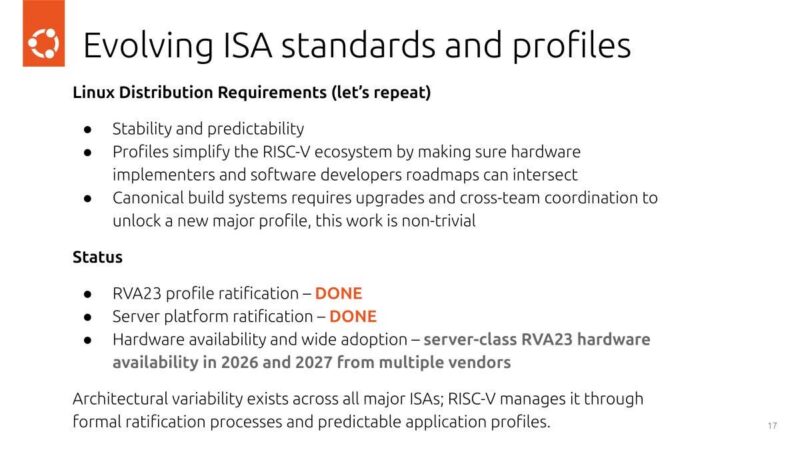
The RVA23 profile ratification is done, and so is server platform ratification, with server-class RVA23 hardware expected from multiple vendors in 2026 and 2027. Canonical notes that unlocking a new major profile is non-trivial, since its build systems require upgrades and cross-team coordination. Profiles help ensure that hardware implementer roadmaps and software developer roadmaps can intersect.
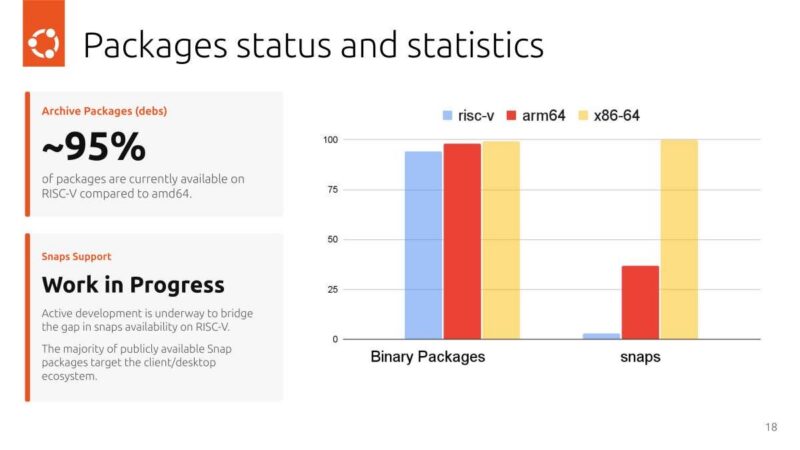
Package coverage on RISC-V is close to catching up with the mainstream builds. Around 95% of packages are currently available on RISC-V compared with amd64, while Snap support is still a work in progress because most publicly available snaps today target the client and desktop ecosystem. Our STH team generally prefers to use the more generic apt package manager rather than snaps, but here we are.
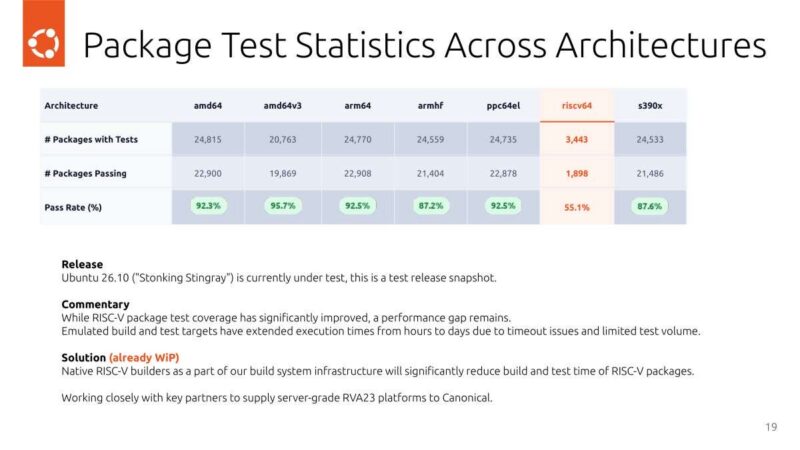
With 3,443 packages under test and 1,898 passing, RISC-V posts about a 55.1 percent pass rate on an Ubuntu 26.10 test snapshot, well below the roughly 92 percent seen on amd64. Canonical attributes part of that to emulated build and test targets, stretching execution times from hours to days, and to adding native RISC-V builders with help from partners supplying server-grade RVA23 platforms. It also has a much lower percentage of packages that have tests than the other architectures, which gives you a good idea of just how mature RISC-V is.
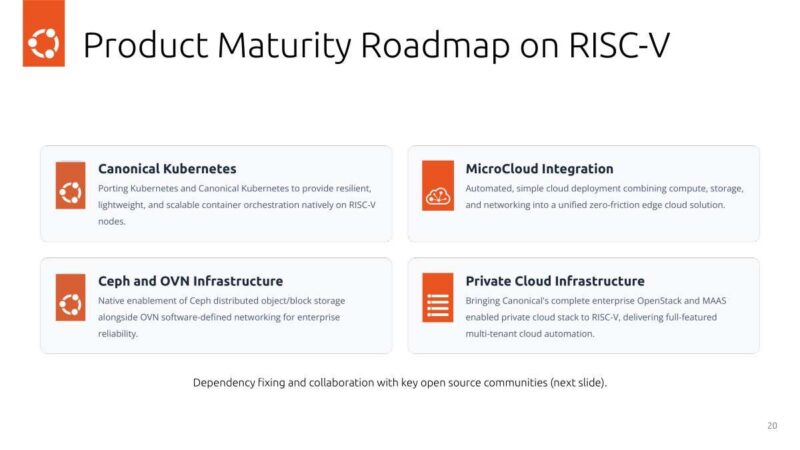
Canonical Kubernetes and MicroCloud are being ported for native RISC-V container orchestration and edge cloud. The company is working on bringing RISC-V out across its stack though.
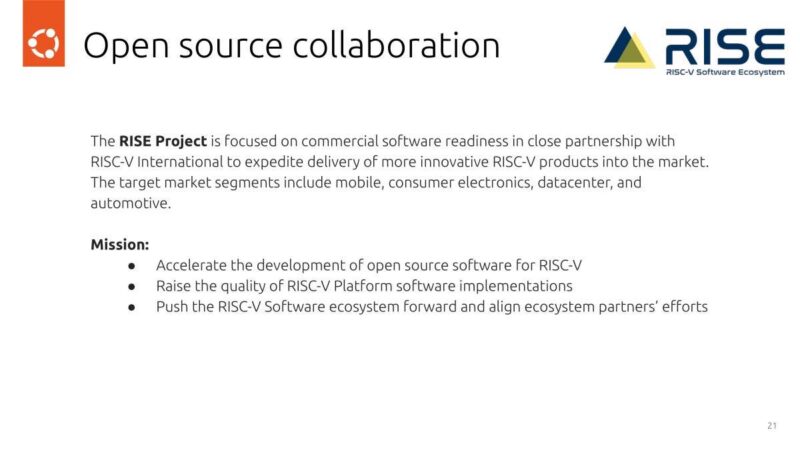
Open source collaboration is central to the push. Canonical participates in the RISE Project with RISC-V International, which targets commercial software readiness across mobile, consumer electronics, datacenter, and automotive. RISE focuses on accelerating open-source software for RISC-V, improving platform implementation quality, and aligning ecosystem efforts.
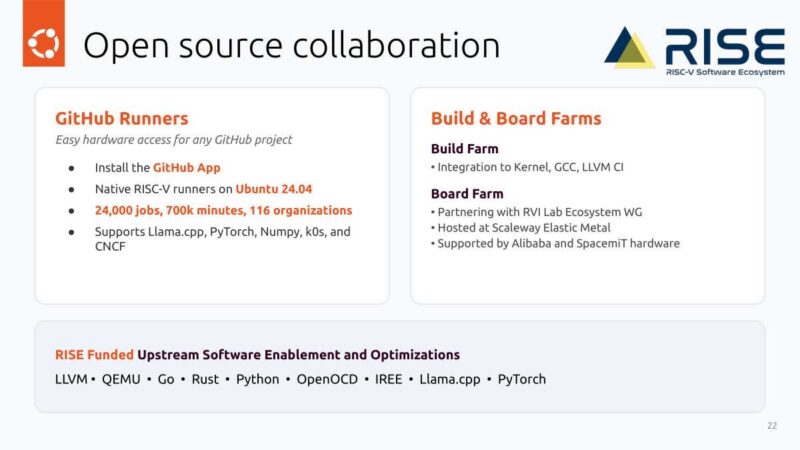
Native RISC-V runners on Ubuntu 24.04 back a build and board farm hosted at Scaleway Elastic Metal with Alibaba and SpacemiT hardware, and the project reports 24,000 jobs and 700,000 minutes across 116 organizations.
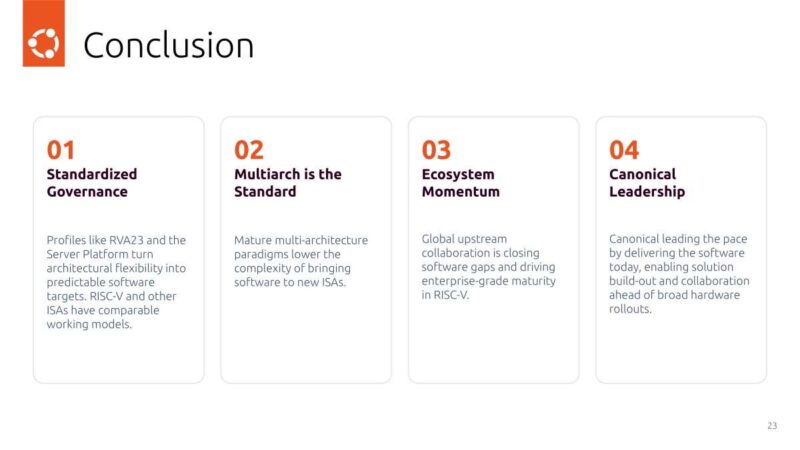
Taken together, Canonical is betting that standardized profiles and broad upstream collaboration can push RISC-V past the software readiness gap that has historically slowed open source adoption of new ISAs. It frames RVA23-style profiles as the way to make software targeting predictable and to make multi-architecture maturity the foundation for enterprise-grade deployments.
Final Words
With server-class RVA23 hardware arriving over the next two years, the software stack now has a fixed target to converge on. Hopefully this moves RISC-V into a more mainstream role. Still, it seems like there is quite a bit of ground to cover.