Posted on 16 June 2010. Tags: atx form factor, clarkdale, dual intel, expandability, expansion slots, home server, hyper-v, i3-530, i5-650, installed windows, intel core i3-530, intel pentium, intel xeon, intel xeon x3460, motherboard intel, network adapter, network controllers, power consumption, quality controllers, server motherboard, server motherboards, server v2, Supermicro, test configurations, x16
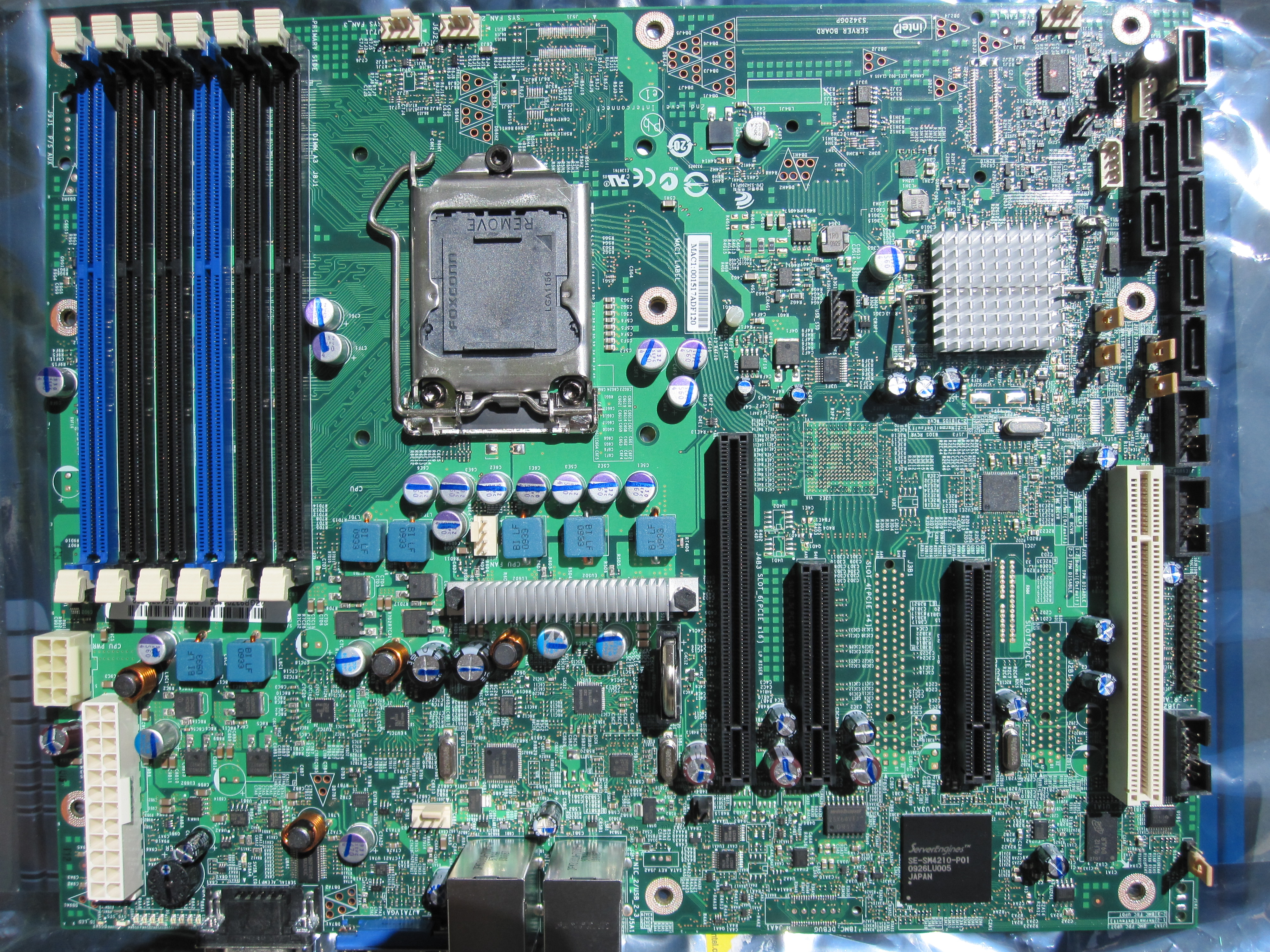
Intel’s 3400 chipset for its socket 1156 platform accepts CPU’s from the cheap Intel Pentium G6950 and Core i3-530 to the higher end Xeon X3430 to X3470 CPUs. Both Clarkdale and Lynnfield based CPU’s offer outstanding power consumption (for early 2010) at relatively low costs. After reviewing the Supermicro X8SIL-F, I purchased a competing (price wise) Intel motherboard to review, the Intel S3420GPLC. As I soon found, Intel also makes a good board, however it lacks some of the Supermicro’s features.
Read the full story
Posted in Motherboards
Posted on 08 June 2010. Tags: Areca, cpu intel, differentiators, dual intel, expanders, expansion slots, intel pro, ipmi, ipmi 2.0, LSI SAS1068E, motherboard review, nics, Norco, pci slots, rpc, SSD, Supermicro, supermicro motherboard, Supermicro X8ST3-F, test configuration, WHS, x25, X8ST3-F
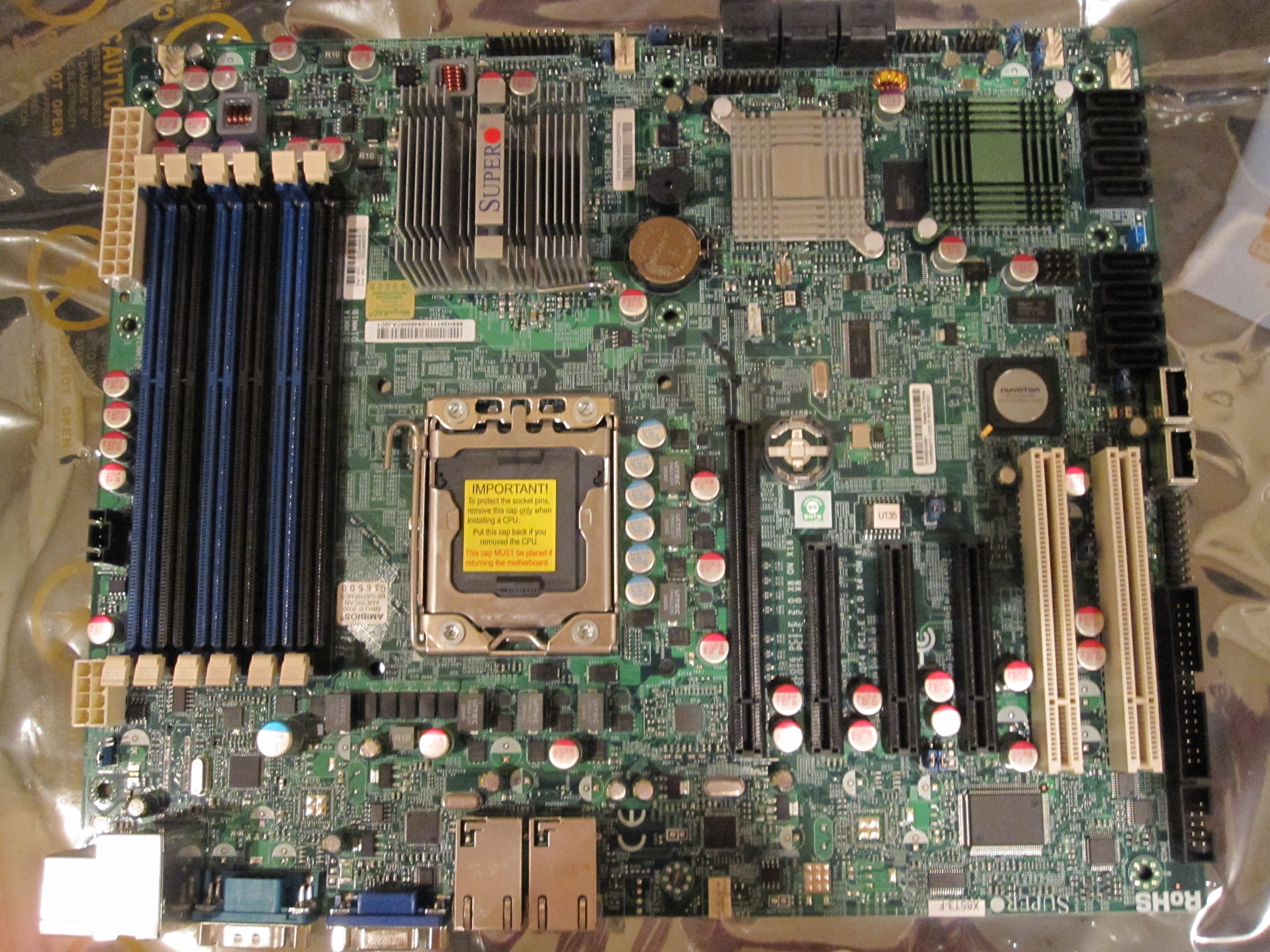
My main server, the Big WHS now houses over 60TB of storage, runs multiple VM’s, and has over 10 Gigabit NICs. At the heart of this server, is a Supermicro X8ST3-F. It was not the first motherboard I tried in the server, as I originally tried using an ASUS P6T7 WS Supercomputer in the Big WHS, but it has been running solidly since its first installation. Aside from its stability, it also comes with many PCIe slots, an onboard LSI 1068e based 8 port SATA/ SAS controller, dual Intel Gigabit NICs, onboard video, and IPMI 2.0 with KVM over IP.
Read the full story
Posted in Motherboards
Posted on 27 May 2010. Tags: 4u, backplane, das, direct attached storage, ecosystem, expander, expansion slots, HP SAS Expander, iteration, jbod, matx, motherboard, nas, Norco, Operating Systems, original design, pcie slot, PCMIG, san, SAS, SAS Expander, secondary server, Server, virtual machines
After completing the first DAS/ SAS Expander JBOD enclosure project I realized that there was a major area of improvement. Using less than 30% of a large 4U case’s volume for useful purposes seemed like the key area to improve upon. As I was completing that build I soon realized that I wanted a secondary server to be able to access some of the drives for EXSi or Hyper-V virtual machines. Further, NAS operating systems that run poorly in virtual machines, such as unRaid require dedicated server for testing. I could have built another server in another enclosure, but I decided that I could improve upon the original design and access drives that are housed in the Big WHS ecosystem through a simple cable swap. This eliminates the need to physically move drives from enclosure to enclosure. The following is a slightly (approximately $20) more expensive version of the original Build Your Own JBOD DAS Enclosure with a HP SAS Expander iteration.
Read the full story
Posted in Non-drive Components, The Big WHS
Posted on 20 May 2010. Tags: business storage, DDR3, dual nic, enormous benefit, eon zfs storage, expansion card, expansion slots, file server, flash drive, freenas, home server, home servers, htpc, intel xeon, internal usb header, motherboard, nics, Norco, openfiler, overclocking board, realtek nic, Review, server test, server v2, small business servers, storage drive, storage servers, Supermicro, Supermicro x8sil-f, test configuration, unraid, usb thumb drive, vail, virtual machine, WHS, Windows Home Server, windows home server v2 vail, x8sil-f, X8SIL-F v1.02
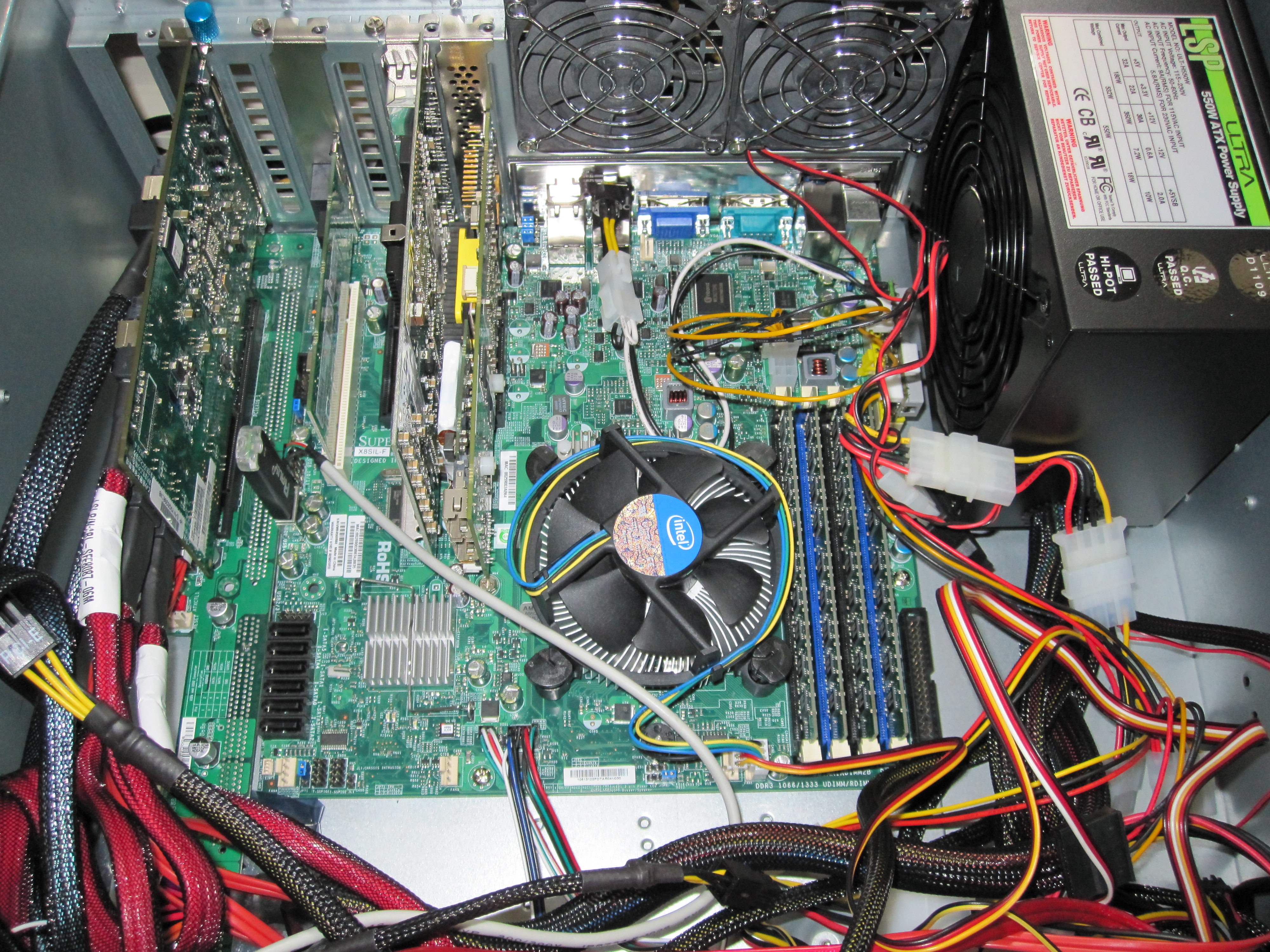
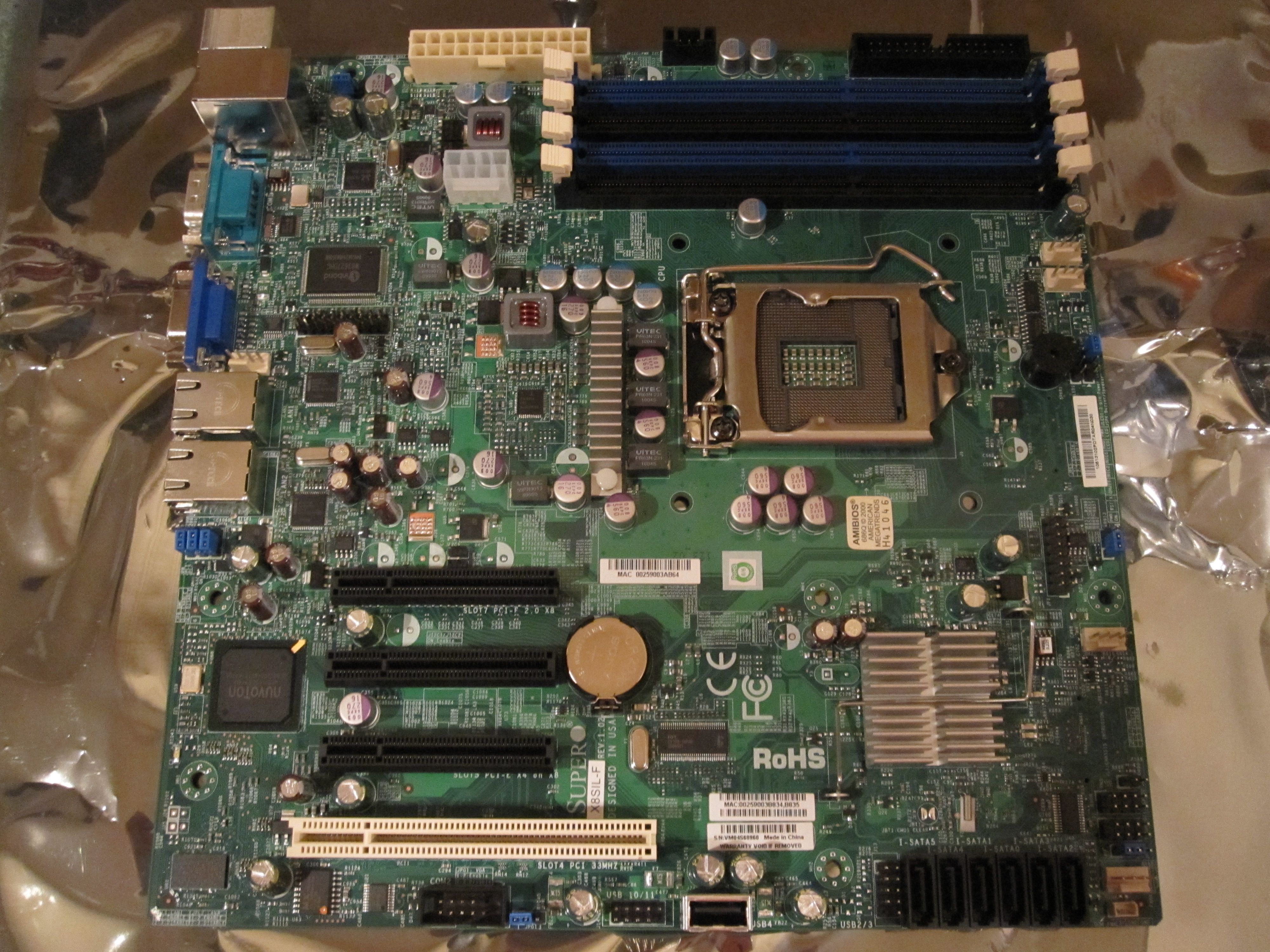
The Supermicro X8SIL-F motherboard is an excellent board for home and small business servers. When building a file server built upon Windows Home Server (V1 or V2 Vail) or another open source NAS project such as FreeNAS, Openfiler, EON ZFS storage, the Supermicro has a feature set that differentiates itself from both AMD and Intel based consumer-level motherboards. Compatibility with those operating systems and virtualization platforms such as Microsoft’s Hyper-V make the X8SIL-F a strong contender for a DIY storage or virtual machine server.
Read the full story
Posted in Motherboards
Posted on 03 May 2010. Tags: Areca, beep, bios update, dual intel, expansion cards, expansion slots, gigabit, google, google research, green ears, hitachi drives, home server, intel pro, lga, matx motherboard, network ports, server board, server v2, Supermicro, supermicro motherboard, Supermicro x8sil-f, x8, x8sil-f
Just as a quick note. I purchased a Supermicro X8SIL-F (mATX LGA 1156 server board with IPMI 2.0 and dual Intel gigabit NICs) last week, along with two 2TB Western Digital Green EARS drives using advanced format, and two Hitachi 2TB drives. First off, I was very excited about the X8SIL-F because it is a great mATX motherboard with IPMI 2.0, three PCIe x8 and one PCI slot with two onboard Intel NICs. My plan was to use those expansion slots for:
- PCIe #1: Areca ARC-1300
- PCIe #2: Intel Pro/1000 PT Dual
- PCIe #3: HP SAS Expander
- PCI #1: Intel Pro/1000 GT
That would give me well over 30 SATA ports (since there would be onboard SATA also) and five gigabit network ports (all Intel), and an option to expand to seven assuming I swapped the dual Intel NIC for a quad. I wanted to have a ZFS test box for FreeNAS/ OpenSolaris and for a physical or secondary Hyper-V installation of Windows Home Server v2 VAIL in the future. I had also ordered 4GB of ECC DDR3 1333 since I wanted lots of cache for ZFS.
Read the full story
Posted in Motherboards