Posted on 19 April 2011. Tags: dual intel, Dual Processor, Intel, intel xeon, X5670
Although the Intel Xeon L5640 is a lot of processor with very low power consumption requirements, the Intel Xeon X5670 is a much higher-end part. Although quad socket capable, the X5670 is also dual socket capable and fills a position that the Xeon E series does not scale to at this time. The L5640 was fast, but let’s see how adding another 533MHz to twelve physical, twenty-four logical cores fares in terms of performance. At a base clock of 2.93GHz and a turbo clock of 3.33GHz using a 6.4GT/s QPI alongside a higher 95w TDP, one can imagine that performance is going to be stellar. Read the full story
Posted in Server CPUs
Posted on 29 March 2011. Tags: dual intel, Dual Processor, Intel, intel xeon, L5640
Today it is time to look at a twelve core, twenty-four thread powerhouse of a system. After looking at the low-cost Westmere-EP based dual Intel Xeon E5606 configuration and finding it to be a power sipping dual-CPU setup, I noted that the E5606 is essentially a six core die with two cores that likely did not pass Intel internal testing and were therefore disabled. Intel also produces another low-power option, this time with the full six cores enabled, with Turbo Boost and Hyper Threading. With a street price close to $1,000, the Xeon L5640 is in a different league compared to the Xeon E5606 (approximately $240 at the time of this writing), but it offers a 60w TDP and many more cores. Given the price tag and speed of these CPUs, I plan on only testing a dual-Xeon L5640 configuration. Read the full story
Posted in Low Power Servers, Server CPUs
Posted on 16 June 2010. Tags: atx form factor, clarkdale, dual intel, expandability, expansion slots, home server, hyper-v, i3-530, i5-650, installed windows, intel core i3-530, intel pentium, intel xeon, intel xeon x3460, motherboard intel, network adapter, network controllers, power consumption, quality controllers, server motherboard, server motherboards, server v2, Supermicro, test configurations, x16
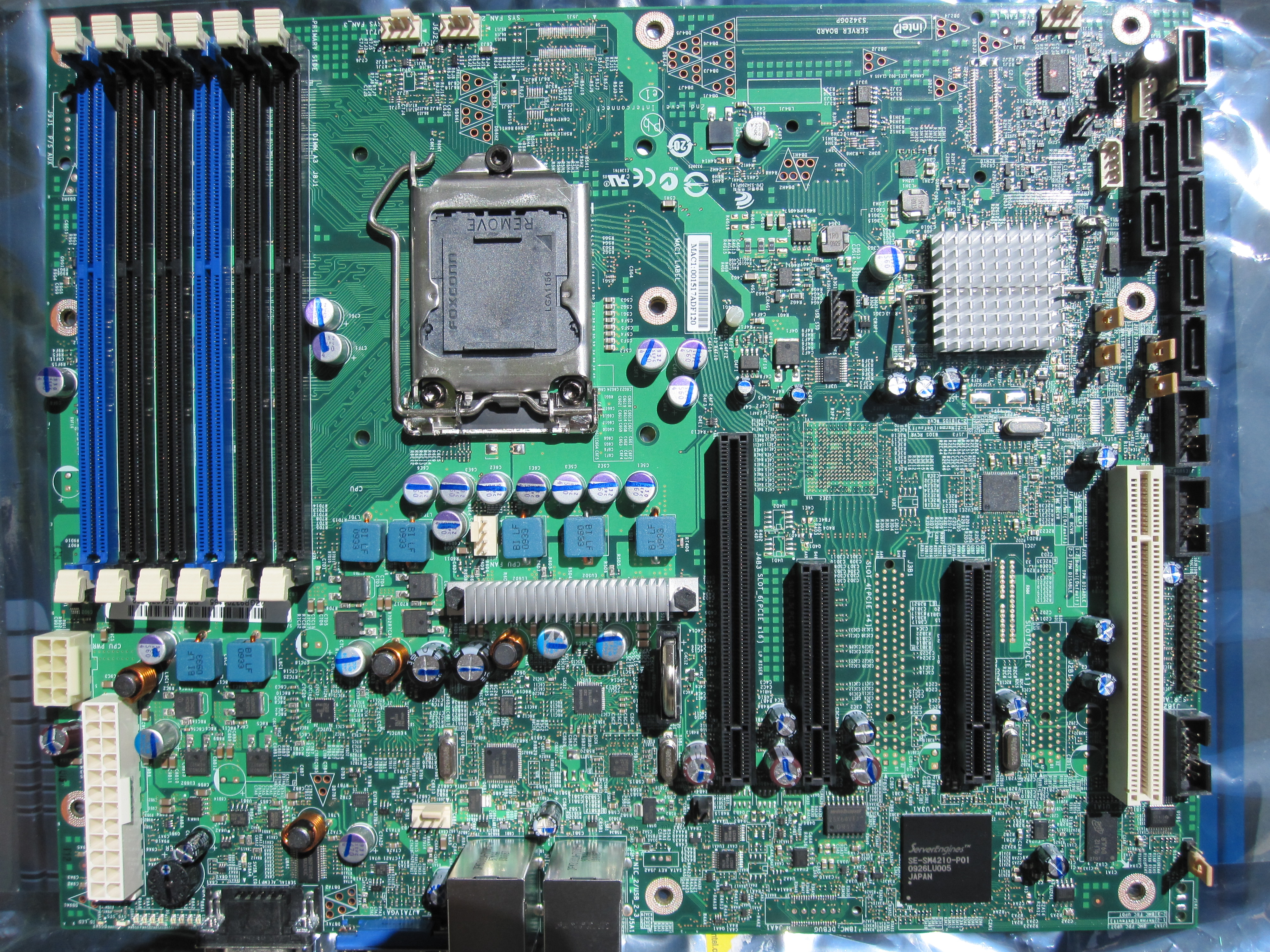
Intel’s 3400 chipset for its socket 1156 platform accepts CPU’s from the cheap Intel Pentium G6950 and Core i3-530 to the higher end Xeon X3430 to X3470 CPUs. Both Clarkdale and Lynnfield based CPU’s offer outstanding power consumption (for early 2010) at relatively low costs. After reviewing the Supermicro X8SIL-F, I purchased a competing (price wise) Intel motherboard to review, the Intel S3420GPLC. As I soon found, Intel also makes a good board, however it lacks some of the Supermicro’s features.
Read the full story
Posted in Motherboards
Posted on 08 June 2010. Tags: Areca, cpu intel, differentiators, dual intel, expanders, expansion slots, intel pro, ipmi, ipmi 2.0, LSI SAS1068E, motherboard review, nics, Norco, pci slots, rpc, SSD, Supermicro, supermicro motherboard, Supermicro X8ST3-F, test configuration, WHS, x25, X8ST3-F
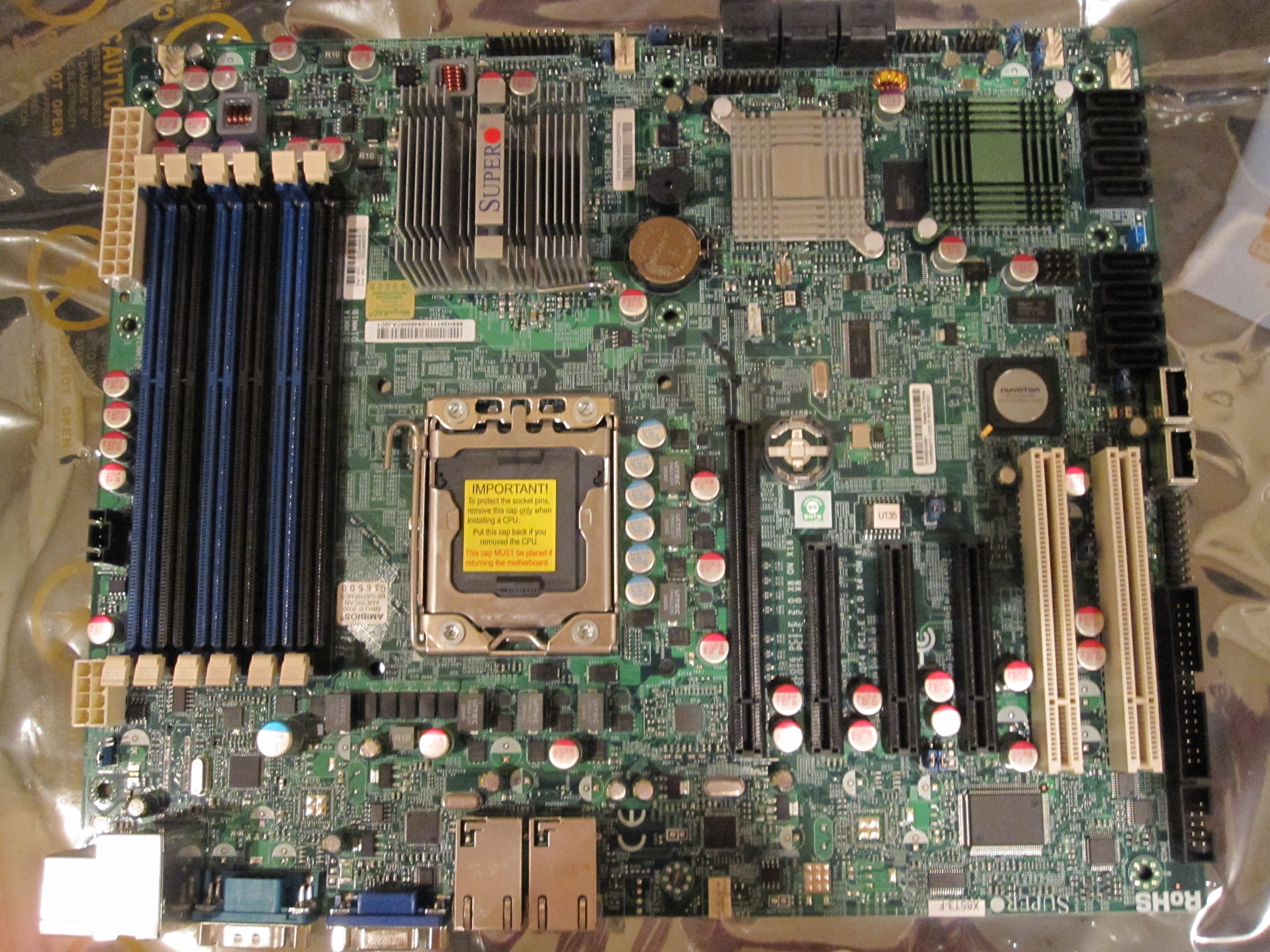
My main server, the Big WHS now houses over 60TB of storage, runs multiple VM’s, and has over 10 Gigabit NICs. At the heart of this server, is a Supermicro X8ST3-F. It was not the first motherboard I tried in the server, as I originally tried using an ASUS P6T7 WS Supercomputer in the Big WHS, but it has been running solidly since its first installation. Aside from its stability, it also comes with many PCIe slots, an onboard LSI 1068e based 8 port SATA/ SAS controller, dual Intel Gigabit NICs, onboard video, and IPMI 2.0 with KVM over IP.
Read the full story
Posted in Motherboards
Posted on 10 May 2010. Tags: Areca, clarkdale, compatibility issue, doorstep, dual intel, e mail, gigabit, i3-530, intel core i3-530, lga, linux freebsd, matx, monday afternoon, Norco, rma request, rma support, rpc, server board, Supermicro, Supermicro x8sil-f, test environments, ups, virtual machines, WHS, x8sil-f
As I mentioned in the previous post on the compatibility issue, I had to RMA my Supermicro X8SIL-F (mATX LGA 1156 server board with IPMI 2.0 and dual Intel gigabit NICs) last week because it was version 1.01 PCB instead of v1.02. The difference being support for Clarkdale CPU’s.
Just to give an idea of why Supermicro’s support is so good here is the timeline:
- Sunday (day 0) - Sent a note to Supermicro tech support explaining my problem.
- Monday morning (day 1) - Received a confirmation that I needed v1.02 PCB of the X8SIL-F to use with my Intel Core i3-530.
- Monday afternoon – submitted my RMA request online
- Tuesday mid-day (day 2) - was contacted by Supermicro RMA support, I gave the requried information for advanced RMA. Later that day I got a follow-up e-mail saying that the advance RMA request had to be approved and that it may take until the next day.
- Wednesday (day 3) – confirmed that I accepted the Supermicro advance RMA policy, and that ground shipping would be fine (I live only a few miles from a Supermicro facility).
- Thursday (day 4) – New X8SIL-F shipped.
- Friday (day 5) – X8SIL-F was at my doorstep. I was not home to sign for the delivery, so made arrangements to pick up at the UPS facility. Bottom line is that Supermicro had the replacement board at my doorstep within 96 hours of submitting my RMA request.
Overall great service from Supermicro! I have also decided that I will house this in the Norco RPC-4220 that serves as the DAS box for the Big WHS. That way I can use it to add drives for the test environments. Odds are I will either run ESXi with a few Linux/ FreeBSD/ OpenSolaris virtual machines or just run OSes directly on the PC. I am also planning to power this system independently of the rest of the enclosure and drives so that I can power cycle the server without taking the drives off of the Areca array.
Posted in Motherboards
Posted on 03 May 2010. Tags: Areca, beep, bios update, dual intel, expansion cards, expansion slots, gigabit, google, google research, green ears, hitachi drives, home server, intel pro, lga, matx motherboard, network ports, server board, server v2, Supermicro, supermicro motherboard, Supermicro x8sil-f, x8, x8sil-f
Just as a quick note. I purchased a Supermicro X8SIL-F (mATX LGA 1156 server board with IPMI 2.0 and dual Intel gigabit NICs) last week, along with two 2TB Western Digital Green EARS drives using advanced format, and two Hitachi 2TB drives. First off, I was very excited about the X8SIL-F because it is a great mATX motherboard with IPMI 2.0, three PCIe x8 and one PCI slot with two onboard Intel NICs. My plan was to use those expansion slots for:
- PCIe #1: Areca ARC-1300
- PCIe #2: Intel Pro/1000 PT Dual
- PCIe #3: HP SAS Expander
- PCI #1: Intel Pro/1000 GT
That would give me well over 30 SATA ports (since there would be onboard SATA also) and five gigabit network ports (all Intel), and an option to expand to seven assuming I swapped the dual Intel NIC for a quad. I wanted to have a ZFS test box for FreeNAS/ OpenSolaris and for a physical or secondary Hyper-V installation of Windows Home Server v2 VAIL in the future. I had also ordered 4GB of ECC DDR3 1333 since I wanted lots of cache for ZFS.
Read the full story
Posted in Motherboards